
Vehicle Wrap Bubbling: Causes, Fixes & When to Reinstall
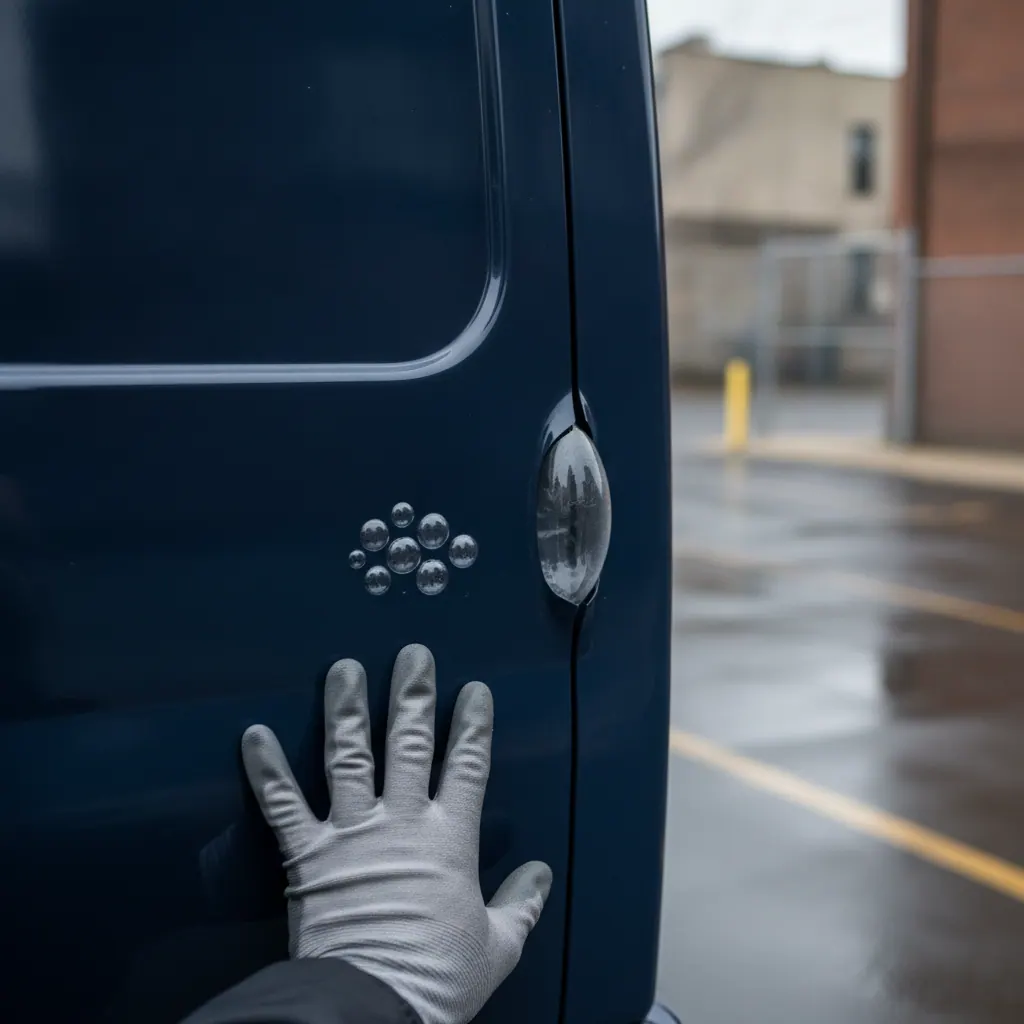
Vehicle wraps bubble for three main reasons: trapped air during installation, low-quality calendered vinyl that shrinks over time, and surface contamination the installer missed before laying the film. Most small post-install bubbles flatten on their own within 30 days as cast vinyl conforms to the panel. Bubbles that persist past 30 days, grow larger, or appear in clusters almost always require professional attention.
Vehicle wraps bubble for three main reasons: trapped air during installation, low-quality calendered vinyl that shrinks over time, and surface contamination the installer missed before laying the film. Most small post-install bubbles flatten on their own within 30 days as cast vinyl conforms to the panel. Bubbles that persist past 30 days, grow larger, or appear in clusters almost always require professional attention.
What Actually Causes Wrap Bubbling
Every bubble tells a story. Read the bubble correctly and you know whether you have a DIY fix or a reinstallation job.
1. Trapped Air from Installation
This is the most common cause. The installer squeegeed too fast, skipped a section, or worked a flat panel without relieving air in the corners. Small trapped-air bubbles, usually under 10mm, often migrate to an edge and disappear on their own. Give them 2 to 4 weeks in warm conditions, like parking on the south side of a building in summer. If they haven't moved by then, they won't move on their own.
2. Calendered Vinyl Shrinkage
Calendered vinyl is a budget-grade film rolled out under pressure. It carries memory in the material. Once it warms up, it tries to return to its original flat shape, pulling away from curved panels and creating lifting edges and bubbles. This is why Chicago Fleet Wraps uses only cast vinyl, specifically Avery Dennison MPI 1105 Supercast and 3M IJ180-CV3 (and the newer 3M IJ280), both with UV overlaminate. Cast films are poured into a mold and dried, so they conform permanently to compound curves without fighting the panel. If a competitor wrapped your fleet van with calendered film, expect bubbling within the first Chicago summer. The temperature swings between a Logan Square parking lot in January and the same lot in July are brutal on cheaper materials.
3. Surface Contamination
Wax, silicone, road film, and even hand oils prevent adhesive from bonding. One missed spot on a door panel is enough. Contamination bubbles tend to cluster in a specific zone rather than scatter randomly. They also tend to grow over time because moisture gets under the film and spreads.
4. Outgassing from Fresh Paint
New or recently repainted panels release solvents for weeks after the job is done. If vinyl goes over paint that hasn't fully cured, those solvents create bubbles as they escape. Standard cure time before wrapping is 30 days minimum for factory paint, longer for body-shop resprays. Wrapping a freshly painted van the week it comes back from a shop is a setup for failure.
5. Heat Exposure and UV Damage
Parking on the Dan Ryan or I-290 shoulder in August, or leaving a vehicle on black asphalt near Midway without shade, accelerates adhesive breakdown on inferior films. UV overlaminate matters here. Without it, the adhesive layer degrades, loses tack in some spots, and bubbles form as the film lifts. Every wrap Chicago Fleet Wraps installs includes UV overlaminate as a standard part of the material stack, not an add-on.
The Honest Self-Assessment Test
Before you call anyone, run through this check yourself. It takes five minutes.
- Size: Is the bubble smaller than a dime? Probably a trapped-air bubble that may self-correct.
- Age: Is the wrap less than 30 days old? Give it time if the bubble is small and isolated.
- Location: Is it on a flat panel or a curved section? Curved bubbles are harder to self-heal.
- Pattern: Is it a single bubble or a cluster? Clusters indicate contamination or a failing adhesive zone.
- Edge behavior: Press the bubble gently. Does the air move toward an edge? Good sign. Does it spring back immediately? The adhesive may be compromised in that spot.
- Growth: Mark the edge of the bubble with a wax pencil and check it in a week. Growing bubbles need professional repair. Stable ones may not.
How to Repair Small Wrap Bubbles Yourself
This applies only to small, isolated, trapped-air bubbles on wraps installed within the last 90 days. Do not attempt this on older wraps, contamination clusters, or any bubble near a seam or edge.
The Heat-and-Smooth Method
- Work in shade, not in direct sun. Ideal temperature is 65 to 80 degrees Fahrenheit. Cold vinyl is stiff and tears.
- Use a heat gun or hair dryer on low. Hold it 4 to 6 inches from the bubble. Move it constantly. Never focus heat on one spot for more than three seconds.
- Once the vinyl is warm and pliable, use a felt-edged squeegee (not a hard plastic one) and push from the center of the bubble toward the nearest edge in short, overlapping strokes.
- Apply firm, even pressure. You are guiding the air out, not pressing the vinyl down by force.
- If the bubble reaches the edge of a panel, you may see the vinyl lift slightly at the edge. Press it back down immediately while still warm.
- Let the panel cool at ambient temperature. Do not pour cold water over it to speed the process.
The Micro-Pin Method
This is a last resort for stubborn isolated bubbles only. Use a wrap installer's pin tool or the tip of a clean sewing needle. Pierce the bubble at a 45-degree angle, not straight in. Puncture at the edge of the bubble, not the center. Gently press the air out through the hole, then smooth the vinyl flat. Apply heat immediately after to help the adhesive re-bond. A correctly executed pin release leaves no visible mark on cast vinyl. A bad pin release tears the film. If you are not confident in this technique, stop and call a professional.
When Bubbling Means You Need Professional Reinstallation
Some bubbling is beyond field repair. Attempting a DIY fix in these situations almost always makes the problem worse and can damage the underlying paint. Call a professional when you see any of the following.
- Bubbles growing past a 25mm diameter or expanding week over week.
- Edge lifting combined with bubbling. Once an edge lifts, dirt and moisture enter freely. The contamination spreads under the film and ruins adhesion across a larger zone.
- Bubble clusters covering more than a 6-inch area. This points to a preparation failure or a film defect. The entire panel section needs to come off.
- Bubbling within the first 7 days on a new install. A quality installer should catch this immediately. If yours didn't, that tells you something about their process.
- Silvering or white haze around bubbles. This indicates adhesive failure, not just trapped air. The film is delaminating.
- Bubbling after a car wash or pressure wash. High-pressure water forced under an edge and is now lifting the film progressively. The affected section must be removed and reinstalled.
Chicago Fleet Wraps has wrapped 19,400 vehicles since 2001 with zero verified paint-damage claims. That record exists because the team knows exactly how to remove problem sections without pulling paint, which is a real risk on vehicles with OEM paint thinner than 4 mils or on any repainted panel. Removal technique matters as much as installation technique.
What Professional Bubble Repair Actually Looks Like
At Chicago Fleet Wraps, bubble complaints on warranty work follow a specific process. The vehicle comes into the climate-controlled install bay in Portage Park, 4711 N Lamon Ave #7. The installer documents the bubble pattern, checks the substrate temperature and paint adhesion, then decides on a panel-section repair or a full-panel re-pull. The shop uses 3M Knifeless Tape for any cuts, which keeps blade contact off the paint entirely. Material matching is done against the original job ticket. For fleet accounts, and the company carries 2,800 active fleet accounts, the repair is folded into the fleet's service schedule to minimize downtime.
The 2-year workmanship warranty covers installation defects including bubbling caused by prep failures or installation technique. It does not cover damage from pressure washing above 1,200 PSI, automatic car washes with abrasive brushes, or chemical contact with non-wrap-safe products. Know the difference before you file a claim.
Chicago-Specific Factors That Make Bubbling More Likely
Chicago weather accelerates every failure mode in wrap materials. Winter road salt bonds to panel surfaces and contaminates them. The freeze-thaw cycle that plagues neighborhoods from Norwood Park to Bridgeport causes panels to flex slightly, which stresses adhesive bonds. Summer heat on dark vans parked on exposed asphalt near O'Hare can push panel temperatures past 180 degrees Fahrenheit, which is beyond the operating range of calendered films.
Avery Dennison MPI 1105 Supercast and 3M IJ180-CV3 are rated for these conditions. Generic import films are not. If your fleet operates in winter and the wrap goes on in November, the installer needs to pre-heat the panels before application and use a climate-controlled bay. Cold adhesive does not bond properly. A van wrapped in an unheated Pilsen garage in January is going to bubble by March.
Chicago Fleet Wraps: Key Numbers
- 25 years in business, founded 2001
- 19,400+ vehicles wrapped across the Chicagoland area
- 2,800+ active fleet accounts currently under contract
- 0 verified paint-damage claims in company history
- Cargo van full wrap starting at $4,200
- Fleet discounts: 3% for 2 to 4 vehicles, 7% for 5 to 9, 11% for 10 to 24, 15% for 25 or more
- Free pickup and delivery across Chicagoland
- 2-year workmanship warranty, 5 to 7 year wrap lifespan on cast materials
People Also Ask
Take the Next Step
If your fleet wrap is bubbling and you are not sure whether it is a DIY fix or a professional job, call Chicago Fleet Wraps at (312) 597-1286. The shop offers 24-hour itemized quotes and free pickup and delivery across Chicagoland. The install bay is at 4711 N Lamon Ave #7, Chicago IL 60630, in Portage Park. Bring the vehicle in, or have it picked up, and get a straight answer on what the repair requires and what it costs. No guessing, no overselling.
Ready for a quote? See Wrap Material Guide or get an itemized quote in 24 hours.
Frequently Asked Questions
Why is my new vehicle wrap bubbling after just a few days?
New wrap bubbles within the first 30 days are usually trapped air that shifts and releases as the adhesive cures. Small bubbles under 10mm on flat panels often self-correct with warm weather and time. Bubbles that appear in clusters, grow, or develop within the first 7 days on a professional install are a sign of a prep failure or material defect and should be reported to the installer immediately under the workmanship warranty.
Can I fix wrap bubbles myself, or do I need a professional?
Small, isolated, trapped-air bubbles on wraps less than 90 days old can often be fixed with a heat gun and a felt squeegee, or carefully with a pin tool. Do not attempt DIY repair on bubbles larger than 25mm, clusters covering more than 6 inches, bubbles with edge lifting, or any bubble showing white haze or silvering around it. Those conditions require professional panel removal and reinstallation to avoid paint damage.
How long should a vehicle wrap last before bubbling becomes a problem?
A cast vinyl wrap installed on a properly prepped surface in a climate-controlled environment should last 5 to 7 years without significant bubbling. Calendered vinyl commonly bubbles within 1 to 2 years on curved panels because the film has material memory and fights the substrate. Using cast films like Avery Dennison MPI 1105 Supercast or 3M IJ180-CV3 with UV overlaminate eliminates the shrinkage-driven bubbling that cheap wraps develop.