
Questions? Talk to the Installers.
25+ years. 19,400+ vehicles. We'll give you a straight answer.
Every term you will meet when buying, specifying, or installing a commercial vehicle wrap, defined straight. Cast vinyl is poured as a liquid onto a moving release liner, which is why it stays dimensionally stable and conforms to compound curves. Calendered film does neither.
The premium standard. Manufactured by casting liquid PVC resin onto a moving release liner. The result is a dimensionally stable, ultra-thin film that conforms to compound curves and corrugations without wrinkling or lifting. Rated 5–7 years outdoors with UV overlaminate. Avery Dennison MPI 1105 and 3M IJ180-CV3 are the industry-leading cast films. Chicago Fleet Wraps uses cast vinyl only.
Economy vinyl made by squeezing PVC compound between heated rollers (calendering). Thicker, stiffer, and prone to dimensional shrinkage over time. Especially on curves. Rated 2–3 years outdoors. Acceptable for flat surfaces only. Not used at Chicago Fleet Wraps on any commercial install.
A clear protective film heat-laminated over the printed vinyl face. Provides UV protection, scratch resistance, and chemical resistance. Determines the final finish: gloss, satin, or matte. DOL 1360Z (Avery Dennison) and 3M 8914 are the standards. Without overlaminate, printed ink degrades within 1–2 years.
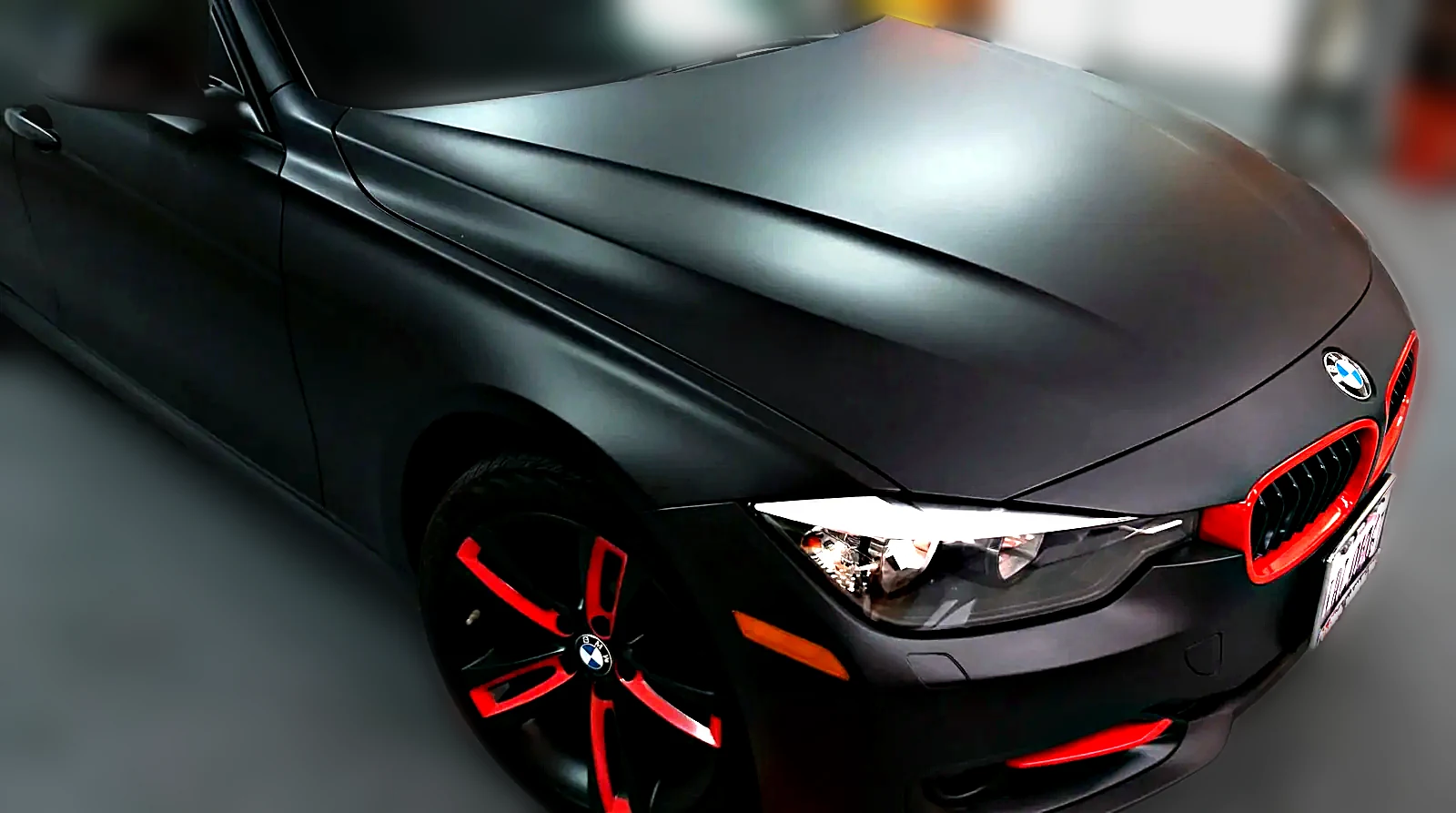
Films beyond standard printed vinyl: chrome delete (matte black over chrome trim), carbon fiber texture, brushed metal, color change (no printing, solid/metallic colors), reflective vinyl, holographic, and paint protection film (PPF).
Premium cast print media. 2.5 mil thick with Comply™ air egress technology. Rated 7 years vertical outdoor with DOL 1360 overlaminate. The primary film used at Chicago Fleet Wraps for fleet installs.
Water-based inkjet printing using HP's latex polymer ink technology. Inks are cured with heat during printing, producing a dry, flexible, UV-stable output with no VOC outgassing. HP Latex produces wider color gamut than solvent on most substrates and is safe for enclosed spaces immediately after printing. Chicago Fleet Wraps is HP Latex films.
Ink is dissolved in chemical solvents that evaporate during drying. Produces highly durable outdoor prints but requires outgassing time before lamination (typically 24–48 hours). Strong VOC output during printing.
Raster Image Processor. Software that translates vector/raster artwork into print instructions for the wide-format printer. Controls ink density, color profiles, print speed, and tiling. SAi Flexi is the industry standard for vehicle wrap printing.
Matching printed wrap colors to specific Pantone PMS values for brand consistency. Critical for fleet accounts with strict brand standards. Requires ICC profiling specific to the printer/ink/media combination.
The process of allowing air trapped under freshly applied vinyl to escape through microscopic channels in the adhesive (Comply™, Controltac™). Reduces initial bubbling. Pressure-activated adhesive tacks down fully within 24–72 hours after application.
Using a heat gun (300–350°F) to stretch and conform vinyl into recesses, around rivets, across compound curves, and into door handles. Required on all complex panel areas. Over-heating causes adhesive failure; under-heating causes edge lifting.
The surface being wrapped. For vehicle wraps: factory paint (ideal), plastic trim, glass (requires perforated or specific adhesive), textured plastic bumpers (requires special technique). Substrate condition directly determines adhesion quality and wrap longevity.
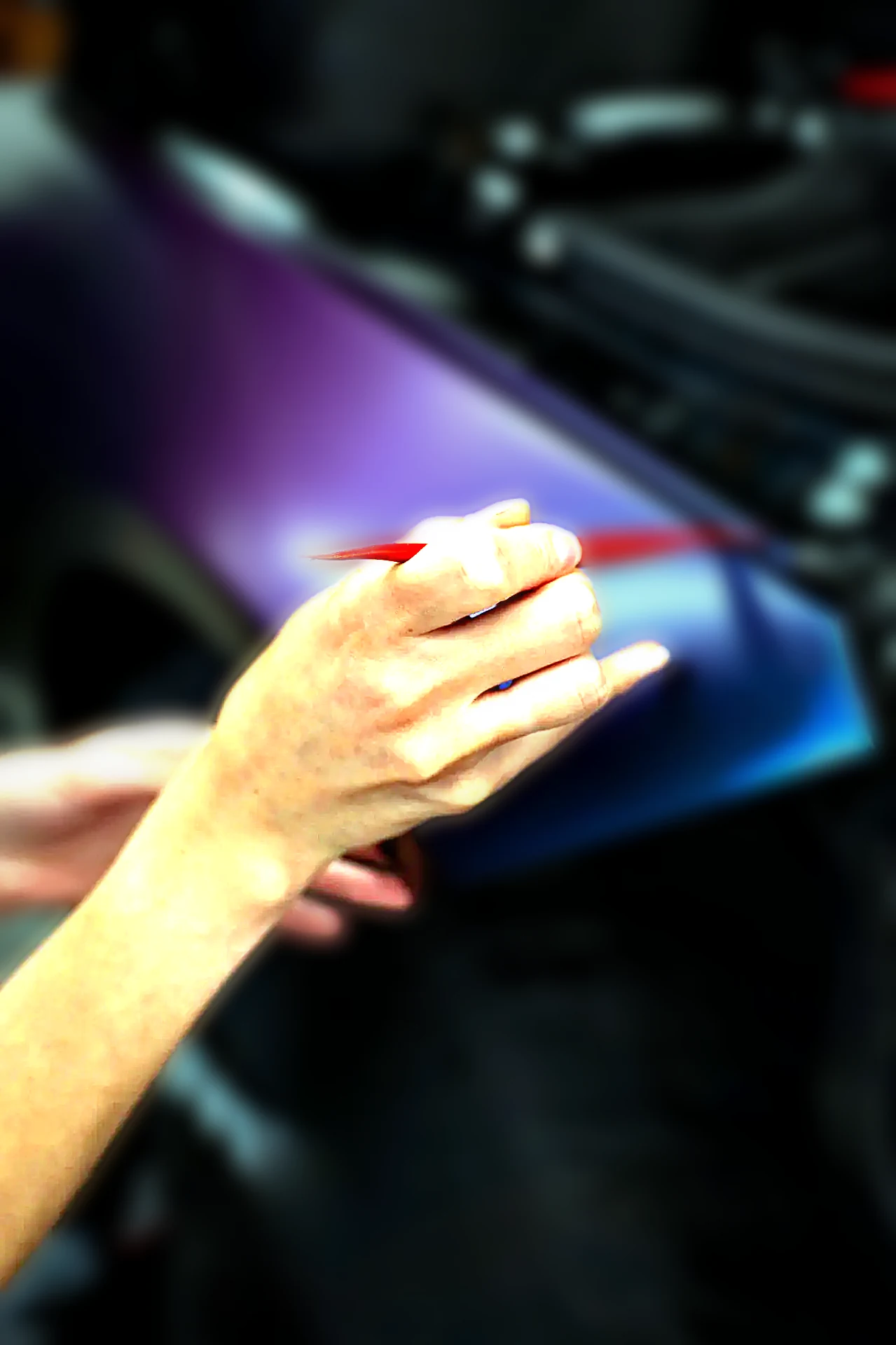
The primary installation tool. A rigid plastic blade used to apply and smooth vinyl onto the vehicle surface. Removes air, activates adhesive, and sets the film. Different hardnesses (durometers) for different panel types.
Applying heat to vinyl edges and complex areas after installation to lock the film's memory into the new conformation. Critical on door edges, around mirrors, and anywhere the film was stretched. Prevents edge lifting.
The junction where two panels of vinyl meet on a vehicle. Properly overlapped seams (3–5mm) are weather-sealed and nearly invisible. Visible seam placement is part of the design process. Seams are typically placed at natural body line breaks.
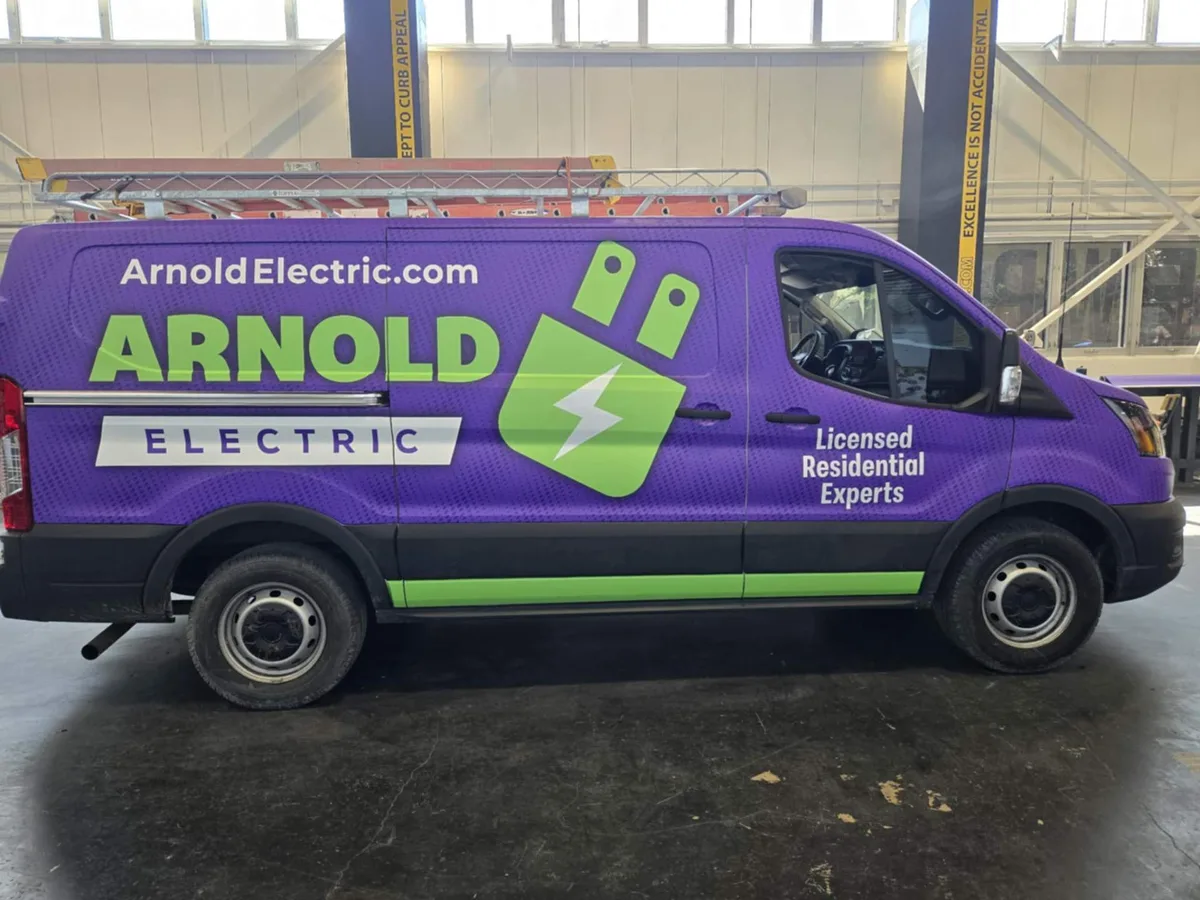
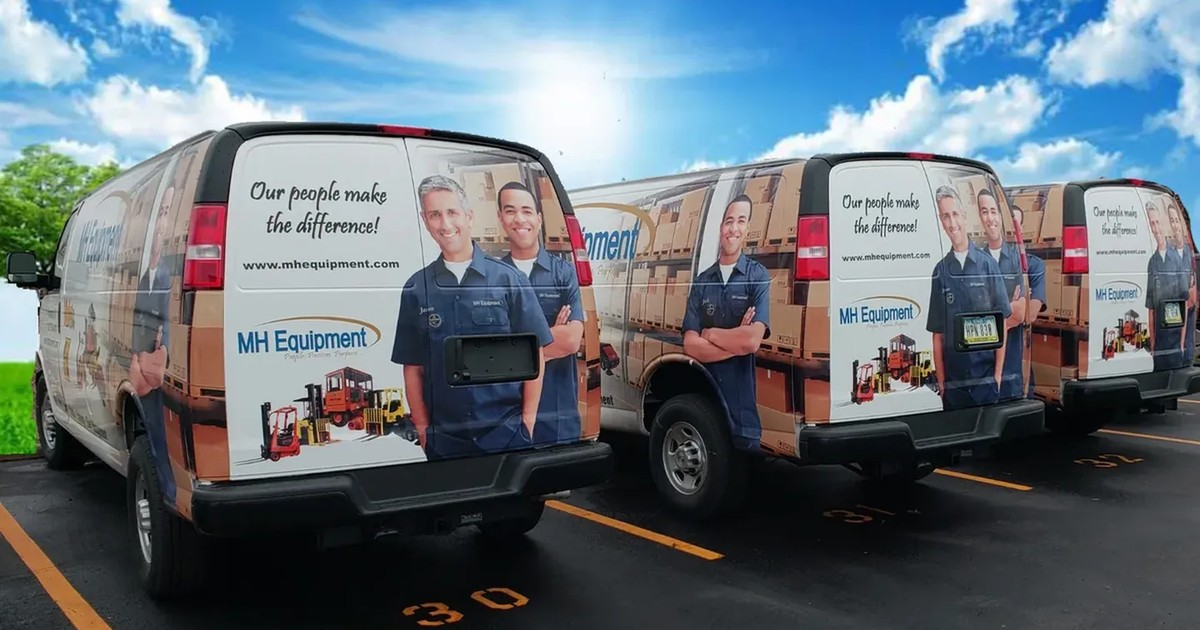
Complete vinyl coverage of all exterior panels. Hood, roof, sides, rear, bumpers. Maximum brand impact and paint protection. Cargo van: $4,200+ · Sprinter: $4,200+ · Box truck: $5,300–$6,700+
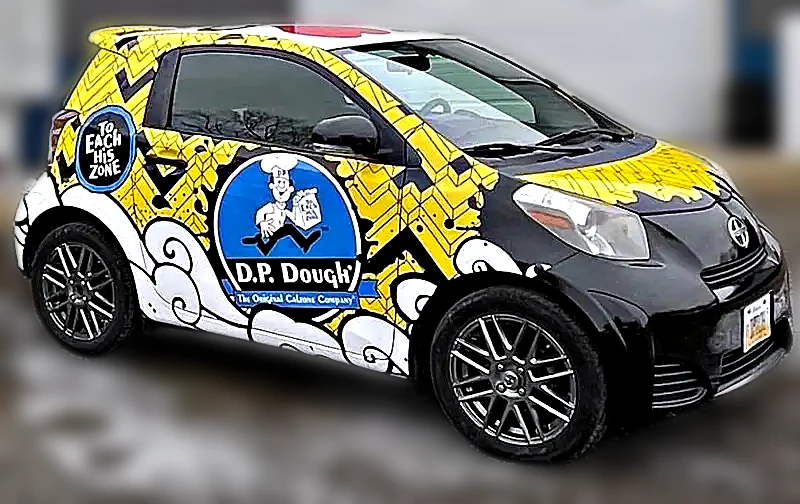
Vinyl covering specific panels or sections. Typically the rear 2/3 of the vehicle, lower body, or side panels only. 80% of brand impact at 40–60% of the cost. Most common: lower body + rear doors + side panels. Starting at $850.
Individual cut vinyl or printed panels applied to specific locations. Logo, phone number, website, USDOT numbers. Minimal coverage. Lowest cost entry point for fleet branding. Starting at $150–$400 per vehicle.
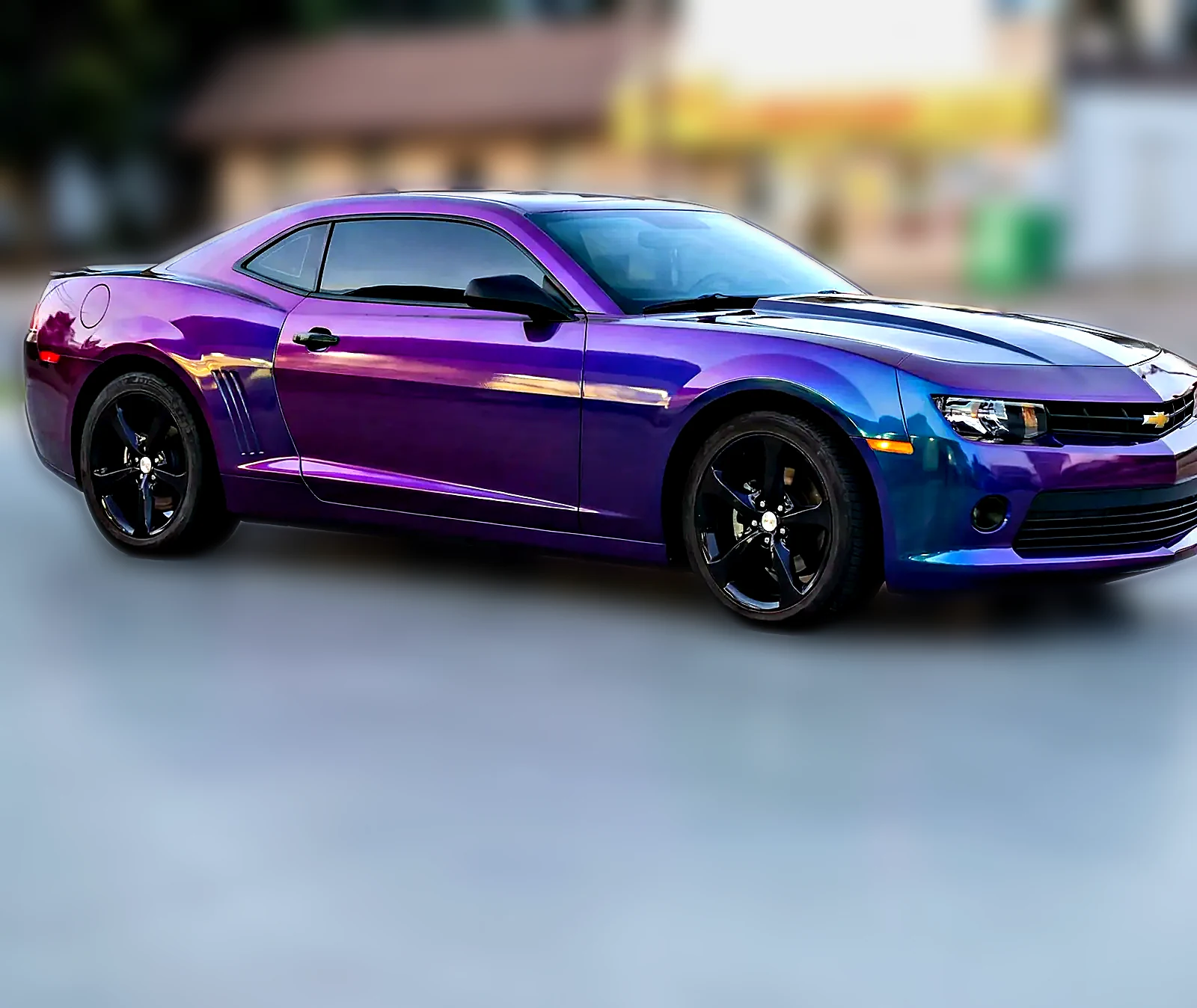
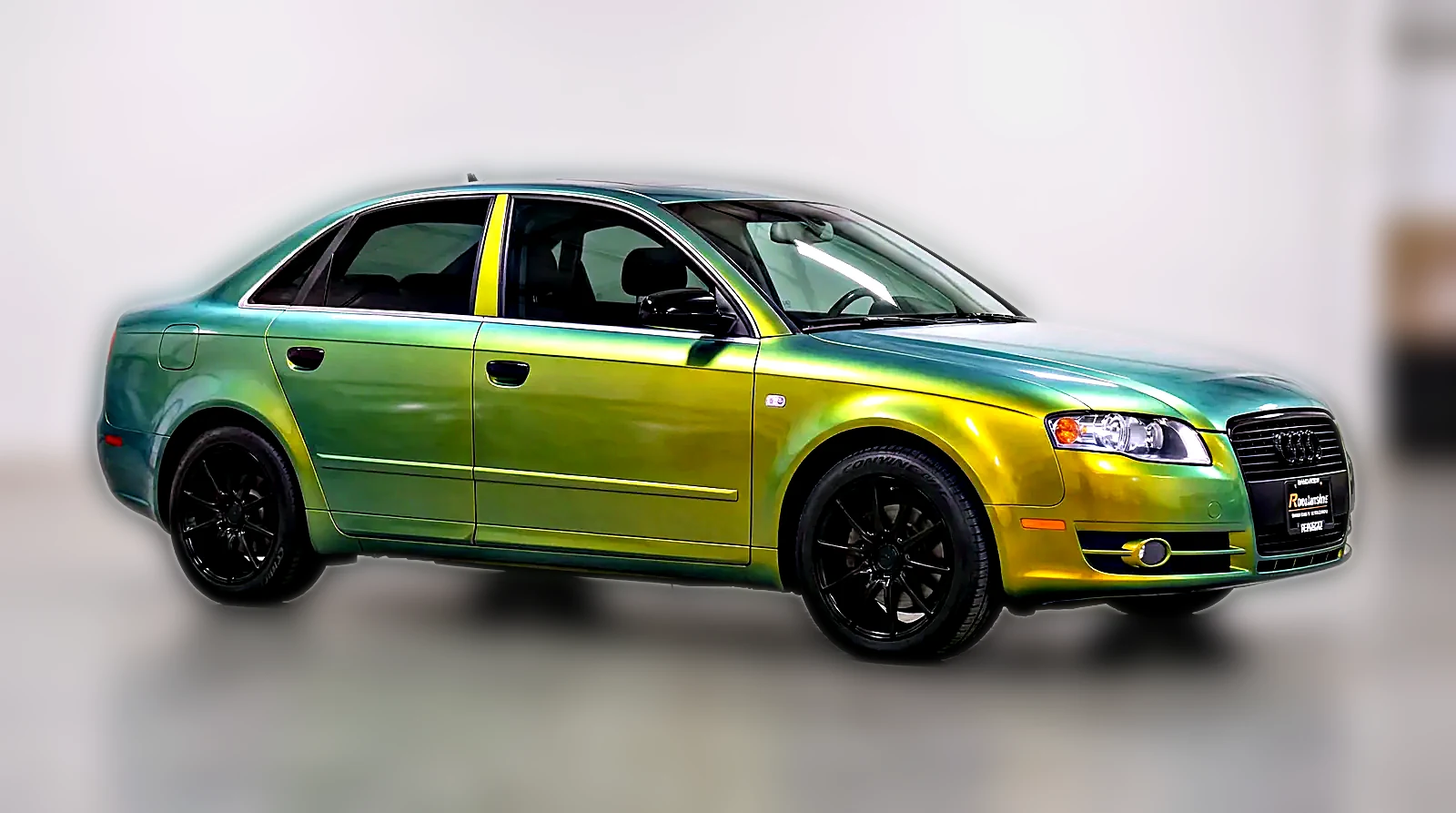
Solid-color vinyl film (no printing) applied to change a vehicle's appearance without altering factory paint. Popular for personal vehicles. Cast film only. Same quality as fleet wraps. Fully reversible. Gloss, satin, matte, metallic, and specialty finishes available.
Manufacturer certification requiring demonstrated competency in Avery Dennison product installation. Provides access to dealer pricing, technical support, and warranty backing. Chicago Fleet Wraps is Avery Dennison certified.
3M's manufacturer certification program for wrap installers. Requires training, testing, and demonstrated installation quality. Supports warranty claims on 3M products. Chicago Fleet Wraps is 3M films.
HP certification for wide-format latex printing. Confirms capability to produce HP Latex quality standards for vehicle wrap applications. Chicago Fleet Wraps is HP Latex films.
25+ years. 19,400+ vehicles. We'll give you a straight answer.
Frequently Asked
Free Fleet Quote · 2-hour response
Itemized pricing in your inbox within 24 hours. Not a range. 19,400+ vehicles wrapped. HP Latex, Avery, and 3M films. Pickup across Chicagoland.
or call (312) 597-1286
“Wrap Glossary. What you are really paying for: the factory paint is the asset, so the wrap goes on to guard it and comes off clean at resale. That is the standard on every vehicle that leaves our Lamon Avenue shop.”
Chicagoland Coverage
Scheduled fleet pickup and full-service installation across the city and suburbs. Wrapping since 2001 and in Chicago since 2014, with 19,400+ vehicles wrapped.