
Are Chrome Wraps Legal? What Chicago Drivers Must Know
Chrome wraps are legal in Illinois, but several other states restrict or ban them over glare and road safety. Before you wrap a vehicle in mirror chrome, know where you can drive it, what inspectors look for, and whether the finish suits a working fleet.
Chrome wraps are legal in Illinois, but several other U.S. states restrict or outright ban them due to glare and road safety concerns. Before you wrap your vehicle in mirror chrome, you need to know exactly where you can drive it, what inspectors look for, and whether a chrome finish is the right call for a working fleet. At Chicago Fleet Wraps, we have wrapped 19,400-plus vehicles since 2001 and logged zero verified paint-damage claims, so this answer comes from real field experience, not speculation.
The Short Legal Answer for Illinois Drivers
Illinois has no statute that specifically bans chrome vehicle wraps. The Illinois Vehicle Code does not list mirror-finish vinyl as a prohibited surface treatment. That means you can legally drive a chrome-wrapped car, van, or truck on the Dan Ryan, I-90, or Lake Shore Drive without facing a chrome-specific citation.
That said, "legal" does not mean "without risk." Police in any jurisdiction can write a distracted-driving-related citation if they believe your vehicle's reflectivity is endangering other drivers. The law is broad enough to cover it. Keep that in mind before you go full mirror chrome on a delivery van that sits in stop-and-go traffic on the Kennedy every morning.
States Where Chrome Wraps Are Restricted or Banned
Several states have moved to restrict chrome and mirror-finish wraps. The list changes as legislatures update traffic codes, so always verify with your state DMV before a long-haul trip. Known problem jurisdictions as of this writing include:
- California: The California Vehicle Code Section 26709 governs reflective surfaces on vehicles. CHP officers have the discretion to cite chrome-wrapped vehicles for excessive glare. Enforcement is inconsistent but real.
- New York: New York restricts mirror-finish surfaces that can interfere with other drivers' vision. Commercial vehicles face tighter scrutiny than personal vehicles.
- Virginia: Virginia has issued guidance discouraging mirror chrome finishes on vehicles operated on public roads. Enforcement has been documented.
- Texas: No statewide ban, but several municipalities have issued warnings. Texas DPS officers have broad discretion under distracted-driving statutes.
- Florida: No explicit ban, but Florida's bright sunlight makes glare citations more likely than in northern states.
If your fleet crosses state lines, run your route against current DMV guidance for every state on that route. This is especially relevant for Chicago-based fleets that run loads to the East Coast through Indiana, Ohio, Pennsylvania, and New York.
Why Chrome Creates a Real Safety Problem
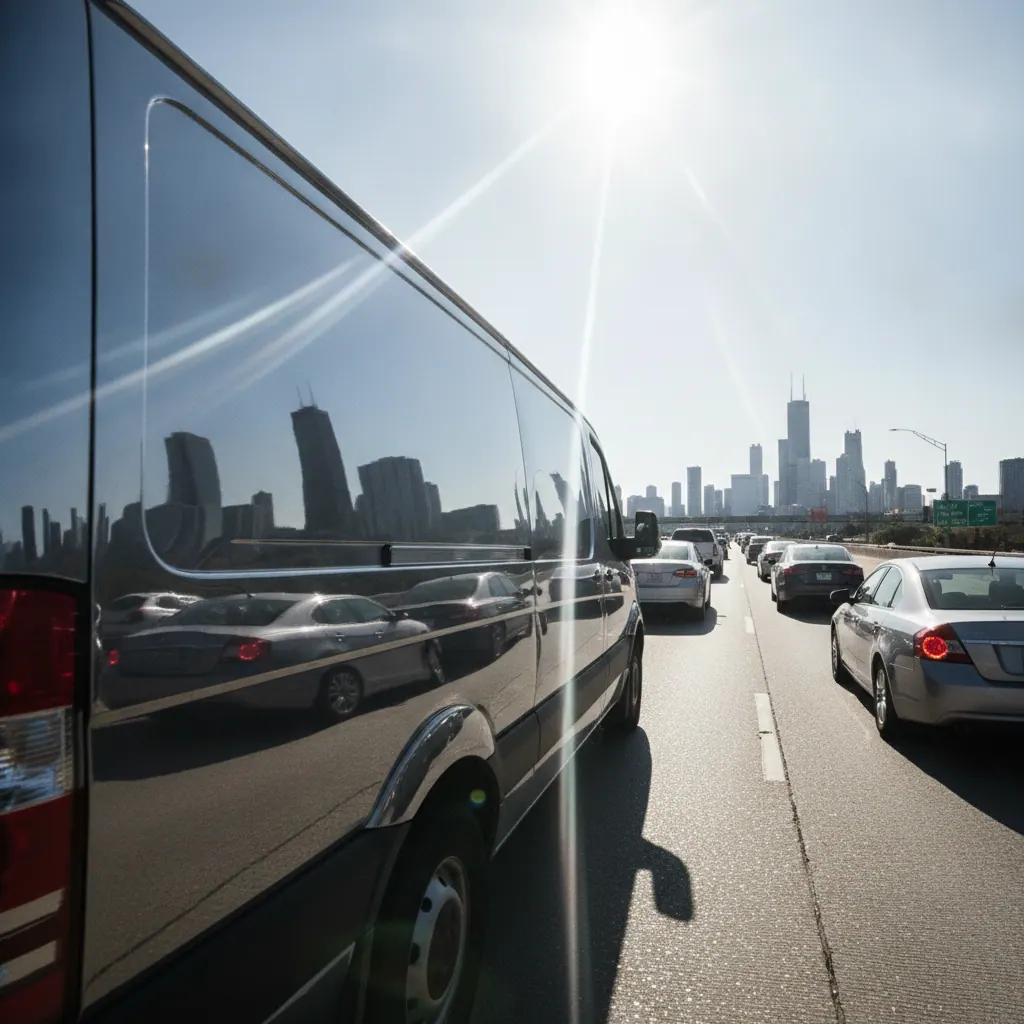
Mirror chrome vinyl reflects sunlight at a much higher rate than standard automotive paint. On a clear day in Chicago, a chrome-wrapped vehicle sitting in direct sun on the Eisenhower can produce a reflected glare intense enough to momentarily blind a driver in an adjacent lane. That is not a hypothetical. It is a documented complaint that has driven regulatory action in multiple states.
Flat chrome is less reflective than brushed chrome, which is less reflective than mirror chrome. If you want a metallic look, the finish type matters legally and practically. We talk through all three options at every chrome inquiry we receive.
Commercial Fleet Considerations
Fleet operators face a different risk profile than individual vehicle owners. A single chrome-wrapped personal car is unlikely to draw sustained regulatory attention. A fleet of ten chrome-wrapped cargo vans running a Chicago delivery route every day is a different story. Regulators notice patterns. Clients notice them too, and not always favorably.
We currently serve 2,800-plus active fleet accounts across Chicagoland. The number of those accounts that have chosen full mirror chrome as their fleet livery is very small. The accounts that ask about chrome usually end up choosing one of the alternatives described below, once they work through the full picture.
DOT-regulated commercial vehicles have additional constraints. If your vehicle requires DOT markings, those markings must remain visible and legible. Chrome finishes can reduce contrast and make required lettering harder to read at inspection. That alone can fail a roadside inspection.
Chrome Wrap Pros and Cons: The Honest List
Pros
- Extreme visual impact. Nothing else on the road looks like mirror chrome.
- Strong brand recall. If your marketing strategy depends on being impossible to miss, chrome delivers.
- Protects underlying paint while installed, just like any quality cast vinyl wrap.
- Removable without paint damage when installed correctly with cast vinyl and proper technique.
Cons
- Legal risk in multiple states. Multi-state fleet operators face real exposure.
- Glare citations are possible in Illinois even without a specific chrome ban.
- Chrome films are harder to install cleanly than standard cast vinyl. Bubbles and seams show more on a mirror surface. Installer skill matters more here than on any other finish.
- Chrome vinyl is more sensitive to temperature extremes. Chicago winters, with temperatures regularly below zero on the North Side, can stress chrome films at edges and seams if the installation was not done in a climate-controlled environment.
- Chrome finishes show scratches and swirl marks more readily than matte or satin finishes.
- Higher material cost than standard wrap films.
How We Install Chrome When We Do It
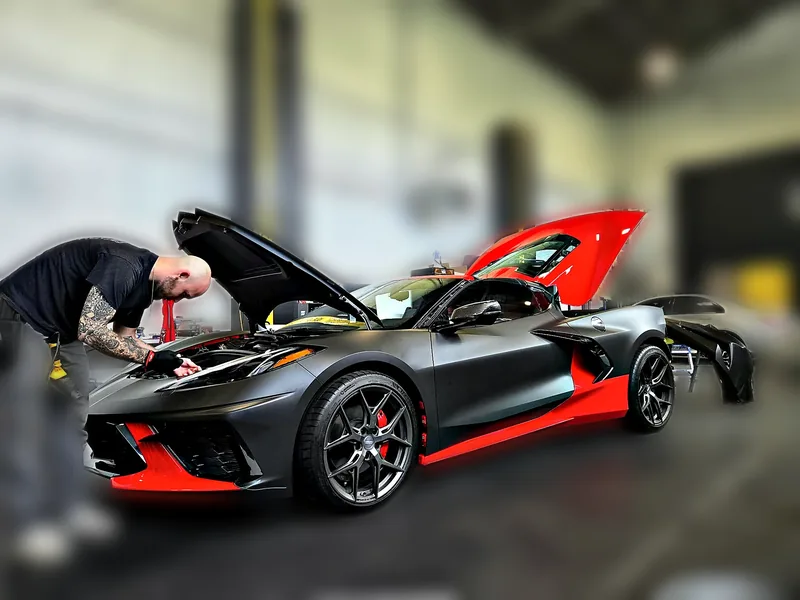
We do chrome wraps. We are selective about where and how. Every chrome job we take runs through our standard 8-day production lifecycle, which includes surface prep, panel-by-panel fitting, and a final inspection pass before the vehicle leaves our Portage Park shop at 4711 N Lamon Ave.
We use cast vinyl only, never calendered film. Calendered vinyl shrinks over time. On a standard color that means gradual edge lifting. On chrome that means visible distortion in the mirror surface within months. We work exclusively with Avery Dennison MPI 1105 Supercast and 3M IJ180-CV3 or the newer 3M IJ280, all with UV overlaminate. The overlaminate matters on chrome because it adds a layer of scratch resistance and reduces bare-film reflectivity slightly, which helps in jurisdictions that scrutinize glare.
We cut with 3M Knifeless Tape rather than blading directly on the vehicle. On a chrome film this is not optional. A blade slip on a mirror surface leaves a visible mark that cannot be corrected without replacing the panel section.
Our shop is climate-controlled year-round. That matters specifically for chrome. Applying chrome vinyl in a cold, uncontrolled environment produces air pockets and poor adhesion at edges. Chicago winters make an uncontrolled garage a liability for any wrap job, but chrome makes a cold install an almost guaranteed callback.
Chrome Alternatives That Solve the Legal Problem
If the legal risk of mirror chrome is too high for your operation but you want a premium metallic look, these finishes deliver strong visual impact without the glare problem:
- Brushed aluminum or satin chrome: Metallic appearance with significantly reduced reflectivity. Much lower glare risk. Easier to maintain.
- Gloss metallic: High-shine metallic colors like gold, gunmetal, or bronze read as premium without the mirror effect.
- Matte metallic: Zero glare. Strong visual texture. Very popular with fleet accounts that want a distinctive look without any regulatory exposure.
- Color-shift or flip films: These change apparent color with viewing angle. Visually striking, legally unproblematic.
We walk every client through the full option set during the quoting process. Our quotes are itemized and ready within 24 hours. We do not hand you a single-line number and disappear.
What a Chrome Wrap Costs at Chicago Fleet Wraps
Our standard cargo van full wrap starts at $4,200. Chrome films carry a material premium above that base price because the film itself costs more and the installation labor is higher due to the precision required. We calculate the exact premium per vehicle based on size and panel complexity and include it line-by-line in your quote.
Fleet discounts apply regardless of finish. On a single contract you get three percent off for two to four vehicles, seven percent for five to nine, eleven percent for ten to twenty-four, and fifteen percent for twenty-five or more. Those discounts apply to chrome jobs the same as standard wraps.
We offer free pickup and delivery across Chicagoland. You do not need to drive your fleet vehicles to Portage Park. We come to you, take the vehicles, and return them wrapped. All work comes with a two-year workmanship warranty and expected wrap lifespan of five to seven years.
A Note on Our Track Record
We have been wrapping vehicles since 2001 and have served the Chicago metro since 2014. Across 19,400-plus vehicles wrapped, we have zero verified paint-damage claims. Zero. That number matters when you are considering a chrome wrap because chrome installation errors are the most likely to cause problems during removal if the wrong film or technique is used. Our record reflects what happens when you install quality cast vinyl correctly from the start.
People Also Ask
Which states ban chrome vehicle wraps?
No state has passed a law using the words "chrome wrap" specifically, but California, New York, and Virginia have vehicle codes or enforcement guidance that restricts mirror-finish or highly reflective surfaces on vehicles. California's Vehicle Code Section 26709 is the most frequently cited authority. Officers in those states have issued citations to chrome-wrapped vehicles. If your vehicle crosses state lines regularly, particularly heading east through New York or west to California, you face meaningful legal risk with a full mirror chrome wrap.
Is a chrome wrap harder to install than a standard wrap?
Yes, significantly. Chrome vinyl film, especially mirror chrome, shows every imperfection. Bubbles, seams, and fingerprints that would be minor or invisible on a standard color are highly visible on a mirror surface. Chrome films also require climate-controlled installation conditions. Cold or humid environments cause adhesion problems and edge lifting that are difficult to correct after the fact. For this reason, chrome wraps should only be installed by experienced shops using cast vinyl film, not calendered vinyl, and using precision cutting methods like 3M Knifeless Tape rather than blading directly on the vehicle surface.
Take the Next Step
If you are considering a chrome wrap or a metallic alternative for your vehicle or fleet, call us directly at (312) 597-1286. We will prepare an itemized quote within 24 hours, cover the legal picture for your specific routes and vehicle type, and show you physical samples of every finish option before you commit to anything. Our shop is at 4711 N Lamon Ave, Suite 7, Chicago IL 60630 in Portage Park. Free pickup and delivery is available throughout Chicagoland if you prefer we come to you first.
Ready for a quote? See Chrome Car Wraps or get an itemized quote in 24 hours.
Frequently Asked Questions
Are chrome wraps legal in Illinois?
Yes, chrome wraps are legal in Illinois. The Illinois Vehicle Code does not include a specific prohibition on mirror or chrome-finish vehicle wraps. However, Illinois law enforcement can issue citations under broad road-safety statutes if a vehicle's reflective surface is judged to create a hazard. The risk is low for individual vehicles but higher for commercial fleets operating daily in dense Chicago traffic.
Which states ban or restrict chrome vehicle wraps?
No state has passed a law using the specific term 'chrome wrap,' but California (Vehicle Code Section 26709), New York, and Virginia have codes or enforcement guidance that restricts mirror-finish or highly reflective surfaces on vehicles. Officers in those states have documented citations. Multi-state fleet operators should verify current DMV guidance for every state on their regular routes before choosing a mirror chrome finish.
How much does a chrome wrap cost for a cargo van in Chicago?
Chicago Fleet Wraps starts cargo van full wraps at $4,200. Chrome finishes carry a material and labor premium above that base price due to higher film costs and the precision required for a clean mirror installation. Fleet discounts are available: 3% for 2-4 vehicles, 7% for 5-9, 11% for 10-24, and 15% for 25 or more vehicles on a single contract. Call (312) 597-1286 for an itemized quote.