
Wrap Vinyl Bubbling & Lifting: Causes & Fixes
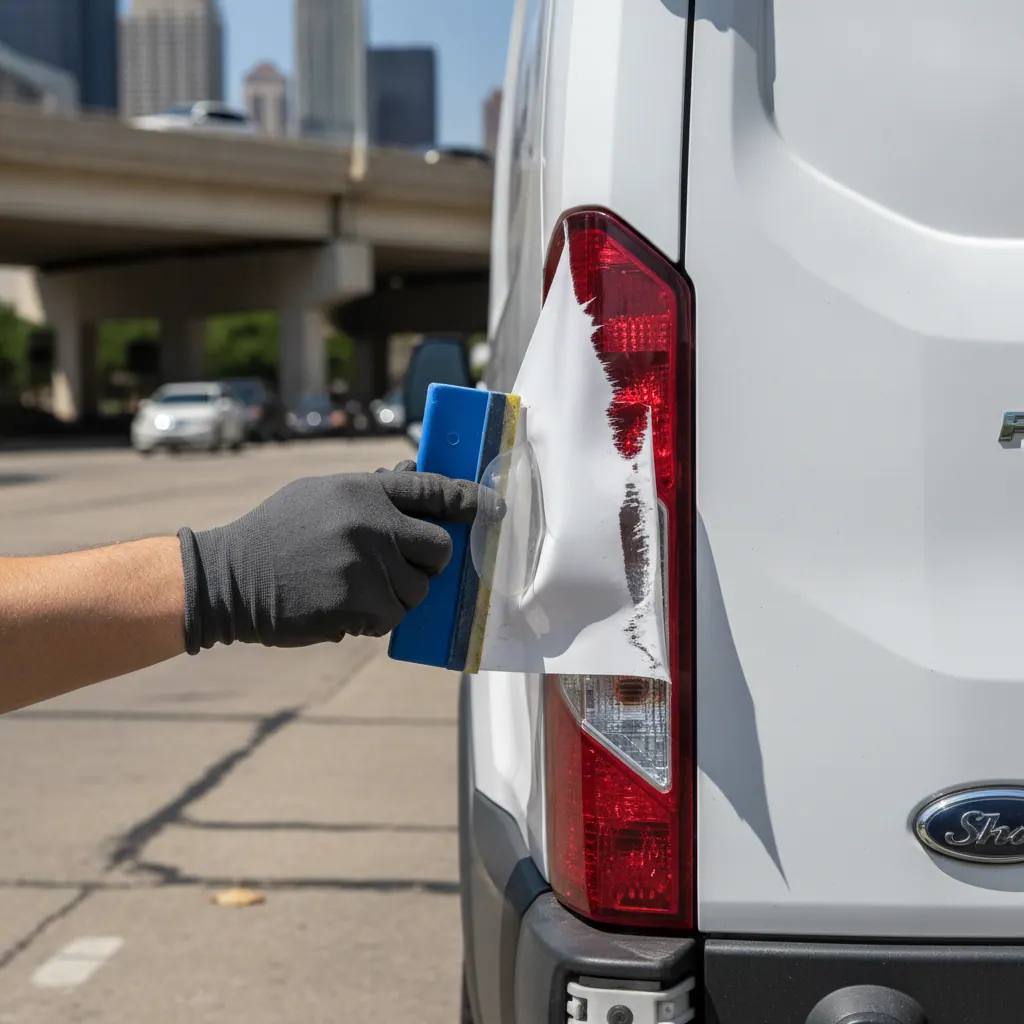
Bubbling and lifting wrap vinyl almost always trace back to three root causes: improper surface prep before install, wrong vinyl material for the application, or post-install heat and UV exposure without an overlaminate. At Chicago Fleet Wraps, we have wrapped 19,400+ vehicles since 2001 and logged zero verified paint-damage claims, so we see every failure mode up close. This guide gives you a direct field diagnosis you can act on today.
Bubbling and lifting wrap vinyl almost always trace back to three root causes: improper surface prep before install, wrong vinyl material for the application, or post-install heat and UV exposure without an overlaminate. At Chicago Fleet Wraps, we have wrapped 19,400+ vehicles since 2001 and logged zero verified paint-damage claims, so we see every failure mode up close. This guide gives you a direct field diagnosis you can act on today.
Why This Matters More in Chicago Than Almost Anywhere
Chicago punishes wraps hard. Vehicles sitting on the Dan Ryan at noon in July hit panel temperatures above 160°F. The same vehicle parks overnight in Portage Park in January at minus 10°F. That 170-degree swing stresses every bond between vinyl and clearcoat. Add road salt on the Kennedy, parking garage exhaust residue in the Loop, and lakefront UV intensity, and you have a genuine stress test running 365 days a year.
Bubbles and lifting edges are not cosmetic annoyances. Left alone, they let moisture and salt migrate under the film. That accelerates adhesive failure across wider panels and, on older or repainted vehicles, can pull at compromised clearcoat. Catching failure early keeps repair costs low and keeps your fleet looking sharp on Wacker Drive or Western Avenue.
The Six Most Common Causes of Bubbling Wrap Vinyl
1. Contaminated Surface at Install Time
This is the leading cause we see on vehicles that arrive for re-wraps. Oil, silicone wax, detailing spray, or even fingerprints left on paint create a barrier between the adhesive and the clearcoat. Air gets trapped at those contamination points. The bubble may not appear for two to eight weeks, which confuses shop owners into blaming the weather or the vinyl brand. It is almost always surface prep.
Fix: A trained installer can sometimes rescue small contamination bubbles within the first 30 days using a wrap squeegee and gentle heat gun work. Panels with widespread contamination require full removal and reinstall after a proper isopropyl alcohol and surface cleaner wipe-down.
2. Calendered Vinyl Instead of Cast
Calendered vinyl is flat-rolled and has internal memory. It wants to return to its flat sheet shape. When it is stretched over curves, compound curves, or recesses like door handles, that memory pulls the film back. The result is lifting edges and bubbles at every contour point. Calendered film also thickens unevenly as it relaxes, creating visible texture differences across a panel.
Chicago Fleet Wraps uses cast vinyl only. Our material list is Avery Dennison MPI 1105 Supercast and 3M IJ180-CV3 or the newer 3M IJ280, always with UV overlaminate. Cast film conforms to compound curves without stress memory. It is more expensive upfront. The longer service life and lower re-wrap frequency make it the correct choice for fleet applications.
Con to acknowledge: Cast vinyl costs more per square foot than calendered stock. If a competitor quotes you significantly less, ask which vinyl class they are using. A lower install price on calendered film often means a re-wrap bill in 18 to 24 months instead of the 5 to 7 year lifespan cast film delivers.
3. Missing or Inadequate Overlaminate
Unlaminated printed wraps degrade faster under UV. The print layer softens and the adhesive bond weakens from the top down. You see this as widespread micro-bubbling that looks like the vinyl is breathing. UV overlaminate seals the print, adds structural stiffness, and slows adhesive degradation by years. Any commercial fleet wrap without overlaminate is a short-term wrap regardless of the base film quality.
Fix: There is no field repair for UV degradation. The panel must be removed and reinstalled with laminated film.
4. Improper Post-Heat Application
Cast vinyl must be post-heated after installation to activate the conformable adhesive fully, especially at edges, bumpers, and mirror wraps. If a shop skips post-heat or uses insufficient temperature, the adhesive never achieves full bond. Edge lifting starts within weeks, accelerated by car washes, rain, or a Chicago wind blast coming off Lake Michigan near Lakeshore Drive.
Fix: Edge lifting caught within the first 60 days can often be pressed back with controlled heat and squeegee pressure. Edges that have already contaminated with dirt or moisture need to be trimmed back to clean film, then the fresh edge is sealed.
5. Application in Wrong Temperature Conditions
Vinyl adhesive needs a surface temperature between roughly 60°F and 90°F to bond correctly. Installing on a vehicle that just came in from a Chicago January morning, even inside an unheated bay, means cold metal that chills adhesive before it can flow into the clearcoat texture. The bond is weak from day one. Bubbles appear quickly.
Our install bay at 4711 N Lamon Ave is climate-controlled year-round. That is not a luxury detail. It is a quality control requirement. Cold-weather installs in non-climate-controlled shops are a primary cause of early failure claims we diagnose on vehicles wrapped elsewhere.
6. Paint or Clearcoat in Poor Condition
Wrap vinyl bonds to clearcoat. If the clearcoat is chalking, peeling, or has been repainted with cheap single-stage paint, the adhesive bonds to a failing surface. The wrap lifts when the paint does. This is one reason our 2,800+ active fleet accounts go through a pre-wrap paint inspection before every install. We have maintained zero verified paint-damage claims across our entire history because we assess the surface before committing to it.
Con to acknowledge: If your vehicle has compromised paint, a wrap is not a fix. It is a temporary mask that will fail and may complicate the eventual repaint. Honest assessment up front saves money and protects the fleet relationship.
Field Repair Decision Tree
- Single small bubble, no dirt inside, film less than 60 days old: Heat gun at low setting, press with squeegee from center outward. Success rate is high if done within the first month.
- Multiple bubbles across one panel, film less than 6 months old: Likely contamination or post-heat failure. Panel removal, surface reclean, reinstall with new film section.
- Edge lifting at bumper or mirror, film less than 1 year old: Trim to clean edge, heat and press. If dirt is underneath, trim back further to uncontaminated film.
- Widespread bubbling across multiple panels, film over 2 years old, no overlaminate: Full re-wrap. UV has compromised the adhesive system. Spot repairs will not hold.
- Bubbles with visible paint lifting underneath: Stop. Do not attempt vinyl repair. Consult a body shop first. Document with photos before any removal.
What a Professional Repair Looks Like at Our Shop
When a fleet vehicle comes in for bubble or lifting diagnosis, our process is straightforward. We inspect the full vehicle surface, not just the reported problem area, because adjacent panels often show early-stage failure that the driver has not noticed yet. We photograph all anomalies before touching anything. Then we provide a written assessment with repair options and costs, usually within the same visit.
Our standard production lifecycle runs 8 days from intake to delivery. For repair-only work on existing wraps, timeline varies by scope. We will tell you exactly what it is at the quote stage. Our quotes are itemized and take about 2 hours to produce. No vague line items.
We also offer free pickup and delivery across Chicagoland. If your fleet is based in Evanston, Schaumburg, or Naperville, we collect the vehicle and return it. Your drivers stay on the road.
Prevention Is Cheaper Than Repair
The best wrap troubleshooting is the kind you never need. Cast vinyl with overlaminate, proper surface prep, climate-controlled install conditions, and post-heat application are the four variables that determine whether a wrap lasts 5 to 7 years or fails in 18 months. All four are shop decisions, not driver decisions. Choosing a shop that controls all four eliminates most of the failure modes in this guide.
Our 2-year workmanship warranty covers installation defects. If a bubble or lifting issue traces back to our install process, we repair it at no charge. We stand behind that because our process controls make warranty claims rare.
Stats Section
Chicago Fleet Wraps was founded in 2001. In 25 years of operation, our team has wrapped more than 19,400 vehicles and currently serves 2,800+ active fleet accounts across Chicagoland. Our verified paint-damage claim count is zero. Those numbers reflect what happens when material selection, surface prep, and install environment are treated as non-negotiable standards rather than cost-cutting targets.
People Also Ask
Next Step
If your wrap is showing bubbles, lifting edges, or widespread delamination, do not wait. Call Chicago Fleet Wraps at (312) 597-1286 or visit us at 4711 N Lamon Ave #7, Chicago IL 60630 in Portage Park. We will schedule your vehicle for a full inspection, produce an itemized repair or replacement quote within 24 hours, and arrange free pickup across Chicagoland if you need it. Fleet pricing is available for multi-vehicle contracts, with discounts starting at 3% for 2 to 4 vehicles and scaling to 15% for 25 or more units under a single agreement. The sooner the diagnosis, the lower the repair cost. Call today.
Ready for a quote? See Vehicle Wrap Cost Chicago or get an itemized quote in 24 hours.
Frequently Asked Questions
Why is my vehicle wrap bubbling after only a few months?
Short-term bubbling within the first one to six months almost always points to one of three install-side failures: contaminated paint surface at application time, use of calendered vinyl instead of cast vinyl, or skipped post-heat work at edges and recesses. Bubbles from these causes often cluster around door handles, bumper edges, or hood creases. A shop with proper surface prep protocols and a climate-controlled install environment eliminates these causes before the vinyl goes on. If your wrap was installed with calendered film or without post-heat, the fix is panel removal and reinstall with correct materials and process.
Can wrap bubbles be repaired without replacing the entire wrap?
Yes, in many cases. Small air bubbles caught within the first 30 to 60 days can be pressed out with a heat gun and squeegee if no dirt or moisture has entered under the film. Edge lifting caught early can be trimmed back to clean film, heated, and pressed down. Panel-level contamination or UV adhesive failure requires section or full-panel replacement, not whole-vehicle replacement, unless failure is widespread. The key variable is timing. Bubbles addressed immediately cost far less to fix than ones left for months while moisture and road salt migrate under the film.
How long should a quality vehicle wrap last before bubbling or lifting?
A properly installed cast vinyl wrap with UV overlaminate should deliver a 5 to 7 year service life without bubbling or significant edge lifting under normal fleet use. Calendered vinyl wraps typically show failure signs in 18 to 36 months, especially in high-thermal-stress environments like Chicago. The material class, overlaminate, install process, and surface prep quality all play a role. Wraps installed in climate-controlled conditions on properly prepared paint, using cast film like Avery Dennison MPI 1105 Supercast or 3M IJ180-CV3 with overlaminate, consistently reach the long end of that lifespan range.