
Custom Food Truck Wraps Chicago | Design & Install
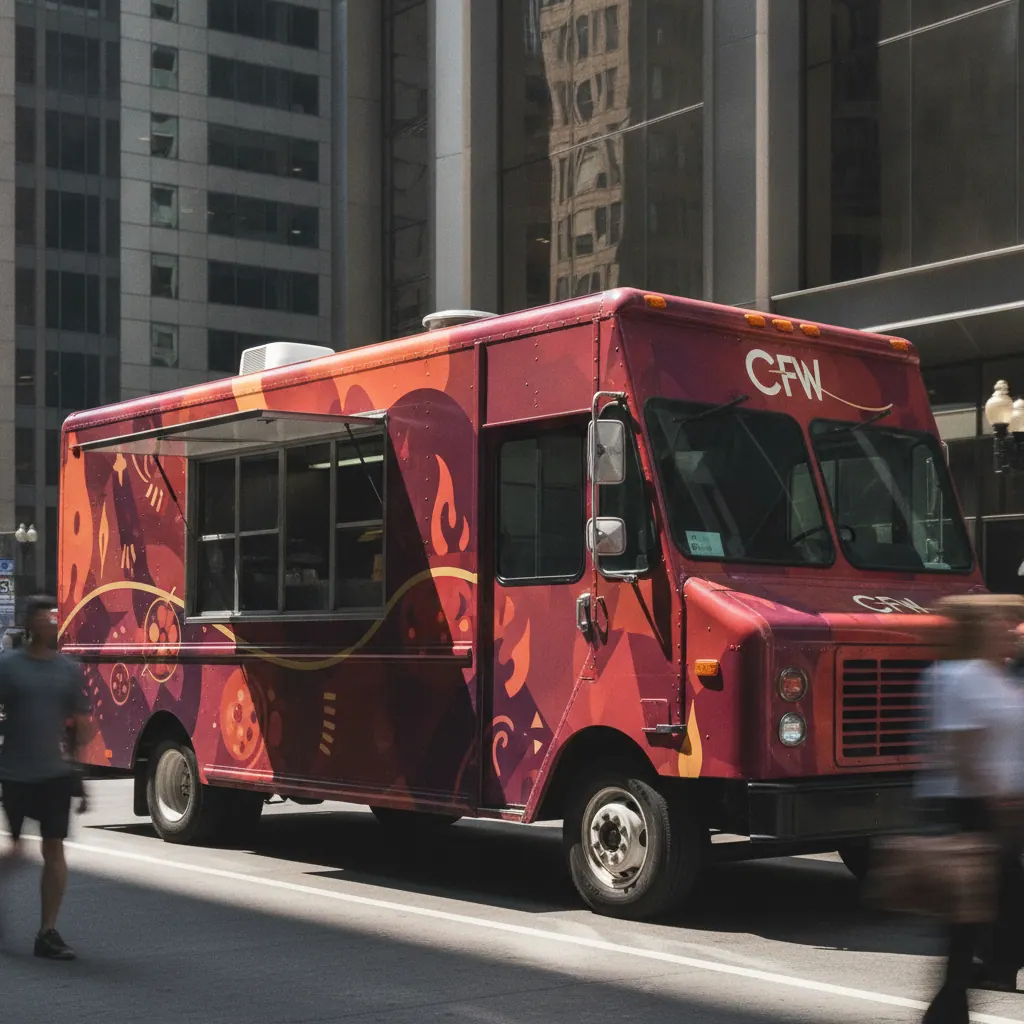
A professional food truck wrap in Chicago costs roughly the same as a base cargo van full wrap, starting near $4,200, and delivers five to seven years of outdoor advertising on every street from Wicker Park to the 290. Chicago Fleet Wraps has wrapped 19,400-plus vehicles since 2001 with zero verified paint-damage claims, using cast vinyl only, never calendered film. This post covers what actually goes into a food truck wrap: design decisions, material choices, Chicago-specific weather considerations, and the full installation process.
A professional food truck wrap in Chicago costs roughly the same as a base cargo van full wrap, starting near $4,200, and delivers five to seven years of outdoor advertising on every street from Wicker Park to the 290. Chicago Fleet Wraps has wrapped 19,400-plus vehicles since 2001 with zero verified paint-damage claims, using cast vinyl only, never calendered film. This post covers what actually goes into a food truck wrap: design decisions, material choices, Chicago-specific weather considerations, and the full installation process.
Why Food Truck Wraps Work as Marketing in Chicago
Chicago is a foot-traffic city. Lunch crowds pack the Loop, Pilsen hosts weekend markets, and festivals run from Millennium Park to Ravenswood every summer. Your truck is a moving billboard hitting all of it. A clean, readable wrap with your menu, logo, and phone number does real work on the Kennedy, parked on Randolph Street, or staged at a Bridgeport block party.
The math is straightforward. A wrap spread over five years costs far less per day than almost any other form of local advertising. The caveat: a bad wrap, one printed on cheap film, applied in a cold garage, or designed without legibility in mind, costs the same money and delivers none of the payoff. That is why materials and process matter before price.
Honest Pros and Cons of Food Truck Wraps
Pros
- Mobile reach: One vehicle hits multiple neighborhoods in a single shift. No static location required.
- Long lifespan: Properly installed cast vinyl lasts five to seven years under Chicago conditions.
- Reversible: Wraps remove cleanly when you rebrand or sell the truck, protecting the underlying paint.
- Speed to market: Our production lifecycle runs eight days from approved design to vehicle back in your hands.
- Fleet pricing: If you operate multiple trucks, discounts start at 3 percent for two to four vehicles and climb to 15 percent for 25 or more under a single contract.
Cons
- Upfront cost: Quality wraps are not cheap. Budget accordingly and treat it as a capital expense, not a supply cost.
- Surface condition matters: Rust, deep dents, and failing paint all cause wrap adhesion problems. The truck needs prep work first, and that costs extra time and money.
- Not a fix for bad branding: A wrap amplifies your brand. If the logo, colors, and messaging are unclear, the wrap just makes unclear branding bigger.
- Maintenance required: Hand washing only. Automated brushes degrade edges and overlaminate over time.
Materials: What We Use and Why It Matters
Chicago Fleet Wraps installs cast vinyl only. We use Avery Dennison MPI 1105 Supercast and 3M IJ180-CV3, along with the newer 3M IJ280, both finished with UV overlaminate. We never install calendered vinyl on a food truck or any other vehicle. Here is the difference in plain terms.
Calendered vinyl is manufactured by pressing warm plastic through rollers. It retains memory of that flat sheet and shrinks back toward flat over time, especially in heat. Chicago summers get into the 90s. A truck sitting in direct sun on a South Side parking lot will see surface temperatures well above air temperature. Calendered film lifts at edges, bubbles over rivets, and fails early.
Cast vinyl is poured and cured in a thin film. It conforms to compound curves, rivet heads, door channels, and the corrugated body panels common on food trucks without fighting the shape. It stays put through Chicago winters where temperatures drop below zero and through the freeze-thaw cycles that crack pavement on Ashland every March.
The UV overlaminate adds a protective layer against UV fading and grease, which is a real concern on a cooking vehicle. It also gives you a choice between gloss, satin, and matte finishes depending on the look you want for your brand.
Design Considerations for Food Trucks Specifically
Food truck design is different from standard fleet van design in a few specific ways.
Service window placement. Your wrap design has to account for the window opening, the menu board area, and any ventilation panels. A designer who has never templated a food truck body will fight these constraints. We template each truck individually before any design goes to print.
Legibility from distance and speed. On the Eisenhower or Lake Shore Drive, a driver has about two seconds to read your truck. Your name and one key identifier, cuisine type or a signature item, need to read instantly. Small fonts and busy backgrounds fail this test every time.
Night visibility. Food trucks often run dinner service. Matte finishes look premium in daylight but go dark at night. Gloss or satin finishes reflect streetlight and keep the truck visible at evening markets in Lincoln Park or Pilsen.
Heat zone awareness. The area directly above the exhaust and near cooking equipment runs hot. We account for this in material selection and application technique so the wrap holds in those zones.
The Installation Process at Chicago Fleet Wraps
Our shop is at 4711 N Lamon Ave #7 in Portage Park on the Northwest Side. Every install happens in our climate-controlled bay. Temperature and humidity control matter because vinyl adhesion is sensitive to both. Cold installs in an unheated garage are one of the most common causes of early wrap failure across the industry.
Here is how our eight-day production lifecycle runs for a food truck wrap:
- Day 1: Truck arrives or we pick it up. We offer free pickup and delivery across Chicagoland. We do a full surface inspection, photograph every panel, and measure for template.
- Days 2 and 3: Design development based on your brand assets and approved brief. If you have an existing logo and brand guide, we work from those. If you need design built from scratch, that is a separate scope we quote upfront.
- Day 4: Design proof to client for approval. Revisions happen here, not after print.
- Days 5 and 6: Print and lamination. We print on approved cast vinyl stock and apply UV overlaminate before any cutting begins.
- Day 7: Install. We use 3M Knifeless Tape for all panel cuts. This method cuts the film without touching the paint underneath. It is a significant reason we carry zero verified paint-damage claims across more than two decades of installs.
- Day 8: Quality inspection and vehicle return. We check every edge, every rivet, every door channel before the truck leaves our bay.
Pricing and Fleet Discounts
A base cargo van full wrap starts at $4,200. Food truck pricing varies based on body size, surface complexity, and the number of cutouts for windows and service equipment. We provide itemized quotes within two hours of your first contact. There are no vague estimates here. Every line item is spelled out before you commit to anything.
If you run more than one truck, our fleet discount structure applies under a single contract:
- 2 to 4 vehicles: 3 percent discount
- 5 to 9 vehicles: 7 percent discount
- 10 to 24 vehicles: 11 percent discount
- 25 or more vehicles: 15 percent discount
We hold 2,800-plus active fleet accounts. A significant portion of those are food and beverage operators who added trucks to their contract as their businesses grew. The discount structure is designed to reward that growth in real dollars.
Warranty and Longevity
Every wrap we install carries a two-year workmanship warranty. Properly maintained wraps on cast vinyl last five to seven years. Maintenance means hand washing, no pressure washing directly at edges, and keeping the truck out of automated brush washes. We give every client a written care guide when the vehicle is returned.
Chicago weather is genuinely hard on wraps. Salt brine on the expressways from November through March works into every edge and seam it can find. That is exactly why we use cast vinyl, why we finish every edge with proper heat forming, and why climate-controlled installation matters from day one.
People Also Ask
What is the difference between cast vinyl and calendered vinyl for food truck wraps?
Cast vinyl is poured into a thin film and cured, making it flexible enough to conform to compound curves, rivets, and corrugated panels common on food trucks. It does not retain memory of a flat shape, so it holds on complex surfaces through heat and cold. Calendered vinyl is pressed flat and tends to shrink back toward flat over time, causing edge lifting and bubbling, especially on vehicles that see direct sun and temperature swings like food trucks in Chicago. Chicago Fleet Wraps uses Avery Dennison MPI 1105 Supercast and 3M IJ180-CV3 or 3M IJ280, never calendered film.
A Note on Our Record
We have been doing this since 2001 in Portage Park. Twenty-five years, 19,400-plus vehicles wrapped, and zero verified paint-damage claims. That last number is not marketing language. It is a direct result of using 3M Knifeless Tape for all cuts, never blading directly on painted metal, and running every install through a trained team in a controlled environment. We are not the only wrap shop in Chicago. We are the one with that record.
Next Step
Call Chicago Fleet Wraps at (312) 597-1286 or stop by our shop at 4711 N Lamon Ave #7, Chicago, IL 60630 in Portage Park. Tell us your truck dimensions, your timeline, and your brand situation. We will have an itemized quote back to you within two hours. Free pickup and delivery across Chicagoland if bringing the truck in is a scheduling problem. The eight-day production clock starts when you approve the design proof.
Ready for a quote? See Vehicle Wrap Cost Chicago or get an itemized quote in 24 hours.
Frequently Asked Questions
How much does a food truck wrap cost in Chicago?
A food truck wrap in Chicago starts near the base cargo van full wrap price of $4,200 and increases based on body size, surface complexity, and the number of window and equipment cutouts. Chicago Fleet Wraps provides itemized quotes within two hours of first contact. Operators running multiple trucks can access fleet discounts from 3 percent on two to four vehicles up to 15 percent on 25 or more vehicles under a single contract.
How long does a food truck wrap last in Chicago weather?
A food truck wrap installed with cast vinyl and UV overlaminate lasts five to seven years under Chicago conditions, including winter road salt exposure and summer heat. Calendered vinyl falls short of that lifespan because it shrinks under temperature extremes and lifts at edges. Proper installation in a climate-controlled bay and regular hand washing extend wrap life. Chicago Fleet Wraps backs every install with a two-year workmanship warranty.
What vinyl material should a food truck wrap use in Chicago?
Food truck wraps in Chicago should use cast vinyl with a UV overlaminate, not calendered vinyl. Cast vinyl conforms to compound curves, rivet heads, and corrugated body panels without pulling away over time. It holds through Chicago's freeze-thaw cycles and summer heat. Chicago Fleet Wraps installs Avery Dennison MPI 1105 Supercast and 3M IJ180-CV3 or the newer 3M IJ280, both finished with UV overlaminate, on every food truck wrap it produces.