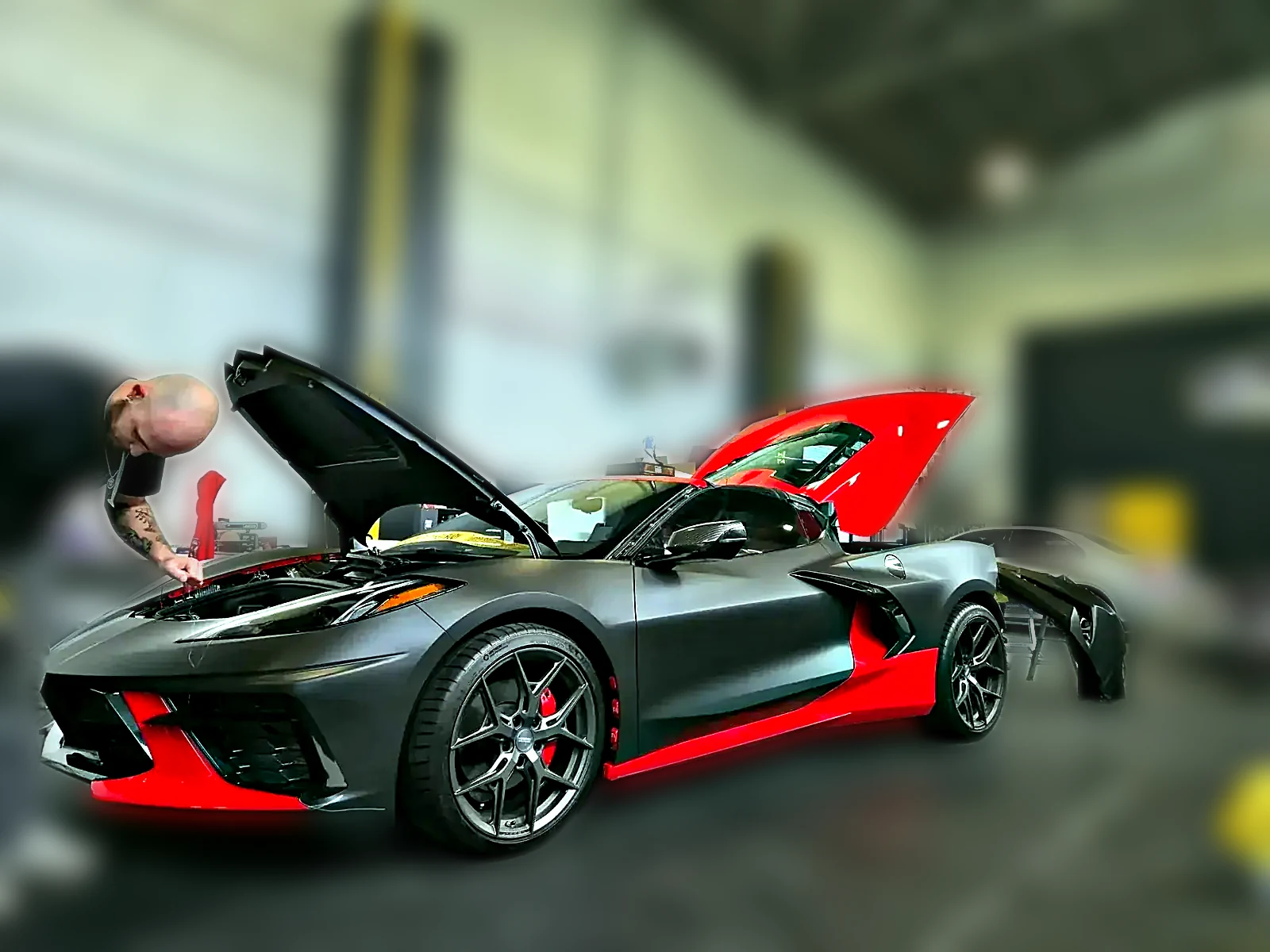
Corvette custom wrap by Chicago Fleet Wraps

Chicago Paint Protection Film vs Vehicle Wrap: Your Wrap Protects the Brand. PPF Protects the Paint.

Quick AnswerPPF is clear urethane film that takes stone chips and keeps the factory paint. A vinyl wrap replaces the color and carries your branding across the whole panel. Chicago Fleet Wraps installs wraps, not paint protection film, so this page compares the two rather than selling film.

Paint protection film and a vinyl wrap do different jobs, and in Chicago the choice usually comes down to whether you are keeping the factory paint or putting a brand on the panel. PPF is clear and protects the paint underneath. A wrap replaces the color. Chicago Fleet Wraps does wraps, not film.

PPF, ceramic coating, or a wrap?

These three get mixed up constantly, so here is the short version. A ceramic coating is a chemical layer. It changes how water and dirt behave on a panel and it makes washing easier. It will not stop a stone. PPF is a physical layer thick enough to absorb an impact. A printed wrap is also a physical layer and it does shield the paint, but you trade away the factory color and gain a surface you can print a brand on.

On commercial work the answer is often not PPF at all. A wrapped van already carries cast vinyl over the sheet metal, and we laminate print with 3M 8518 gloss overlaminate for road salt and UV, so the paint underneath is covered. Where film earns its keep on a fleet is the unwrapped front cap of a box truck, the mirror arms, and the hood of a pickup nobody wants to repaint. On a leased vehicle the logic shifts again: film on the hood, bumper and rockers, pulled before turn-in, hands the paint back the way the lease expects to find it.

What is warranted, and by whom?

Three different terms get blurred together in this category, so here they are apart. A paint protection film carries a manufacturer film warranty against yellowing, cracking and delamination, and that warranty is the film maker's to honor, not the installer's. Chicago Fleet Wraps installs no film, so none of it is ours either way.

On wrap work the terms are ours to state. Chicago Fleet Wraps backs its own installation with a 2-year workmanship warranty covering qualifying installation-related lifting, peeling, bubbling and edge failure under normal use, subject to the written warranty terms, and the printed vinyl is separately covered by a 5-year material warranty for qualifying material defects. Expected service life of 5 to 7 years is neither of those. If a shop quotes you one number that supposedly covers film, labor and service life all at once, ask which company is actually standing behind each part of it.
Why Paint Protection Film?

PPF is a clear urethane film with a self-healing topcoat. It sits on the paint, takes the hit from road debris, and keeps the panel underneath original. A printed wrap also shields paint, but a wrap replaces the factory color and a wrap panel is opaque. PPF is what you pick when the paint itself is the thing worth keeping.

The film is thicker and stiffer than the cast vinyl we print fleet graphics on, and it goes on wet. An installer floats it into place on a slip solution, squeegees the water out from the center, and locks the edges down with heat. That is a different skill from a dry vinyl install, which is why film work and wrap work are rarely bought from the same shop.

What film stops, and what it cannot undo

PPF takes stone chips, grit blasting on the rockers, brush marks from an automatic wash, and bug acid on the nose. Light swirls in the topcoat reflow and disappear as the panel warms. What film cannot do is reach damage that is already in the paint. The film is clear, so a chip or a scratch under it stays visible and cannot be touched without lifting the film off. Anything that needs polishing gets polished before the film goes on, not after.

Which panels actually need film in Chicago?

Coverage follows damage, and damage lands in the same places on almost every vehicle.

  • The front bumper
  • The leading edge of the hood
  • The mirror caps
  • The headlamps
  • The rocker panels just behind the front wheels

Those five areas absorb most of what the road throws.

Chicago adds a second problem. From the first salt run to the spring street sweep, the Kennedy is a slurry of brine and grit and the car ahead of you works like a sandblaster. Salt film creeps into every edge and seam, so on a Chicago vehicle where the film ends matters as much as what it covers. An edge that stops on the visible face of a bumper grows a grey line by March. An edge tucked behind the panel does not.

Partial front, full front, full body

A partial front covers the bumper, a strip across the leading edge of the hood, and the mirror caps. It is the smallest job that stops the chips that matter. A full front adds the whole hood, both front fenders and the headlamps, so there is no cut line across the hood to look at or to clean. Full body carries film onto the doors, rockers, roof and the quarters behind the rear wheels, which is the choice on a car whose paint is hard or expensive to refinish.

How do you look after film through a Chicago winter?

Wash it more often in winter, not less. Salt sitting on an edge is what eventually finds its way under film. Hand wash with a pH-neutral soap and a soft mitt, rinse out the wheel wells and rockers where brine collects, and keep a pressure washer wand well back from the panel and off the film edges completely. A wand held close to a seam will lift film that would otherwise have lasted years.

Skip abrasives and anything with grit in it, and take tar and bug splatter off the nose sooner rather than later. If an edge ever starts to lift, get it back to the shop that installed it before it catches air. A corner caught early is a reheat. The same corner caught in July is a new piece of film.

So what does Chicago Fleet Wraps actually do?

Wraps, and only wraps. We do not install paint protection film, do not stock it and will not quote it, so if film is the right answer for your vehicle, take it to a film installer. What we do install is printed and color-change vinyl in Avery Dennison MPI 1105 and 3M IJ180-CV3 cast film, laminated with 3M 8518 gloss overlaminate against road salt and UV.

Six installers work five bays across roughly 6,000 square feet in Portage Park, with two in-house designers next to production. Across 19,400+ vehicles wrapped the record on paint is zero verified paint damage claims, which is the number that matters when you hand over a vehicle you care about. The shop holds 4.9 stars across 51 Google reviews and is women-owned.

Vehicles stay inside. Secure indoor overnight storage means nothing sits out on Lamon Avenue waiting for a bay. Multi-vehicle wrap work runs on a volume ladder: 3 percent off at two to four vehicles, 7 percent at five to nine, 11 percent at ten to twenty-four, and 15 percent at twenty-five or more. Free pickup covers Cook, DuPage, Kane, Lake, Will and McHenry counties. Send the year, make and model of the vehicle you want wrapped. You will hear back within 2 business hours. The itemized quote follows within 24 hours once we have what we need.

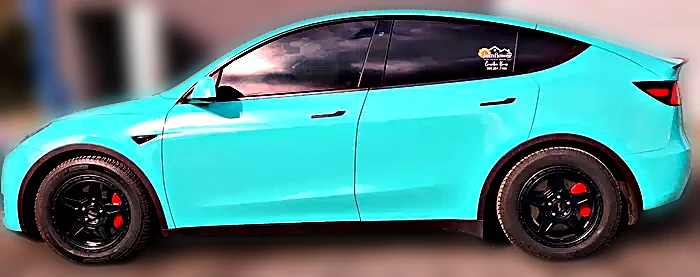
Tesla color change wrap by Chicago Fleet Wraps
Tesla color change wrap by Chicago Fleet Wraps · (312) 597-1286
Related Services: ·

Last Updated: April 2, 2026

Other Wrap Finishes & Protection Options

Explore every vinyl finish we install.

→ Color-Shift → Carbon Fiber → Chrome Delete → Color Change → Gloss → Two-Tone → Matte → Chrome Wraps → Satin → Resale Value

Free Quote · 2-hour response

Ready to protect your car?

Itemized pricing in your inbox within 24 hours. Not a range. 19,400+ vehicles wrapped. HP Latex, Avery, and 3M films. Pickup across Chicagoland.

Get a Fleet Quote →

or call (312) 597-1286

Written by Roy Wraps, Founder of Chicago Fleet Wraps. 25 years in the wrap industry. Avery Dennison certified installer; in-house HP Latex printing.