
When Vehicle Wraps Go Wrong | Chicago Fleet Wraps
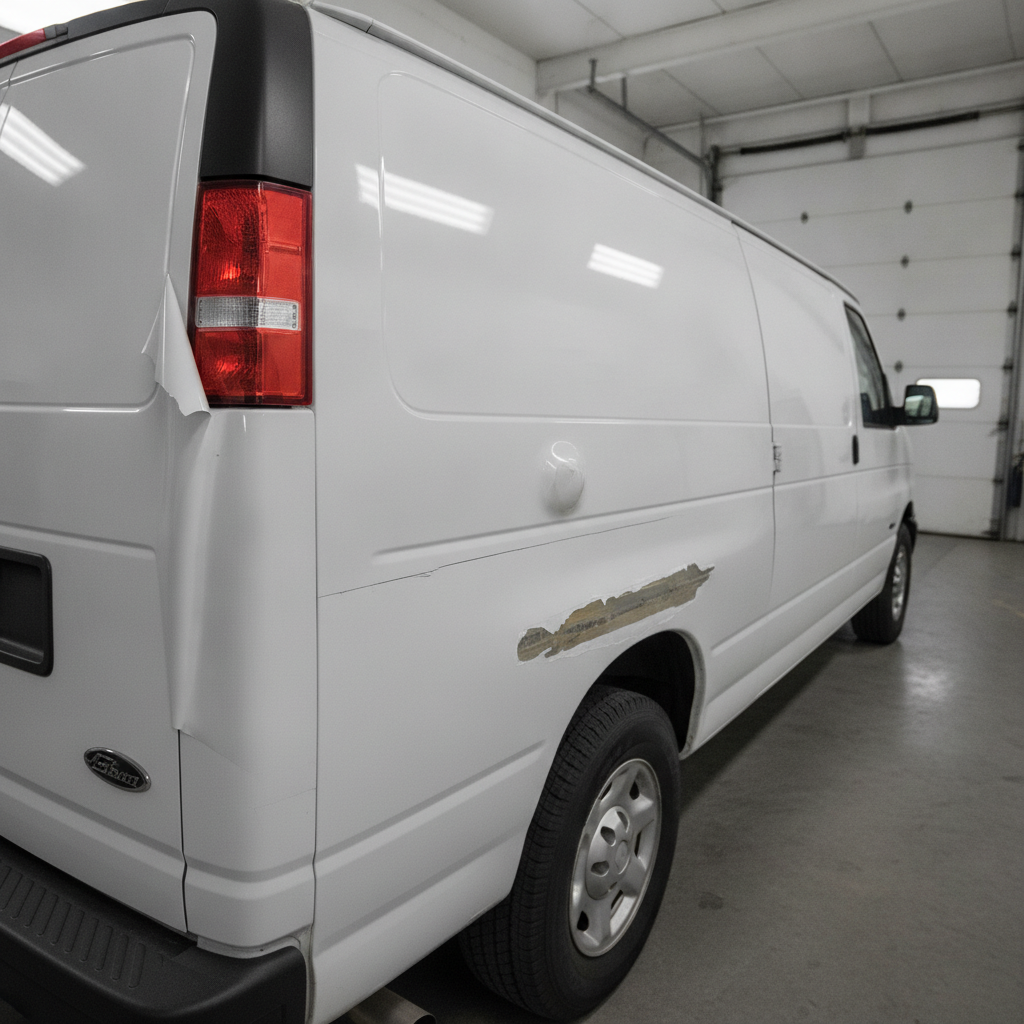
Vehicle wraps fail for predictable reasons: wrong vinyl, poor surface prep, bad installation conditions, and no post-install care plan. Most failures show up within the first six months and are entirely preventable. Knowing what goes wrong, and why, saves you from a costly redo and protects your fleet's paint in the process.
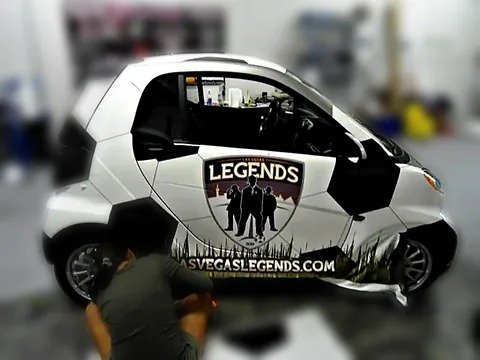
Vehicle wraps fail for predictable reasons: wrong vinyl, poor surface prep, bad installation conditions, and no post-install care plan. Most failures show up within the first six months and are entirely preventable. Knowing what goes wrong, and why, saves you from a costly redo and protects your fleet's paint in the process.
The Real Cost of a Wrap Gone Wrong
A failed wrap is not just an eyesore. It is a rolling advertisement for poor workmanship, and it is yours. Peeling edges on a cargo van crawling down the Kennedy Expressway at rush hour tell every driver behind you exactly what kind of operation you run. Beyond the brand damage, you are looking at removal costs, possible paint repair, and a full redo, which adds up fast when you started with a $4,650 base investment on a single cargo van.
We have wrapped 19,400+ vehicles since 2001. We have seen every failure mode in the field. Here is what actually goes wrong and what you should demand from any installer before you hand over your keys.
Failure Mode #1: The Wrong Vinyl
This is the single biggest source of premature failure in the Chicago market. There are two broad categories of wrap vinyl: cast and calendered. Calendered vinyl is cheaper, stiffer, and manufactured by a different process. It works fine on flat surfaces and short-term applications. It does not work on complex curves, door handles, rivets, or compound-radius panels. When it fails, it fails fast. Edges lift. Seams gap. Shrinkage pulls panels away from recesses.
Chicago weather makes this worse. We go from subzero wind chills on the Northwest Side in January to 95-degree heat indexes on the South Side in August. Calendered vinyl cannot handle that thermal swing. It has too much memory. It wants to return to its original flat shape, and it will, usually starting at the most exposed corners of your vehicle.
At Chicago Fleet Wraps, we use cast vinyl only. That means Avery Dennison MPI 1105 Supercast and 3M IJ180-CV3 (and the newer 3M IJ280), both with UV overlaminate. Cast vinyl is manufactured by a process that gives it dimensional stability. It conforms to compound curves and stays conformed. We never install calendered vinyl. Full stop.
When you talk to an installer, ask them directly: what specific product are you using? If they cannot name the product, walk away. If they say anything with the word "economy" or "short-term" in the product name, walk away.
Failure Mode #2: Contaminated or Unprepared Surfaces
Vinyl bonds to paint. It does not bond to grease, wax, silicone, road tar, or previous adhesive residue. A vehicle that looks clean to the eye can still be covered in invisible surface contamination that will cause adhesion failure within weeks.
Chicago fleet vehicles accumulate road salt from November through March. That salt gets into panel seams, around mirror housings, and along rocker panels. If those surfaces are not properly decontaminated before installation, you get lifting at exactly the spots that see the most stress.
Proper prep includes a wash, a clay bar process or chemical decontamination, a wipe-down with isopropyl alcohol, and a final inspection under proper lighting. It also means inspecting the paint condition. Wrap does not hide failing paint. It accelerates it. Blistered or peeling clearcoat under a wrap will lift the wrap from below.
Ask your installer what their prep protocol is. If the answer is "we wash it and wipe it down," that is not enough for a Chicago fleet vehicle with real road miles on it.
Failure Mode #3: Wrong Installation Conditions
Vinyl adhesive has a temperature window. Too cold and the adhesive will not activate properly. Too hot and it activates too fast, trapping air and making repositioning impossible. The ideal install environment is climate-controlled, between 65 and 75 degrees Fahrenheit, with controlled humidity.
Installers who work out of unheated garages in Bridgeport in February or park the vehicle outside in direct sun in Wicker Park in July are fighting physics. The vinyl loses. You pay for it.
Our install bay in Portage Park at 4711 N Lamon Ave #7 is climate-controlled year-round. That is not a luxury. It is a requirement for consistent adhesion across 19,400+ installs and 2,800+ active fleet accounts. We also follow an 8-day production lifecycle, which includes proper outgassing time after installation before the vehicle goes back into service. Rushing that step causes bubbles.
Failure Mode #4: Cutting Directly on the Paint
Traditional box cutters and snap-blade knives used directly on a vehicle panel will score the paint. Every time. Installers who cut seams and edges freehand on the vehicle surface are leaving micro-cuts in your clearcoat. Those cuts are invisible under the wrap. When the wrap comes off, the damage is there. This is how paint damage claims happen.
We cut with 3M Knifeless Tape. The tape is laid under the vinyl during installation and pulled to create a clean cut without any blade touching the paint surface. It is more time-consuming. It is the correct way to do this work. We carry 0 verified paint-damage claims across our entire history because of this process and others like it.
Ask any installer how they cut seams on the vehicle. If the answer involves a blade on the paint, that is your answer.
Failure Mode #5: Ignoring Post-Install Care
A wrap installed correctly will still fail early if it is maintained wrong. Automatic car washes with rotating brushes abrade the laminate and lift edges. Pressure washing seams directly causes lifting. Petroleum-based cleaners attack the adhesive at the edges. Parking against curbs on narrow Chicago streets repeatedly impacts the lower rocker panels and accelerates edge lifting.
The care protocol is simple. Hand wash or touchless wash only. Avoid direct high-pressure spray on seams and edges. Use a wrap-safe cleaner. Address any lifting edge immediately rather than letting it grow. A small lift caught in week two is a five-minute fix. The same lift ignored for three months becomes a panel redo.
What Good Looks Like
A properly installed cast vinyl wrap on a well-prepped surface in a climate-controlled bay, cut with Knifeless Tape and allowed to outgas properly, should last 5 to 7 years in Chicago conditions. It should come off cleanly at end of life without damaging the paint underneath. That is the standard.
Our wraps carry a 2-year workmanship warranty. We offer free pickup and delivery across Chicagoland so your vehicles are not out of service any longer than necessary. For fleets, our fleet discount structure gives you 3% off on contracts covering 2 to 4 vehicles, 7% on 5 to 9, 11% on 10 to 24, and 15% on 25 or more vehicles under a single contract. The base full wrap on a cargo van starts at $4,650. We provide itemized quotes in 2 hours.
We have completed 600+ Rivian EV installs, which are among the most geometrically complex wrapping jobs in the current market. If a process works on a Rivian, it works on your Transit van.
How to Vet Any Wrap Installer
- Ask for the specific vinyl product name. Cast or calendered is not an answer. MPI 1105 or IJ180-CV3 is an answer.
- Ask about the install environment. Climate-controlled or not. If not, ask how they manage temperature in January and July.
- Ask about their cutting method. Knifeless Tape or blade on paint. The answer tells you everything.
- Ask about their prep protocol. Wash only is not enough. Decontamination is required.
- Ask about warranty terms. Get them in writing. A verbal warranty is worth nothing when your wrap is peeling in month eight.
- Ask for references from fleet customers, not just one-off car builds. Fleet work is different. Volume, consistency, and turnaround time matter in ways single installs do not test.
People Also Ask
Can a bad vehicle wrap damage the paint underneath?
Yes, but the damage almost always comes from the installation process, not the vinyl itself. Installers who cut seams and overlaps with a blade directly on the vehicle panel score the clearcoat, leaving damage that is hidden under the wrap and only visible at removal. Poor surface prep, particularly on vehicles with already-failing paint, can also cause clearcoat to lift with the wrap. Using Knifeless Tape instead of blades on the paint surface eliminates the cutting risk. Chicago Fleet Wraps carries zero verified paint-damage claims across 19,400+ installs because of this approach.
How long should a vehicle wrap last in Chicago's climate?
A cast vinyl wrap installed correctly in Chicago should last 5 to 7 years. Chicago is a demanding market: road salt from November through March, freeze-thaw cycling, summer heat, and UV exposure all stress the material and adhesive. Calendered vinyl typically fails in 2 to 3 years under these conditions, sometimes sooner. Cast vinyl from manufacturers like Avery Dennison and 3M, installed with proper prep and in a climate-controlled bay, holds up through the full thermal range Chicago delivers across a typical year.
What are the early warning signs that a vehicle wrap is failing?
Edge lifting is usually the first visible sign, particularly around mirrors, door handles, and lower body panels. Small bubbles that do not dissipate within the first two weeks of installation indicate adhesion problems or insufficient outgassing time. Discoloration or hazing of the laminate points to UV breakdown, often from missing or low-quality overlaminate. Shrinkage at seams, where the vinyl pulls back and exposes the paint line, means calendered vinyl was used or the installation was done in cold conditions. Any of these signs caught early can often be corrected. Left alone, they progress to full panel failure.
Ready for a quote? See Vehicle Wrap Cost Chicago or get an itemized quote in 2 hours.
Frequently Asked Questions
Can a bad vehicle wrap damage the paint underneath?
Yes, but the damage almost always comes from the installation process, not the vinyl itself. Installers who cut seams with a blade directly on the vehicle panel score the clearcoat, leaving damage hidden under the wrap and only visible at removal. Using Knifeless Tape instead of blades eliminates this risk. Chicago Fleet Wraps carries zero verified paint-damage claims across 19,400+ installs because of this method.
How long should a vehicle wrap last in Chicago's climate?
A cast vinyl wrap installed correctly in Chicago should last 5 to 7 years. Road salt, freeze-thaw cycling, summer heat, and UV exposure all stress the material. Calendered vinyl typically fails in 2 to 3 years under these conditions. Cast vinyl from Avery Dennison or 3M, installed in a climate-controlled bay with proper prep, holds up through the full range Chicago delivers.
What are the early warning signs that a vehicle wrap is failing?
Edge lifting around mirrors, door handles, and lower panels is usually first. Bubbles that do not clear within two weeks indicate adhesion or outgassing problems. Hazing of the laminate points to UV breakdown from missing overlaminate. Shrinkage at seams means calendered vinyl was used or the install was done in cold conditions. Early signs caught quickly can often be corrected. Ignored, they progress to full panel failure.