
Half Vehicle Wrap Chicago | Partial Wrap Options & Pricing
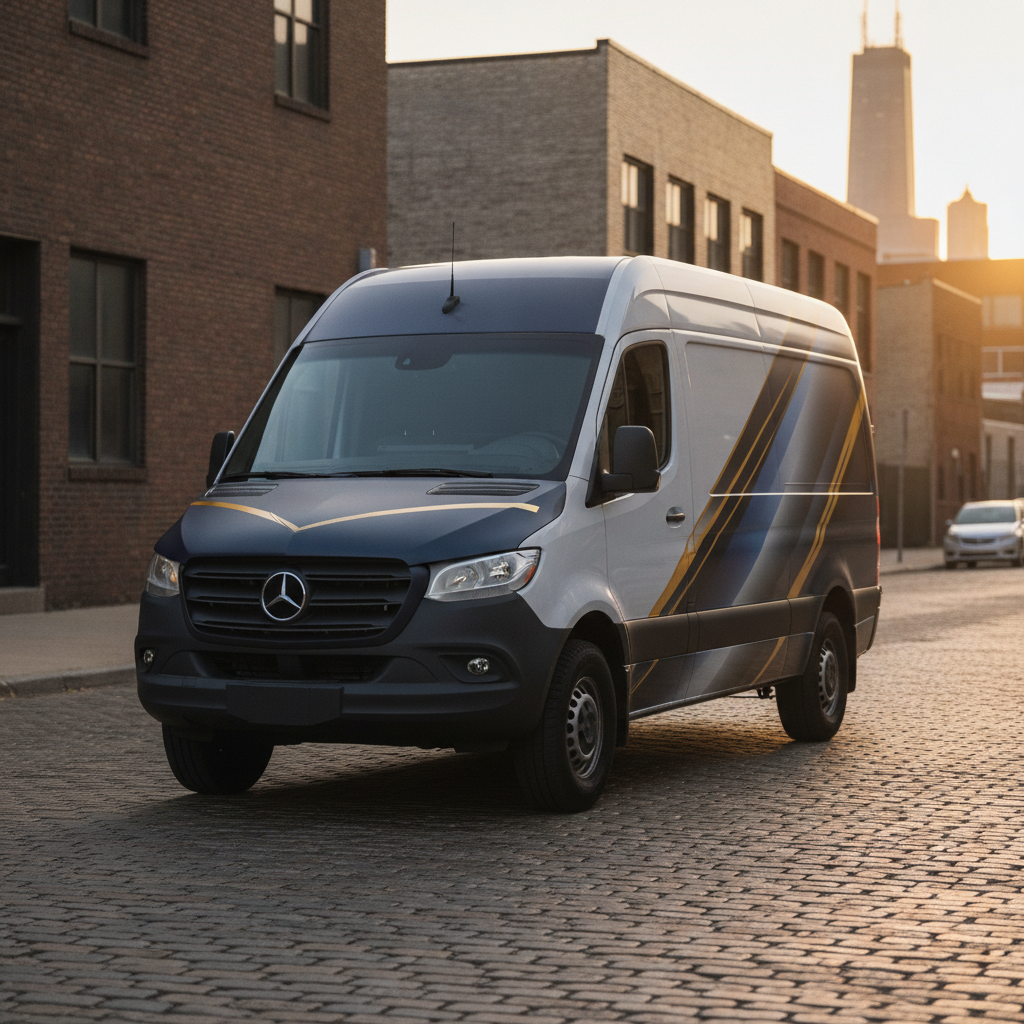
A half vehicle wrap covers roughly 50 percent of a vehicle's exterior, typically the lower body panels, rear, and sides, leaving the roof and hood in factory paint or a matching base color. Chicago Fleet Wraps has wrapped 19,400+ vehicles since 2001 and recorded zero verified paint-damage claims across every job, including thousands of partial installs. If your budget or brand design calls for partial coverage, a half wrap is often the most cost-effective path to street-level visibility.
A half vehicle wrap covers roughly 50 percent of a vehicle's exterior, typically the lower body panels, rear, and sides, leaving the roof and hood in factory paint or a matching base color. Chicago Fleet Wraps has wrapped 19,400+ vehicles since 2001 and recorded zero verified paint-damage claims across every job, including thousands of partial installs. If your budget or brand design calls for partial coverage, a half wrap is often the most cost-effective path to street-level visibility.
What Counts as a Half Wrap vs. a Partial Wrap?
People use these terms interchangeably. Here is how we define them at Chicago Fleet Wraps:
- Half wrap: Approximately 40 to 60 percent coverage. Typically wraps both sides, the rear, and sometimes the hood. The roof stays bare or receives a vinyl cap.
- Quarter wrap: Covers the rear third of the vehicle only. Common on pickup trucks and cargo vans. Good for contact info and logo placement without touching the body sides.
- Spot or decal wrap: Individual panels, doors, or graphic elements applied without full-panel coverage. Low material cost, high design flexibility.
- Three-quarter wrap: Covers everything except the hood and roof. Often indistinguishable from a full wrap at street speed, but saves vinyl on surfaces drivers rarely see.
None of these options is automatically better. Your vehicle shape, paint condition, and brand guidelines determine which makes sense. We walk through that decision during every 2-hour itemized quote before a single sheet of vinyl gets cut.
Chicago-Specific Reasons to Consider a Partial Wrap
Running routes along the Kennedy, Eisenhower, or Dan Ryan means your vehicle sits in stop-and-go traffic for hours every week. Drivers and pedestrians see the sides and rear far more than the roof. A half wrap targeting those surfaces captures the same impressions as a full wrap on those high-visibility zones.
Chicago winters also create a practical case for partial wraps. Salt brine goes down on the Stevenson and 290 corridor from November through March. Road film builds fastest on rocker panels and lower door skins. Wrapping those exact surfaces protects factory paint from salt damage while leaving the roof, which sees less road-spray impact, in its original condition. Our cast vinyl, either Avery Dennison MPI 1105 Supercast or 3M IJ180-CV3 with UV overlaminate, holds up in freeze-thaw cycles that destroy cheaper calendered films. We never install calendered vinyl. Period.
If your operation covers neighborhoods like Logan Square, Wicker Park, or Pilsen where parallel parking is constant, door dings are a reality. Vinyl on the lower body panels adds a layer of micro-abrasion resistance. It will not stop a shopping cart, but it blunts light contact scratches.
Half Wrap Pricing at Chicago Fleet Wraps
Our full cargo van wrap is priced at $4,200. A half wrap on the same van runs significantly less because material and labor both drop proportionally. Exact pricing depends on panel count, vehicle height, and graphic complexity. That is why we build a line-item quote for every job before you commit. You see vinyl square footage, labor hours, and design fees as separate line items, not a single opaque number.
General pricing tiers for partial wraps across common vehicle classes:
- Sedan or crossover, half wrap: Contact us for current quote. Design complexity and paint color both affect final cost.
- Full-size pickup truck, three-quarter wrap: Priced below a full wrap; the cab roof and bed floor are excluded.
- Cargo van, half wrap: Rear doors, lower body rails, and both side panels below the beltline. Quoted individually.
- Box truck, spot or quarter wrap: Rear roll-up door plus lower cab panels. High visibility at loading docks and delivery stops.
Fleet discounts apply to partial wraps under a single contract: 3 percent off for 2 to 4 vehicles, 7 percent for 5 to 9, 11 percent for 10 to 24, and 15 percent for 25 or more. A contractor running 12 vans with half wraps under one agreement gets 11 percent off the entire order. That is a real number, not a negotiating tactic.
Our Short Stats Block
Context matters when you are choosing a wrap shop. Here is what our own job records show:
- 19,400+ vehicles wrapped since we opened in Portage Park in 2001.
- Zero verified paint-damage claims across 25 years of installs, including every partial and half wrap we have completed.
- 2,800+ active fleet accounts currently on service agreements with us.
- 2-hour itemized quotes so you know exactly where every dollar goes before signing anything.
We are not the newest shop in Chicago. We are the one that has been doing this longest without a single paint-damage claim on the books.
The Real Pros and Cons of a Half Wrap
Pros
- Lower upfront cost. Less vinyl, less labor. You get brand presence without paying for surfaces that face the sky.
- Faster turnaround. Our 8-day production lifecycle applies to full wraps. Partial wraps on standard vehicles can move quicker depending on queue.
- Paint protection where it counts most. Lower panels take the most road debris, salt, and brush contact in Chicago traffic. Wrapping them protects the highest-risk surfaces.
- Easier spot repair. If a side panel gets damaged, a partial wrap is simpler and cheaper to replace than peeling and reprinting a full-vehicle graphic.
- Works on imperfect paint. A full wrap over poor factory paint can telegraph every blemish. A half wrap lets you skip panels where the paint is already compromised.
Cons
- Color matching is hard. If your vehicle is white, a half wrap on a white base works cleanly. If you want a dark-color lower half on a silver vehicle, the transition line needs careful design. Paint and vinyl never match perfectly over time.
- Less total brand coverage. A full wrap turns a vehicle into a moving billboard on every surface. A half wrap leaves real estate unused.
- Transition edges need maintenance. Every vinyl edge is a potential peel point. A half wrap has more exposed edges than a full wrap, meaning more points to watch at annual inspection.
- Not ideal for complex full-vehicle designs. If your brand image requires a graphic that flows from hood to bumper, cropping it at mid-door breaks the visual story.
How We Install Partial Wraps
Every install at our Portage Park bay at 4711 N Lamon Ave happens in a climate-controlled environment. Temperature matters. Cold vinyl loses elasticity and will not conform to complex curves. We keep the bay at a controlled temperature year-round so February installs perform the same as August installs.
We use 3M Knifeless Tape for all film cuts. No blade touches your paint during a panel edge cut. The tape creates a clean, precise termination line along body contours without scoring clearcoat. For a half wrap, the beltline cut is the critical moment. Done with a blade, that cut can leave a score mark. Done with Knifeless Tape, it does not. That is one reason our paint-damage claim count stays at zero.
We offer free pickup and delivery across Chicagoland. Schedule a drop, we collect the vehicle, complete the wrap in our bay, and return it to your location. Fleet operators with multiple units in rotation find this valuable because vehicles stay in service longer with less downtime coordination.
Fleet Partial Wraps and Volume Pricing
Most of our 2,800+ active fleet accounts run partial wraps on at least a portion of their vehicles. A plumbing contractor might run full wraps on high-visibility service vans and half wraps on work trucks that spend most of their time on job sites. One contract covering both qualifies for the fleet discount tier based on total unit count.
If you are managing a mixed fleet, bring the full vehicle list to your quote session. We build pricing against the entire order, not vehicle by vehicle. That single-contract structure is how smaller fleets in the 5 to 9 vehicle range open up 7 percent savings they would otherwise miss.
Wrap Lifespan on Partial Installs
Our cast vinyl carries a 5 to 7 year lifespan under normal Chicago conditions. That accounts for UV exposure, salt seasons, and car washes. Our 2-year workmanship warranty covers edge lift, bubbling, and installation defects. It does not cover physical damage from collisions or pressure washing at close range. Partial wraps on lower panels see more road debris than rooftop panels, so we recommend annual edge inspections for any vehicle running heavy highway miles on routes like I-90 or I-94.
People Also Ask
How much does a half vehicle wrap cost in Chicago?
A half vehicle wrap in Chicago costs less than a full wrap because it uses fewer materials and less installation labor. Chicago Fleet Wraps prices full cargo van wraps at $4,200. A half wrap on the same van runs proportionally lower depending on panel count and graphic complexity. Fleet accounts covering 2 to 4 vehicles receive a 3 percent discount, scaling to 15 percent for 25 or more vehicles under one contract. Call (312) 597-1286 for a 2-hour itemized quote specific to your vehicle class and coverage area.
Does a partial wrap damage car paint?
A properly installed partial wrap does not damage factory paint. Chicago Fleet Wraps has completed over 19,400 vehicle wraps since 2001 and has recorded zero verified paint-damage claims. The key factors are cast vinyl film, controlled installation temperature, and using 3M Knifeless Tape for panel edge cuts instead of a blade. Calendered vinyl and blade cutting on paint are the common causes of wrap-related paint damage at other shops. We use neither.
How long does a half wrap last on a vehicle driven in Chicago winters?
Cast vinyl wraps installed by Chicago Fleet Wraps carry a 5 to 7 year lifespan under Chicago weather conditions, including salt seasons and freeze-thaw cycles. We use Avery Dennison MPI 1105 Supercast and 3M IJ180-CV3 with UV overlaminate, both rated for exterior automotive use in harsh climates. A 2-year workmanship warranty covers installation defects including edge lift. Vehicles on heavy highway routes should have wrap edges inspected annually to catch early lifting before it extends.
Ready for a quote? See Van Wraps Chicago or get an itemized quote in 2 hours.
Frequently Asked Questions
How much does a half vehicle wrap cost in Chicago?
A half vehicle wrap in Chicago costs less than a full wrap because it uses fewer materials and less installation labor. Chicago Fleet Wraps prices full cargo van wraps at $4,200. A half wrap on the same van runs proportionally lower depending on panel count and graphic complexity. Fleet accounts covering 2 to 4 vehicles receive a 3 percent discount, scaling to 15 percent for 25 or more vehicles under one contract. Call (312) 597-1286 for a 2-hour itemized quote specific to your vehicle class and coverage area.
Does a partial wrap damage car paint?
A properly installed partial wrap does not damage factory paint. Chicago Fleet Wraps has completed over 19,400 vehicle wraps since 2001 and has recorded zero verified paint-damage claims. The key factors are cast vinyl film, controlled installation temperature, and using 3M Knifeless Tape for panel edge cuts instead of a blade. Calendered vinyl and blade cutting on paint are the common causes of wrap-related paint damage at other shops. Chicago Fleet Wraps uses neither.
How long does a half wrap last on a vehicle driven in Chicago winters?
Cast vinyl wraps installed by Chicago Fleet Wraps carry a 5 to 7 year lifespan under Chicago weather conditions, including salt seasons and freeze-thaw cycles. The shop uses Avery Dennison MPI 1105 Supercast and 3M IJ180-CV3 with UV overlaminate, both rated for exterior automotive use in harsh climates. A 2-year workmanship warranty covers installation defects including edge lift. Vehicles on heavy highway routes should have wrap edges inspected annually to catch early lifting before it spreads.