
Fleet Wrap Pricing Explained | Chicago Fleet Wraps
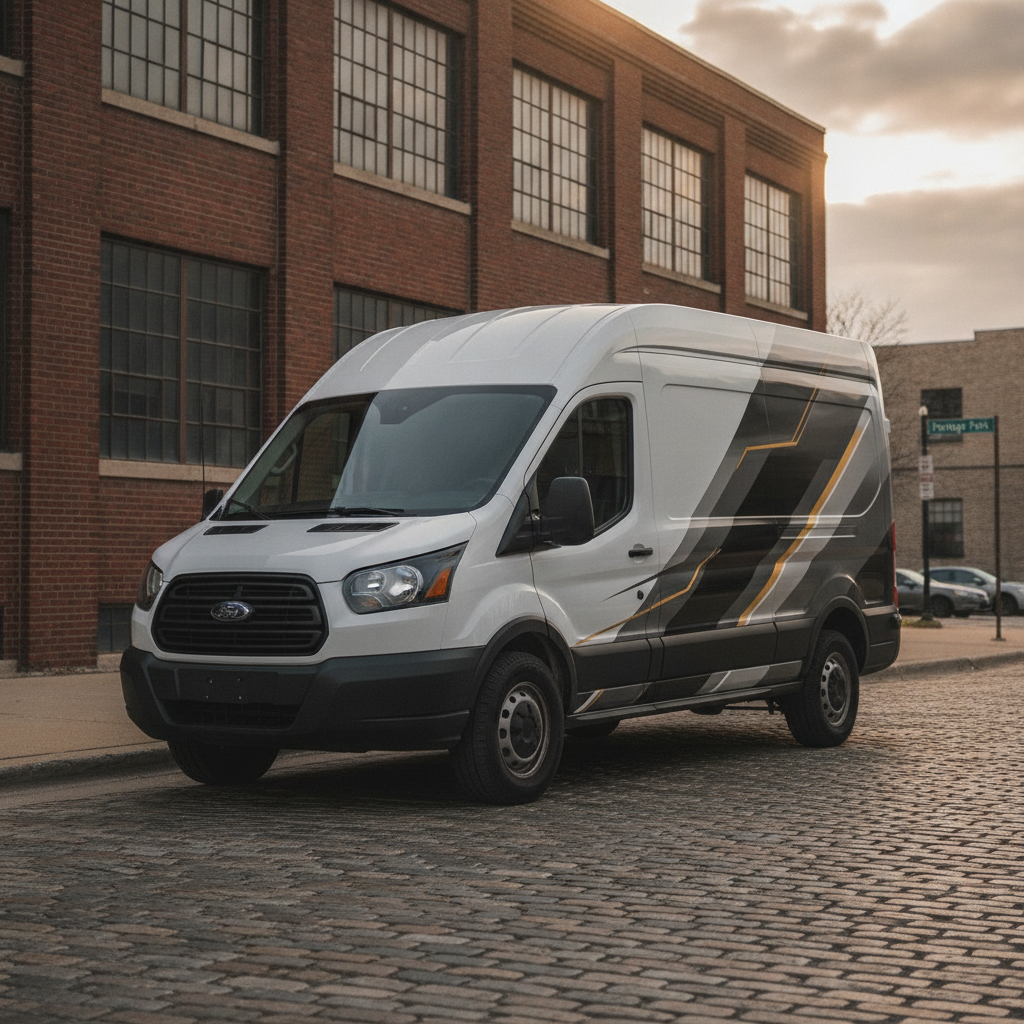
A full wrap on a standard cargo van runs $4,200 at Chicago Fleet Wraps, but that number shifts based on vehicle size, surface complexity, material choice, and how many units you are wrapping at once. Over 25 years and 19,400 vehicles wrapped, we have built a repeatable quoting process that produces an itemized estimate within 2 hours. This page breaks down every line item so you can read a quote, compare shops, and know exactly what you are paying for.
A full wrap on a standard cargo van runs $4,200 at Chicago Fleet Wraps, but that number shifts based on vehicle size, surface complexity, material choice, and how many units you are wrapping at once. Over 25 years and 19,400 vehicles wrapped, we have built a repeatable quoting process that produces an itemized estimate within 2 hours. This page breaks down every line item so you can read a quote, compare shops, and know exactly what you are paying for.
Why Wrap Pricing Confuses Fleet Buyers
Most shops give you a single number. No line items, no explanation. You have no idea whether you are paying for cast vinyl or cheap calendered film, whether installation labor is included, or whether that price covers design. When a quote looks low, something is usually missing. When it looks high, you cannot tell whether the premium is justified. This page fixes that problem by showing you what every major cost driver actually is.
The Four Cost Drivers in Every Quote
1. Vehicle Size and Surface Area
Wraps are priced by square footage of vinyl, not by vehicle type. A Transit full-size cargo van has roughly 400 to 450 square feet of wrappable surface. A smaller Sprinter High Roof runs closer to 500 square feet because of that tall roofline. A Rivian R1T pickup sits in a different category entirely because of its complex body sculpting and EV-specific panel geometry. We have completed over 600 Rivian EV installs, which means we have hard data on material waste and labor hours for those vehicles. Generic shops estimating Rivian wraps from Transit experience will under-quote on material and over-run on labor.
The takeaway: always ask the shop for the square footage figure they are quoting. If they cannot give it to you, they are estimating from a gut number, not a measured surface.
2. Wrap Coverage Level
Full wraps cover every painted panel. Partial wraps cover a defined zone, usually the sides and rear, leaving the cab or hood in factory paint. Spot graphics cover specific areas only. The cost difference between a partial and a full wrap is real, but the value difference depends on your branding goals. A partial wrap on a white Transit can look nearly as complete as a full wrap if the design accounts for the exposed paint. On a dark-colored vehicle, a partial wrap almost always looks incomplete. Be honest with your shop about the vehicle's base color before choosing partial coverage.
3. Material Grade
This is where shops hide the most cost variation. We use cast vinyl only. That means Avery Dennison MPI 1105 Supercast and 3M IJ180-CV3, along with the newer 3M IJ280, all finished with a UV overlaminate. We never use calendered vinyl on fleet vehicles. Here is why that matters to your budget over time.
- Cast vinyl is manufactured by pouring liquid PVC onto a casting sheet. It conforms to curves, rivets, and complex contours without memory shrinkage. Lifespan on a vehicle is 5 to 7 years in normal Chicago conditions.
- Calendered vinyl is rolled under pressure. It is cheaper to buy. It shrinks, especially in cold. Chicago winters on the Kennedy Expressway or the Edens will pull a calendered wrap at panel edges within 18 months. Edge lifting invites moisture, and moisture damages paint.
- We carry 0 verified paint-damage claims across 19,400 vehicles. Material choice is the main reason.
If a competitor quote is significantly lower than ours, ask specifically what vinyl brand and product code they are specifying. A shop that cannot name the product code is likely using unbranded calendered film.
4. Design and Artwork
Some shops bundle design into the wrap price. Others charge separately. Neither model is wrong, but you need to know which one applies before you compare quotes. At Chicago Fleet Wraps, design costs are quoted as a separate line item so you can see exactly what installation labor and materials cost on their own. If you bring camera-ready print files, design cost drops to zero. If you need full brand development from scratch, that is a different conversation.
Fleet Volume Discounts: The Exact Numbers
Fleet discounts apply when multiple vehicles are committed under a single contract. The structure is straightforward. Two to four vehicles earns a 3 percent discount. Five to nine vehicles earns 7 percent. Ten to twenty-four vehicles earns 11 percent. Twenty-five or more vehicles earns 15 percent. These are not negotiated case by case. They are fixed tiers applied automatically to the contract total.
For a fleet of 10 cargo vans at the $4,200 base rate, the pre-discount total is $42,000. The 11 percent fleet discount saves $4,620, bringing the contract to $37,380. That is a meaningful number. It also means the per-unit cost drops below what you would pay if you wrapped vehicles one at a time over two years. If your fleet is growing, locking in a larger contract at the 25-plus tier makes financial sense even if you take delivery in batches.
What the Production Timeline Looks Like
We run an 8-day production lifecycle from approved artwork to wrapped vehicle. That cycle covers design finalization, print, lamination, outgassing, and installation. Rushing any of those steps creates problems. Vinyl that has not fully outgassed after printing traps gases under the laminate, which causes bubbling. We do not rush outgassing.
Installation happens in our climate-controlled bay at 4711 N Lamon Ave in Portage Park. Temperature control matters because vinyl adhesive activates within a specific temperature window. Cold installs, the kind that happen in an unheated lot in January when you are trying to wrap a truck before a trade show, lead to adhesion failures. Our bay stays within spec year-round regardless of what is happening outside on Milwaukee Avenue or the I-290.
We cut panel edges using 3M Knifeless Tape rather than blade-on-paint techniques. This eliminates the single most common source of paint damage during installation. It takes longer. It is worth the time.
Free Pickup and Delivery Across Chicagoland
We pick up vehicles at your location and return them wrapped. That service covers the full Chicagoland area. If your fleet is based in Schaumburg, Bridgeport, Evanston, or anywhere within reasonable range, we come to you. There is no fuel surcharge and no minimum vehicle count required to qualify. For fleet managers running tight schedules across multiple depots, this matters because it removes the logistics problem of moving vehicles to and from a shop during business hours.
The Warranty and Lifespan Picture
We back installation with a 2-year workmanship warranty. Workmanship covers edge lifting, seam failures, and bubbling caused by installation error. It does not cover rock chips, vandalism, or damage from automatic car washes with abrasive brushes. Hand washing or touchless washing extends wrap life significantly.
Material lifespan on cast vinyl runs 5 to 7 years under normal operating conditions. Normal conditions in Chicago include Lake Michigan salt air, freeze-thaw cycles, road salt on the Dan Ryan and the Tri-State, and summer UV on exposed southside routes. Cast vinyl handles all of that. Calendered vinyl does not, which is why we do not use it.
Honest Pros and Cons of Fleet Wraps vs. Alternatives
Pros
- Lower cost-per-impression than most paid media channels when spread across vehicle lifespan.
- Protects factory paint from UV fading, minor abrasion, and road debris on the wrapped surface.
- Removable without paint damage when using cast vinyl and proper installation technique.
- Consistent brand appearance across a fleet of mixed vehicle ages and trim levels.
- One-time cost with no monthly media fee.
Cons
- Upfront cost is real. A 10-van fleet is a $37,380 commitment at the 11 percent tier. That is not a small line item.
- Wraps require maintenance. Pressure washing at close range damages edges. Drivers need brief training on wash procedures.
- Design errors are expensive to correct. A brand update mid-wrap cycle means paying for removal and re-wrap on vehicles that are not at end of life.
- Not every surface wraps cleanly. Vehicles with deep body damage, heavy oxidation, or significant rust under the paint require prep work or are poor candidates for wrapping.
A Quick Stats Reference
- Founded: 2001, 25 years in business
- Vehicles wrapped: 19,400 and counting
- Active fleet accounts: 2,800 plus
- Rivian EV installs: 600 plus
- Paint damage claims: 0 verified
- Google rating: 4.9 stars across 64 reviews
- Quote turnaround: 2-hour itemized estimate
- Production lifecycle: 8 days from approved art to wrapped vehicle
- Warranty: 2-year workmanship
- Wrap lifespan: 5 to 7 years on cast vinyl
People Also Ask
How much does a fleet wrap cost in Chicago?
A standard cargo van full wrap runs $4,200 at Chicago Fleet Wraps. Fleet discounts reduce that figure when multiple vehicles are under a single contract: 3 percent off for 2 to 4 vehicles, 7 percent for 5 to 9, 11 percent for 10 to 24, and 15 percent for 25 or more. Actual cost varies based on vehicle size, surface complexity, and coverage level. The shop provides a 2-hour itemized quote so every line item is visible before you commit.
What vinyl material should a fleet wrap use?
Fleet wraps should use cast vinyl, not calendered vinyl. Cast vinyl, such as Avery Dennison MPI 1105 Supercast or 3M IJ180-CV3 and IJ280, conforms to complex curves, resists shrinkage in cold weather, and lasts 5 to 7 years. Calendered vinyl is cheaper but shrinks, especially in cold Chicago winters, leading to edge lifting and moisture intrusion. Chicago Fleet Wraps uses cast vinyl exclusively and carries 0 verified paint-damage claims across more than 19,400 vehicles wrapped.
How long does a fleet wrap installation take?
Chicago Fleet Wraps runs an 8-day production lifecycle from approved artwork to a finished wrapped vehicle. That timeline covers design finalization, printing, lamination, outgassing, and installation in a climate-controlled bay. Outgassing after printing is a required step that cannot be skipped without risking bubbling. Rushing this process is one of the most common causes of early wrap failure at shops that prioritize speed over quality.
How to Get Your Quote
Call (312) 597-1286 or visit us at 4711 N Lamon Ave #7, Chicago IL 60630 in Portage Park. Tell us how many vehicles you are considering, what coverage level you want, and whether you have existing artwork or need design work. We will produce an itemized quote within 2 hours. Free pickup and delivery is available across Chicagoland. There is no obligation attached to the quote.
Ready for a quote? See Van Wraps Chicago or get an itemized quote in 2 hours.
Frequently Asked Questions
How much does a fleet wrap cost in Chicago?
A standard cargo van full wrap runs $4,200 at Chicago Fleet Wraps. Fleet discounts apply under a single contract: 3 percent off for 2 to 4 vehicles, 7 percent for 5 to 9, 11 percent for 10 to 24, and 15 percent for 25 or more vehicles. The shop produces a 2-hour itemized quote so you can see every cost line before committing.
What is the difference between cast and calendered vinyl for fleet wraps?
Cast vinyl is manufactured by pouring liquid PVC onto a casting sheet, which produces a film that conforms to curves and resists shrinkage. It lasts 5 to 7 years on a vehicle. Calendered vinyl is rolled under pressure, costs less upfront, but shrinks in cold weather, lifts at edges, and invites moisture under the wrap. Chicago Fleet Wraps uses cast vinyl only, including Avery Dennison MPI 1105 Supercast and 3M IJ180-CV3 and IJ280 with UV overlaminate, and carries 0 verified paint-damage claims across over 19,400 vehicles wrapped.
How long does the fleet wrap process take from quote to finished vehicle?
Chicago Fleet Wraps delivers an itemized quote within 2 hours of intake. Once artwork is approved, the production lifecycle runs 8 days through print, lamination, outgassing, and installation in a climate-controlled bay. Free pickup and delivery across Chicagoland means your vehicles do not sit idle while drivers wait at the shop.