
Fleet Wrap Design Errors That Kill Brand Impact
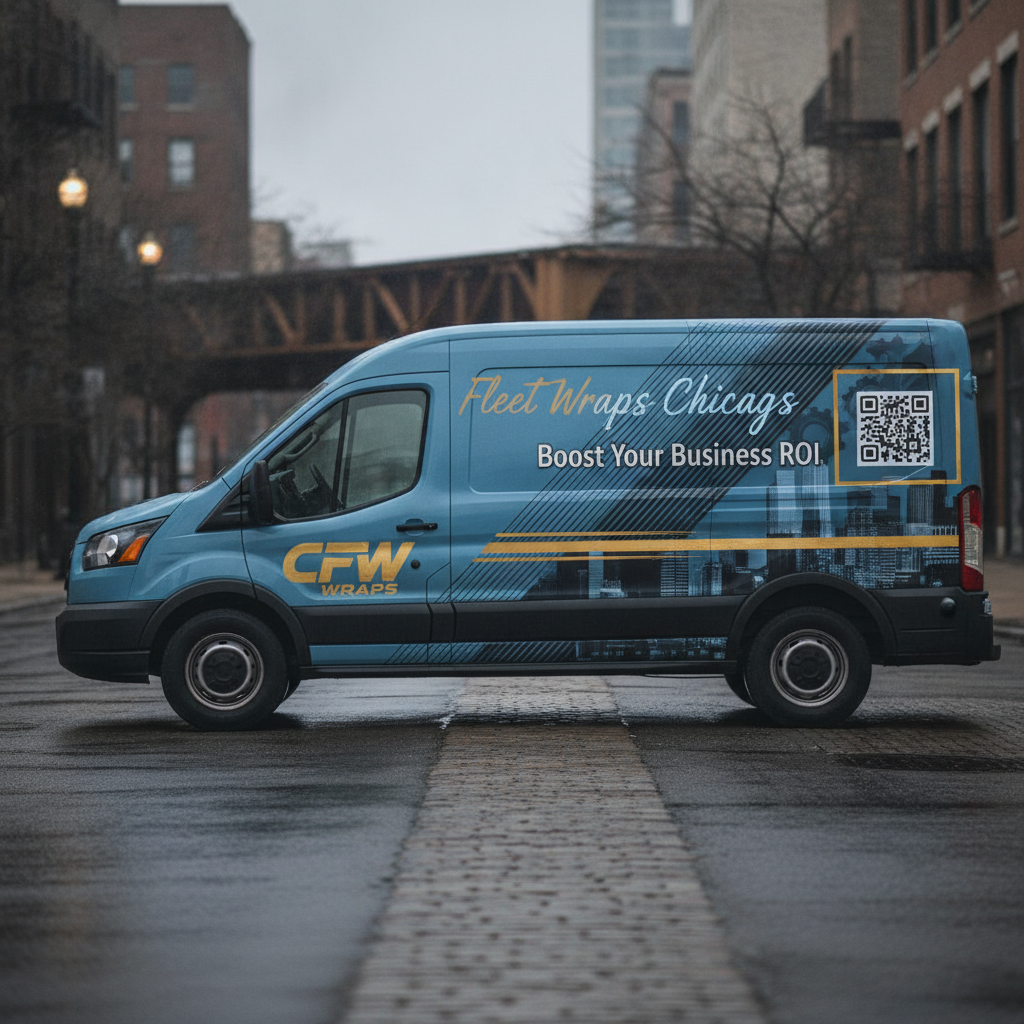
The most common reason a fleet wrap fails to generate leads is poor design, not poor installation. At Chicago Fleet Wraps, we have wrapped 19,400+ vehicles since 2001 and have logged zero verified paint-damage claims, so we see exactly where brands lose money before the truck even hits the Kennedy. This post names the errors, explains why they happen, and tells you how to fix them.
Bad fleet wrap design wastes money in two directions: you pay for the wrap, and your brand message never lands. After 25 years in business and more than 19,400 vehicles wrapped across Chicagoland, our team at Chicago Fleet Wraps has documented the same errors appearing on cargo vans in Pilsen, box trucks on I-90, and service vehicles idling on Michigan Avenue. The patterns are consistent. The fixes are straightforward.
Why Design Errors Cost More Than You Think
A cargo van full wrap runs $4,200. Fleet discounts reduce that cost per unit when you contract multiple vehicles, dropping as low as 15% off for 25 or more vehicles in a single contract. That is real money. Spend it on a wrap that nobody can read from a moving car on the Eisenhower and you have bought a moving billboard that does nothing.
The math is simple. A driver on I-290 has roughly two to three seconds to register your message. If your phone number is in 14-point script font on a dark background, you have lost that driver. Multiply that across thousands of daily impressions and the cost of a design error compounds fast.
Error 1: Too Much Information
This is the most common mistake we see. Business owners want to list every service, every neighborhood they cover, their website, their phone, their social handles, and their slogan. The result is visual noise. No single element stands out, so none of them register.
The fix: Pick one primary call to action. Usually that is a phone number or a web address. Make it large enough to read from 50 feet at 30 mph. Cut everything else or move it to a rear door panel where stopped traffic can read at leisure.
Error 2: Low Contrast Color Choices
Chicago winters are gray. Chicago summers are bright. Your wrap has to work in both. A white logo on a light silver van disappears in February overcast on the Dan Ryan. A dark navy script on a black truck vanishes at dusk on Cicero Avenue.
We print on cast vinyl only. We use Avery Dennison MPI 1105 Supercast and 3M IJ180-CV3 or the newer 3M IJ280, always with UV overlaminate. These materials hold color accurately for five to seven years. But accurate color reproduction cannot save a low-contrast design. The designer has to build contrast in from the start.
The fix: Test your design in grayscale before approving it. If the logo and background blend together in grayscale, they will blend in low light on the street.
Error 3: Wrong Font Choices
Script fonts feel premium in print ads. On a vehicle moving through Wicker Park traffic, they are unreadable. Decorative fonts with thin strokes also fail because vinyl printing and UV overlaminate can slightly soften fine detail at small sizes.
The fix: Use bold sans-serif fonts for any text that needs to be read in motion. Reserve decorative fonts for static elements like a logo badge on the rear door. Minimum recommended letter height for highway-speed reading is four inches.
Error 4: Ignoring Vehicle Geometry
A flat design file does not account for door handles, rivet lines, wheel wells, or the body character lines pressed into modern cargo vans. We use 3M Knifeless Tape cutting in our climate-controlled Chicago install bay to handle complex geometry cleanly. But if the design places critical text directly over a door handle or a Sprinter's prominent body crease, the text will distort or disappear.
The fix: Request a vehicle-specific template from your installer before finalizing art. Our team provides exact templates as part of the 2-hour itemized quote process. Place logos and phone numbers in flat zones.
Error 5: Inconsistent Branding Across a Fleet
We manage 2,800+ active fleet accounts. The accounts with the strongest street presence treat every vehicle as one unit in a system. The accounts with weak presence often have slight color variations between vehicles, different logo versions, and phone numbers in different sizes. The inconsistency makes the fleet look like a collection of unrelated contractors rather than a single organized company.
The fix: Lock down a master design file and a color-matched proof before wrapping vehicle one. Our 8-day production lifecycle gives fleet managers time to approve a physical proof on the first unit before full production runs.
Error 6: Skipping the Overlaminate
Some shops skip UV overlaminate to cut costs. In a city with road salt from November through March, UV exposure from spring and summer sun, and constant highway grit, unlaminated vinyl degrades fast. Colors fade unevenly. The brand looks neglected within two years.
Every wrap we install includes UV overlaminate. It is part of why we back our work with a 2-year workmanship warranty and why our wraps routinely reach the five to seven year lifespan mark.
A Short Word on Material Honesty
Calendered vinyl is cheaper than cast vinyl. Some shops use it without telling clients. Calendered vinyl shrinks over time, especially around curved panels and rivets common on Chicago-area commercial vehicles. Edges lift. Seams open. We use cast vinyl exclusively. Avery Dennison MPI 1105 Supercast and 3M IJ180-CV3 or IJ280 conform to compound curves without the shrinkage problem. It costs more upfront. It does not cost you a rewrap at year three.
People Also Ask
What is the most common fleet wrap design mistake?
Overloading the design with too much text and too many contact points is the most common error. A vehicle moving at highway speed gives a viewer two to three seconds of attention. One phone number or one web address in a large, high-contrast font outperforms a crowded layout every time. Secondary information belongs on rear panels where stopped traffic can read it.
How do I make sure my fleet wrap is readable on Chicago streets?
Test your design in grayscale to check contrast, use bold sans-serif fonts at a minimum of four inches tall for any moving-traffic message, and get a vehicle-specific template so text lands in flat zones away from door handles and body creases. Chicago's seasonal light conditions, from winter overcast to summer glare, demand strong contrast margins that look almost excessive on screen but read cleanly on the street.
Does vinyl type affect how long a fleet wrap lasts?
Yes, significantly. Cast vinyl with UV overlaminate lasts five to seven years on Chicago commercial vehicles. Calendered vinyl shrinks around curves and rivets, causing edge lift and seam failure, often within two to three years. Chicago Fleet Wraps uses cast vinyl only, specifically Avery Dennison MPI 1105 Supercast and 3M IJ180-CV3 or IJ280, always with UV overlaminate, which is part of why the company has recorded zero verified paint-damage claims across 19,400+ vehicles.
Next Step
If your current wrap is not pulling calls or your fleet looks inconsistent across vehicles, the problem is almost clearly fixable at the design stage. Chicago Fleet Wraps offers free pickup and delivery across Chicagoland and a 2-hour itemized quote so you know exactly what you are approving before production starts. Call us at (312) 597-1286 or visit us at 4711 N Lamon Ave #7, Chicago IL 60630 in Portage Park. Bring your current logo files and we will show you specifically where the design is losing you impressions.
Ready for a quote? See Van Wraps Chicago or get an itemized quote in 2 hours.
Frequently Asked Questions
What is the most common fleet wrap design mistake?
Overloading the design with too much text and too many contact points is the most common error. A vehicle moving at highway speed gives a viewer two to three seconds of attention. One phone number or one web address in a large, high-contrast font outperforms a crowded layout every time. Secondary information belongs on rear panels where stopped traffic can read it.
How do I make sure my fleet wrap is readable on Chicago streets?
Test your design in grayscale to check contrast, use bold sans-serif fonts at a minimum of four inches tall for any moving-traffic message, and get a vehicle-specific template so text lands in flat zones away from door handles and body creases. Chicago's seasonal light conditions demand strong contrast margins that read cleanly in both winter overcast and summer glare.
Does vinyl type affect how long a fleet wrap lasts?
Yes, significantly. Cast vinyl with UV overlaminate lasts five to seven years on Chicago commercial vehicles. Calendered vinyl shrinks around curves and rivets, causing edge lift and seam failure within two to three years. Chicago Fleet Wraps uses cast vinyl exclusively, Avery Dennison MPI 1105 Supercast and 3M IJ180-CV3 or IJ280 with UV overlaminate, which is part of why the company has recorded zero verified paint-damage claims across 19,400+ vehicles.