
Custom Vinyl Wraps Chicago | Full-Color & Printed
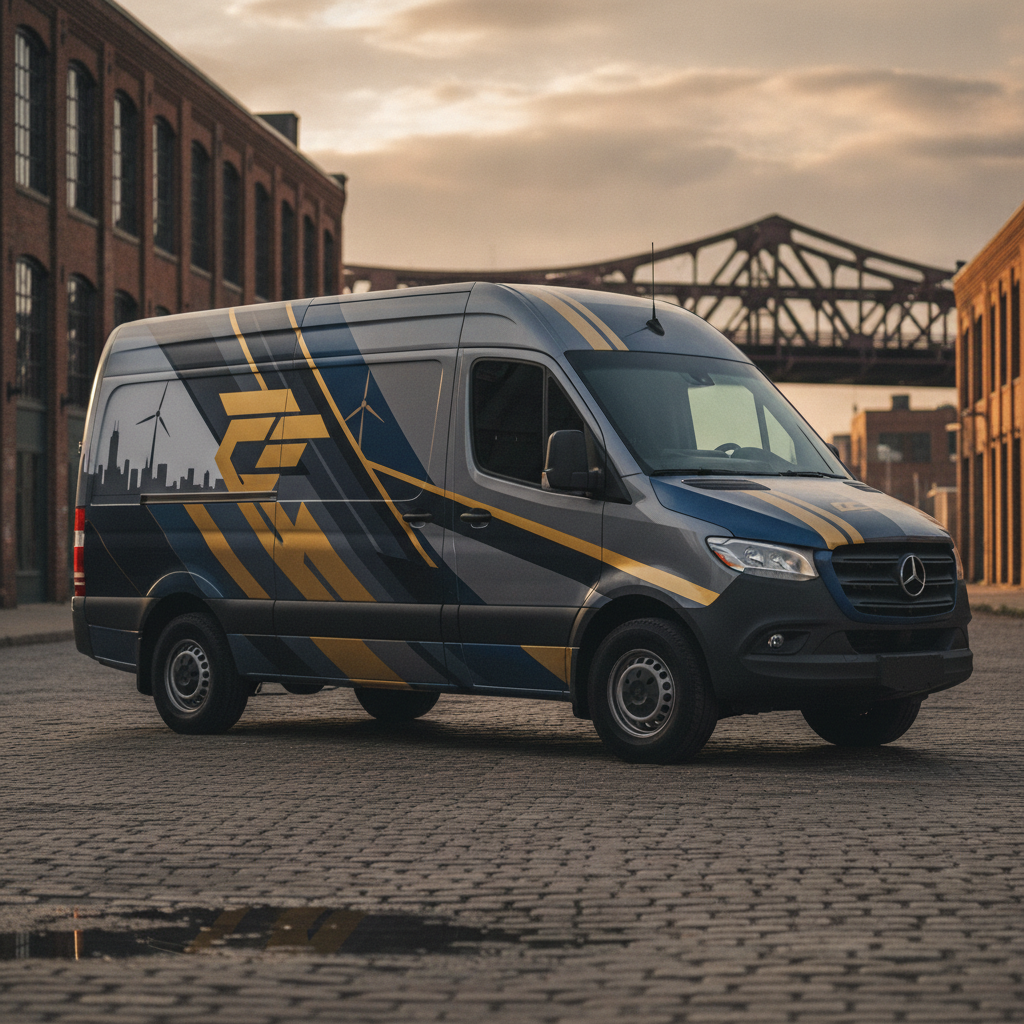
Chicago Fleet Wraps installs full-color, printed, and designer vinyl wraps using cast vinyl only, never calendered film, across every vehicle class from sedans to cargo vans to Rivian EVs. Founded in 2001, the shop has wrapped 19,400-plus vehicles and holds zero verified paint-damage claims across 25 years of work. If you need a single showstopper design or a coordinated fleet of 50 trucks rolling down the Kennedy, this page covers exactly what to expect.
Chicago Fleet Wraps, located at 4711 N Lamon Ave #7 in Portage Park, offers full-color digital prints, single-color cast films, and designer multi-layer wraps. Every project uses either Avery Dennison MPI 1105 Supercast or 3M IJ180-CV3 (and the newer 3M IJ280), both protected with UV overlaminate. The shop backs each install with a 2-year workmanship warranty and a projected 5-to-7-year wrap lifespan.
What "Custom Wrap" Actually Means Here
The word custom gets used loosely in this industry. At Chicago Fleet Wraps it means one thing: the film, the print, and the cut pattern are spec'd to your specific vehicle, your brand colors, and your use case. Nothing is pulled off a shelf. Every job starts with a 2-hour itemized quote that breaks down material cost, labor, and production time by panel.
There are three distinct wrap categories the shop produces:
- Full-color digital prints. Your artwork, scaled to your vehicle's exact dimensions, printed directly onto cast vinyl. Best for photorealistic images, gradient backgrounds, or brand graphics that need to match Pantone specs.
- Single-color and specialty cast films. Gloss, matte, satin, chrome, brushed metal, color-shift. One continuous film color applied panel by panel. No print file required. Popular for personal vehicles and fleet color-coding.
- Designer multi-layer wraps. Printed base film with a secondary cast layer on top, cut to shape with 3M Knifeless Tape. Creates depth and dimension without painting. Used heavily on Rivian EV builds, where the shop has completed 600-plus installs.
Materials: Why Cast Vinyl Is Non-Negotiable in Chicago
Chicago weather is brutal on vehicle film. Summer heat on the Eisenhower bakes dark-colored panels. Winter salt spray on the Dan Ryan and I-90 corrodes edges. Freeze-thaw cycles lift corners on cheap calendered film within one season. Cast vinyl conforms to compound curves without memory stress, which means it does not shrink, lift, or crack when temperatures swing 80 degrees in six months.
Chicago Fleet Wraps uses two primary cast materials:
- Avery Dennison MPI 1105 Supercast. Preferred for complex body lines and recessed door handles. Excellent conformability around Sprinter van ribs and Rivian's angular body seams.
- 3M IJ180-CV3 and IJ280. High-dimensional stability. The IJ280 is the newer spec with improved adhesive for cold-weather installs, relevant when the bay doors open in January.
Both materials are paired with UV overlaminate. That overlaminate is not optional. It protects ink from UV fade on vehicles that sit in outdoor lots in Rosemont, Bridgeport, or Lincoln Park all day. Without it, a full-color print loses vibrancy in 18 to 24 months instead of 5 to 7 years.
The shop never uses calendered vinyl. Calendered film is stiffer, thicker, and prone to shrinkage. On flat panel work it performs adequately. On a modern vehicle with compound curves, it fails prematurely. This is not a marketing claim. It is a structural difference in how the film is manufactured.
The Honest Pros and Cons
What works well
- Cast vinyl protects factory paint. Removal done correctly leaves the original finish intact, which matters for fleet vehicles returning to lease or auction.
- Full-color prints let a one-truck operation look like a 50-truck company. Brand consistency across a mixed fleet (vans, pickups, box trucks) is achievable because the same artwork file scales to each template.
- Wraps are faster to update than paint. When a phone number changes or a company rebrands, you replace film, not paint. That matters for the shop's 2,800-plus active fleet accounts that update graphics on rotation.
- Designer layered wraps create effects, color shifts, textures, that paint cannot replicate without custom automotive finishing that costs far more.
What has real limitations
- Wraps do not hide body damage. Dents, rust bubbles, or deep scratches telegraph through the film. Panel bodywork must happen before installation, not after.
- Color-shift and chrome films are unforgiving on install. Any dust contamination or panel imperfection shows under the reflective surface. Expect longer prep time and slightly higher labor cost on those finishes.
- A 5-to-7-year lifespan is realistic under normal conditions. A vehicle parked outside in full Chicago sun on the South Side all summer, or one that runs through automated car washes with abrasive brushes, will see the lower end of that range.
- Full wraps require a complete vehicle to be out of service for the install window. The shop's 8-day production lifecycle accounts for file prep, printing, curing, and install. Plan around it.
Chicago-Specific Considerations
Portage Park puts the shop near the junction of the Kennedy and 90/94, which means easy access from the Northwest Side, O'Hare corridor, and the Near North fleet yards. Free pickup and delivery covers all of Chicagoland, so a logistics company running out of Elk Grove Village or a food distributor based in Pilsen does not need to drive vehicles to the shop.
Chicago's road salt is corrosive. On wrapped vehicles, edge sealing at door jams, wheel wells, and bumper seams matters. The shop uses 3M Knifeless Tape to cut film precisely at panel edges, reducing the number of cuts made directly on paint and eliminating a common source of edge lift in winter conditions.
The install bay is climate-controlled. This is not a minor detail. Vinyl adhesive activates best between 60 and 80 degrees Fahrenheit. A shop applying film in an unheated bay in February, or in a non-air-conditioned space in August, is working outside the material's spec. Adhesion failures that show up in 6 to 12 months often trace back to improper install temperatures.
Pricing and Fleet Discounts
A cargo van full wrap is priced at $4,200. Fleet pricing is structured by contract volume: 3 percent off for 2 to 4 vehicles, 7 percent off for 5 to 9, 11 percent off for 10 to 24, and 15 percent off for 25 or more vehicles under a single contract. These discounts apply to the full job total, not just materials.
The 2-hour itemized quote breaks the estimate into material, labor, design prep, and any specialty film upcharges. There are no surprise fees added at pickup. If a panel requires additional prep because of prior paint work or adhesive residue, that is flagged in the quote, not discovered at invoice.
A Note on the Shop's Record
Twenty-five years in business. Founded in 2001, in the same Portage Park neighborhood. Zero verified paint-damage claims across 19,400-plus vehicles wrapped. That number is not a marketing line. It reflects material selection, install process, and the decision to never use calendered film on curved surfaces where stress-induced paint pull is a documented failure mode.
The 2,800-plus active fleet accounts include companies that have been renewing wrap contracts with this shop for a decade or more. Retention at that level does not happen with inconsistent work.
People Also Ask
What is the difference between a printed wrap and a designer wrap?
A printed wrap uses a single layer of cast vinyl with your artwork printed directly onto it. A designer wrap adds a second layer of cast film, cut to shape and applied on top of a base layer, creating texture, depth, or contrast effects that a flat print cannot achieve. Designer wraps cost more because they require additional material and significantly more installation time. Both options at Chicago Fleet Wraps use cast vinyl with UV overlaminate, never calendered film.
How long does a custom vinyl wrap last in Chicago's climate?
A properly installed cast vinyl wrap in Chicago lasts 5 to 7 years under normal conditions. Chicago's freeze-thaw cycles and road salt accelerate edge lift on inferior materials, which is why cast vinyl is required rather than calendered film. Vehicles parked outdoors in full sun year-round, or those run through abrasive automated car washes regularly, trend toward the lower end of that range. Chicago Fleet Wraps backs every install with a 2-year workmanship warranty.
Does a vinyl wrap damage factory paint when removed?
When removed correctly by a trained installer, cast vinyl wrap does not damage factory paint. Chicago Fleet Wraps has completed 19,400-plus installs since 2001 with zero verified paint-damage claims on record. The critical factors are material quality, panel prep before install, and proper heat application during removal. Cheap calendered film and improper removal are the primary causes of paint pull in the industry. The shop uses Avery Dennison MPI 1105 Supercast and 3M IJ180-CV3 or IJ280, both of which use adhesives engineered for clean removal from OEM paint.
Next Step
Call (312) 597-1286 or visit the shop at 4711 N Lamon Ave #7, Chicago IL 60630 in Portage Park. Book a 2-hour itemized quote. Bring your vehicle dimensions, your brand files if you have them, and your timeline. If you need pickup and delivery, mention it when you call. The shop handles it free across Chicagoland. The quote is specific, the pricing is published, and the record speaks for itself.
Written by Roy Wraps, Chicago Fleet Wraps.
Ready for a quote? See Van Wraps Chicago or get an itemized quote in 2 hours.
Frequently Asked Questions
What is the difference between a printed wrap and a designer wrap?
A printed wrap uses a single layer of cast vinyl with artwork printed directly onto it. A designer wrap adds a second layer of cast film, cut to shape and applied on top of a base layer, creating texture, depth, or contrast effects a flat print cannot achieve. Designer wraps require more material and installation time. Both use cast vinyl with UV overlaminate at Chicago Fleet Wraps.
How long does a custom vinyl wrap last in Chicago's climate?
A properly installed cast vinyl wrap lasts 5 to 7 years in Chicago. Freeze-thaw cycles and road salt accelerate edge lift on inferior materials, which is why cast vinyl is required. Vehicles in full outdoor sun or run through abrasive car washes regularly trend toward the lower end. Chicago Fleet Wraps backs every install with a 2-year workmanship warranty.
Does a vinyl wrap damage factory paint when removed?
When removed correctly, cast vinyl wrap does not damage factory paint. Chicago Fleet Wraps has completed 19,400-plus installs since 2001 with zero verified paint-damage claims. The critical factors are material quality, panel prep, and proper heat application during removal. The shop uses Avery Dennison MPI 1105 Supercast and 3M IJ180-CV3 or IJ280, engineered for clean removal from OEM paint.