
Commercial Vehicle Wraps: Fleet Buyer's Guide
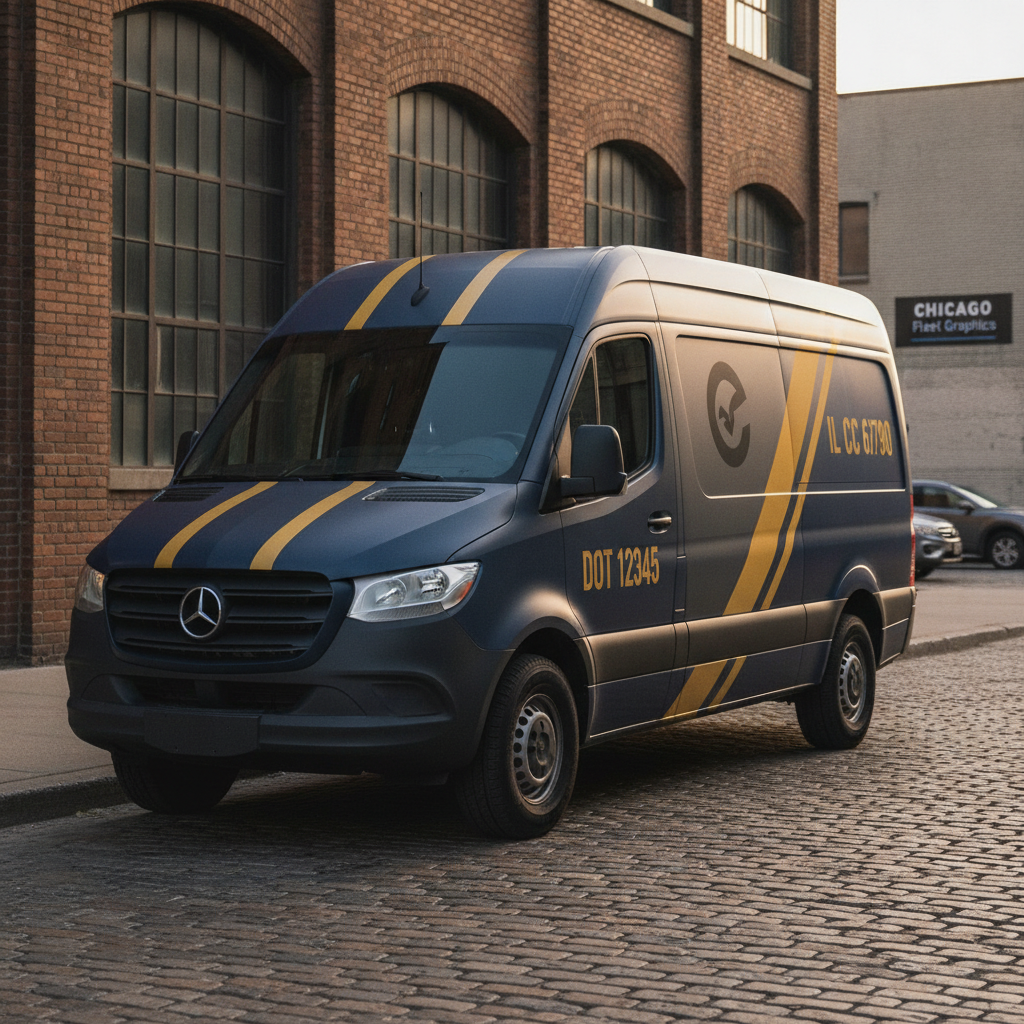
A commercial vehicle wrap is a legal advertising asset, a DOT-compliance tool, and a paint-protection film all in one, but only if it is installed with cast vinyl and proper technique. Chicago Fleet Wraps has wrapped 19,400+ vehicles since 2001 and holds zero verified paint-damage claims, which matters when your fleet runs on leased trucks or recently painted vans. This guide covers every decision point a business owner needs before signing a wrap contract.
A commercial vehicle wrap done right protects your paint, meets federal DOT lettering rules, and keeps your brand consistent from a cargo van in Portage Park to a sprinter on the Kennedy. Done wrong, it voids your lease, triggers a paint-damage dispute, and costs you more to remove than the wrap itself cost to install. This guide tells you exactly how to tell the difference.
Why Commercial Wraps Are Not the Same as a Consumer Color Change
Consumer color-change wraps are built around aesthetics. The customer wants gloss black or satin green, the shop installs it, and the vehicle sits in a garage 90 percent of the time. Commercial wraps live a different life. A Chicago delivery van hits the Eisenhower every morning, parks on salted winter streets, and may carry ladders or pipe racks that vibrate against the sidewalls for 200,000 miles.
The material choice alone separates the two categories. Commercial-grade wraps require cast vinyl. Cast vinyl is manufactured by pouring liquid PVC onto a casting sheet and curing it slowly, which produces a thin, conformable film with built-in memory. It lays flat on compound curves, door handles, and mirror housings without lifting. Calendered vinyl, the cheaper option, is rolled under pressure like pie dough. It retains that stress and shrinks back over time, especially in Chicago winters where temperatures swing 60 degrees between January and July. Lifted edges on a commercial fleet truck are a liability, not just an eyesore.
At Chicago Fleet Wraps, every job uses cast vinyl only. The primary materials are Avery Dennison MPI 1105 Supercast and 3M IJ180-CV3 or the newer 3M IJ280, each paired with a UV overlaminate. The overlaminate is not optional on a commercial vehicle. It resists fuel splatter, car-wash chemicals, and UV degradation from sitting on a lot in the western suburbs all summer.
DOT Lettering: What the Rules Actually Require
The Federal Motor Carrier Safety Administration requires all commercial motor vehicles operating in interstate commerce to display the company name, USDOT number, and state of operation in letters at least 2 inches tall on both sides of the vehicle. If your gross vehicle weight rating exceeds 10,001 pounds, this is not optional. Illinois adds its own ICC MC number requirement for intrastate carriers. Violating either rule can ground your truck at a weigh station on I-90 and trigger fines that dwarf the cost of a wrap.
Here is what most wrap shops get wrong: they treat DOT lettering as a sticker afterthought applied at the end of the job. The correct approach integrates DOT information into the design file from the start. The numbers must be legible against the background, so contrast matters. A dark blue van with black DOT lettering fails a roadside inspection just as surely as no lettering at all.
Practical DOT checklist for your wrap design:
- USDOT number in at least 2-inch contrasting lettering on both sides
- Legal company name as registered with FMCSA
- State of operation abbreviation
- For-hire carriers: MC number
- Illinois ICC number if operating intrastate only
- Font must be readable from 50 feet, not decorative script
If your fleet operates locally in Chicago and the suburbs without crossing state lines, confirm with your attorney whether FMCSA rules apply. When in doubt, comply. The fine is not worth the argument.
Brand Consistency Across a Fleet
A fleet of ten vans that looks like ten different companies is a missed marketing opportunity on every block of Milwaukee Avenue. Brand consistency requires more than sending the same logo file to the wrap shop. It requires color management.
Vinyl manufacturers produce colors in batches, and batch variation is real. A fleet vehicle wrapped in March and another wrapped in October can show visible color drift if the shop does not specify the same vinyl SKU and lot number. On large fleets, the right move is to wrap all vehicles within a single production run or to keep a physical color swatch on file and match each new vehicle to it before cutting.
Chicago Fleet Wraps runs an 8-day production lifecycle from art approval to vehicle delivery. For fleet accounts, design files are locked and versioned so that vehicle number 22 matches vehicle number one. The shop holds 2,800+ active fleet accounts, which means the color-management process is not theoretical. It runs on real jobs every week.
Brand consistency also means consistent placement. Door graphics that drift two inches lower on one van than another look like a production error at a trade show or on a jobsite. Digital templates built to each vehicle's exact cut lines solve this. Every vehicle in your fleet should receive a proof overlay before printing.
Lease-Return and Paint-Safe Removal
A wrap applied with cast vinyl and proper adhesion chemistry can be removed cleanly from factory paint if the paint was fully cured before installation and the wrap has not exceeded its rated lifespan. Chicago Fleet Wraps has zero verified paint-damage claims across 19,400+ vehicles wrapped since 2001. That number is the single most important performance metric for a fleet manager running leased vehicles.
What causes paint damage on wrap removal? Four main factors:
- Calendered vinyl left too long. The adhesive hardens and bonds chemically to the clear coat. Removal becomes a scraping job that pulls clear coat with it.
- Wrapping over fresh paint. Factory paint needs 30 days minimum to fully outgas before a wrap goes on. Aftermarket paint needs 90 days or more depending on the product used.
- Heat-gun abuse during removal. Too much heat deforms thin clear coats, especially on aluminum-bodied vehicles like Rivians or newer Ford Transits.
- Wrapping over existing damage. Stone chips, rust bubbles, or peeling clear coat trap moisture under the vinyl. Removal makes existing damage worse and the wrap shop gets blamed.
Before your wrap is installed, document your vehicle's paint condition with dated photos. A reputable shop will do this as part of intake. Chicago Fleet Wraps conducts a pre-installation inspection and notes any pre-existing paint issues in writing.
For lease-return situations, schedule removal at least 30 days before the lease end date. That buffer gives you time to address any adhesive residue, which is normal and removable with isopropyl alcohol, without rushing into the dealership at deadline.
Warranty Terms: What to Read Before You Sign
Wrap warranties cover two different things, and most buyers confuse them. Material warranty comes from the vinyl manufacturer and typically covers delamination, cracking, and color fade for 3 to 7 years depending on the product. Workmanship warranty comes from the installer and covers lifting edges, bubbling, and installation defects.
Chicago Fleet Wraps offers a 2-year workmanship warranty on all installs. The cast vinyl itself carries a manufacturer lifespan of 5 to 7 years under normal use. Normal use in Chicago means Lake Shore Drive salt spray in February, UV on an open lot in Bridgeport in August, and automated car washes in between. These materials are rated for exactly that environment.
Read the exclusions. Most workmanship warranties exclude damage from car washes with rotating brushes, pressure washing the wrap edges directly, and vehicle accidents. These are reasonable exclusions. What a warranty should not exclude is normal weathering during the rated lifespan or edge lifting that results from poor installation technique rather than owner misuse.
Ask specifically whether the warranty covers vehicles stored outdoors versus garaged. Some manufacturers rate their materials differently based on exposure hours. If your fleet trucks park outside year-round at a yard in Cicero, make sure the warranty is rated for full outdoor exposure.
Pricing, Fleet Discounts, and What Drives Cost
A cargo van full wrap at Chicago Fleet Wraps is priced at $4,200. That is the published single-unit rate. Fleet contracts reduce that number based on volume committed in a single contract:
- 2 to 4 vehicles: 3% discount
- 5 to 9 vehicles: 7% discount
- 10 to 24 vehicles: 11% discount
- 25 or more vehicles: 15% discount
On a 25-vehicle fleet contract at the base van rate, the 15% discount saves $15,750 compared to wrapping each vehicle individually. That is real money, and it comes from a single signed contract, not a loyalty program that requires you to remember to ask.
What drives cost upward: complex cut-outs around riveted panels on box trucks, specialty finishes like chrome delete or textured vinyl, vehicles with previous wraps that require removal first, and rush timelines that compress the 8-day production cycle. What drives cost downward: standardized designs across identical vehicles, large flat-panel box trucks with minimal curves, and fleets that schedule in batches so production runs efficiently.
Chicago Fleet Wraps provides 2-hour itemized quotes and offers free pickup and delivery across Chicagoland. For a fleet manager running vehicles out of a yard in Elk Grove Village or a warehouse off the Stevenson, that logistics piece removes a real scheduling headache.
Installation Quality: What Happens Inside the Bay
The install environment matters as much as the material. Vinyl adhesive is temperature and humidity sensitive. A cold, humid garage in Chicago in November produces bubbles and poor adhesion that show up two months later as lifted seams. Chicago Fleet Wraps operates a climate-controlled install bay, which is not a marketing phrase. It means the bay holds consistent temperature and humidity year-round so that the adhesive flows correctly and the vinyl conforms without stress.
The shop uses 3M Knifeless Tape for panel cuts instead of blades dragged across the surface. Knifeless Tape is a thin monofilament line embedded under the vinyl that cuts cleanly without contacting the paint below. This is the correct method for any vehicle where paint protection matters. Blade cutting directly on a vehicle is an outdated practice that introduces micro-scratches and eventual rust points.
People Also Ask
What DOT lettering is required on a commercial vehicle wrap in Illinois?
Federal FMCSA rules require vehicles operating in interstate commerce to display the company name, USDOT number, and state of operation in letters at least 2 inches tall on both sides. Illinois adds ICC MC number requirements for intrastate carriers. These elements must contrast with the wrap background and be legible from 50 feet. Integrating DOT information into the original wrap design file, rather than applying stickers after installation, is the professional standard and avoids legibility failures that trigger roadside violations.
Will a vehicle wrap damage the paint when removed from a leased truck?
Cast vinyl wrap applied over fully cured factory paint and removed before the vinyl exceeds its rated lifespan leaves paint intact. Chicago Fleet Wraps holds zero verified paint-damage claims across more than 19,400 vehicles wrapped since 2001. Paint damage typically results from using calendered vinyl left on too long, wrapping over fresh or damaged paint, or improper heat-gun technique during removal. Document paint condition before installation and schedule removal at least 30 days before a lease return date.
How long does a commercial vehicle wrap last in Chicago weather?
Cast vinyl wraps using materials like Avery Dennison MPI 1105 Supercast or 3M IJ180-CV3 carry a rated lifespan of 5 to 7 years under full outdoor exposure, which includes Chicago winters with road salt, freeze-thaw cycles, and summer UV. A UV overlaminate is required to achieve that lifespan. Calendered vinyl may begin shrinking and lifting within 2 to 3 years under the same conditions, which is why it is not appropriate for commercial fleet vehicles that park outdoors year-round.
The Bottom Line Before You Buy
Cast vinyl, proper DOT integration, climate-controlled installation, and documented paint-condition records are the four non-negotiable requirements for a commercial fleet wrap that performs for 5 years and releases cleanly at lease return. The cheapest quote in your inbox almost clearly means calendered vinyl and a shop without a climate-controlled bay. Those two corners cut will cost you more in removal damage and early replacement than the price difference ever saved.
Chicago Fleet Wraps has operated from Portage Park since 2001, wrapped 19,400+ vehicles, and maintains 2,800+ active fleet accounts across Chicagoland. The record of zero verified paint-damage claims is the guarantee that matters most to fleet managers running leased vehicles.
Next step: Call (312) 597-1286 or visit the shop at 4711 N Lamon Ave #7, Chicago, IL 60630. Request the 2-hour itemized fleet quote. Bring your vehicle count, lease return dates, and any existing brand guidelines. The quote is free and the pickup is free. There is no reason to delay a decision that affects every mile your fleet drives.
Ready for a quote? See Van Wraps Chicago or get an itemized quote in 2 hours.
Frequently Asked Questions
What DOT lettering is required on a commercial vehicle wrap in Illinois?
Federal FMCSA rules require vehicles in interstate commerce to display the company name, USDOT number, and state of operation in letters at least 2 inches tall on both sides of the vehicle. Illinois adds ICC MC number requirements for intrastate carriers. Letters must contrast with the wrap background and be readable from 50 feet. Integrating DOT information into the original design file rather than applying stickers after installation is the correct method and prevents legibility failures at weigh stations.
Will a vehicle wrap damage paint when removed from a leased commercial truck?
Cast vinyl wrap applied over fully cured factory paint and removed before the vinyl exceeds its rated lifespan will not damage paint. Chicago Fleet Wraps holds zero verified paint-damage claims across more than 19,400 vehicles wrapped since 2001. Damage typically comes from using cheap calendered vinyl, wrapping over fresh or compromised paint, or improper heat application during removal. Always document paint condition before installation and schedule removal at least 30 days before your lease return date.
How much does a commercial fleet wrap cost and are there volume discounts?
A cargo van full wrap at Chicago Fleet Wraps is priced at $4,200 for a single unit. Fleet contracts signed at one time receive discounts of 3% for 2 to 4 vehicles, 7% for 5 to 9, 11% for 10 to 24, and 15% for 25 or more vehicles. Free pickup and delivery is included across Chicagoland, and itemized quotes are completed within 2 hours. Material used is cast vinyl only, with a 2-year workmanship warranty and a 5 to 7 year rated lifespan.