
Fleet Wrap Program Management | Chicago Fleet Wraps
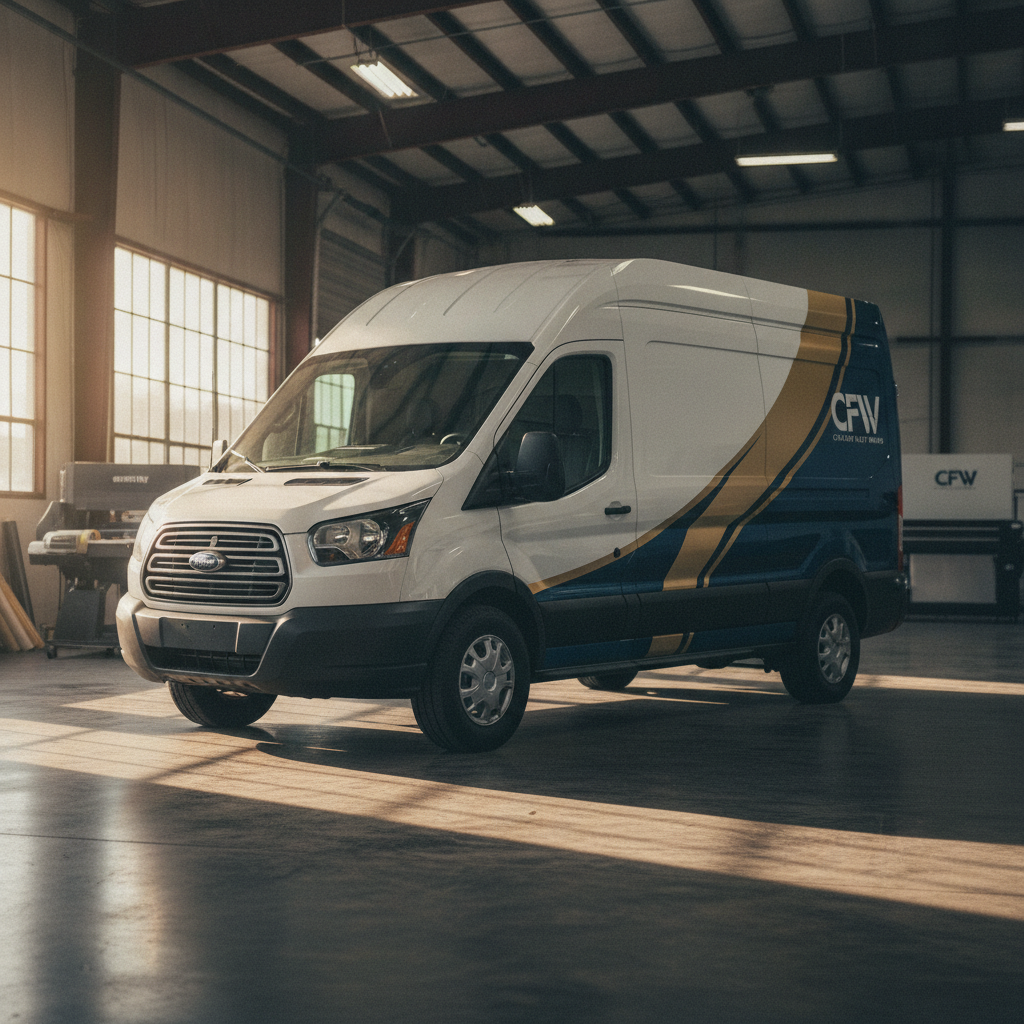
A well-run commercial fleet wrap program keeps every vehicle on brand, on schedule, and off the collision repair apron. Chicago Fleet Wraps has wrapped 19,400-plus vehicles for 2,800-plus active fleet accounts since 2001, recording zero verified paint-damage claims across that entire body of work. This field guide covers every stage: pilot approval, brand standards lockdown, staged scheduling, replacement-vehicle intake, and multi-year per-unit budgeting.
A well-run commercial fleet wrap program keeps every vehicle on brand, on schedule, and off the collision repair apron. Chicago Fleet Wraps has wrapped 19,400-plus vehicles for 2,800-plus active fleet accounts since 2001, recording zero verified paint-damage claims across that entire body of work. This field guide covers every stage: pilot approval, brand standards lockdown, staged scheduling, replacement-vehicle intake, and multi-year per-unit budgeting.
Why Fleet Programs Fail (And How to Stop It)
Most fleet wrap programs don't fall apart because the vinyl fails. They fall apart because someone skipped the approval process, or scheduling was handed to one coordinator who booked fifteen vans during the same week in February when half the Chicagoland fleet is already off the road for winter maintenance. The problems are operational, not material.
The good news: every failure mode is preventable. Work through the five stages below in order and you will not repeat the mistakes that cost other fleet managers time, money, and brand consistency.
Stage 1: Pilot Vehicle Approval
Do not wrap the whole fleet before you wrap one vehicle. Wrap one. Look at it hard.
The pilot vehicle serves three functions. First, it confirms that your template files match the actual body lines of the vehicle year and trim level. A 2022 Transit and a 2024 Transit do not share the same panel geometry. Second, it gives your marketing and legal teams a physical artifact to approve, not a PDF mock-up. Third, it exposes any substrate issues: rust bubbles under the B-pillar, repainted panels with texture mismatches, aftermarket body parts that don't match OEM dimensions.
Book a 2-hour itemized quote session before the pilot install. At Chicago Fleet Wraps, that quote session documents vehicle condition, confirms material selection, and locks the production spec so the pilot and every subsequent unit come off the same file.
Pilot approval should require sign-off from at least three stakeholders: fleet manager, brand manager, and one driver who will actually operate the vehicle. Drivers notice things brand managers miss, specifically door-edge graphics that peel when the door hits a loading dock in Bridgeport or a parking structure pillar in the Loop.
Con to acknowledge: The pilot adds one full production cycle to your launch timeline. Our 8-day production lifecycle means you need to plan for this buffer. Do not promise a fleet launch date before the pilot clears approval.
Stage 2: Brand Standards Lockdown
A brand standards document for fleet wraps is not the same as a general brand guide. Your general brand guide tells a designer what font to use on a brochure. Your fleet wrap brand standards document tells a wrap shop what file format to deliver, what overlaminate is required, and what the tolerance is on panel alignment.
Specify the following in writing before production begins:
- Material specification: At Chicago Fleet Wraps, we use cast vinyl only. Avery Dennison MPI 1105 Supercast and 3M IJ180-CV3 or the newer 3M IJ280, always with UV overlaminate. Calendered vinyl is never acceptable for fleet applications. It shrinks. It lifts at edges. It fails early on compound curves. Put cast-only in your brand standards and enforce it with every shop in your network.
- Color matching protocol: Specify Pantone references and require a printed proof against those references before any vehicle goes into production.
- Approved vehicle classes: List every body style in your fleet, cargo van, sprinter, box truck, pickup, and confirm that a separate approved template exists for each.
- Finish tolerances: Define the maximum acceptable gap at seams, the minimum overlap at panel edges, and the required clearance around lights and handles.
- Photography requirement: Require four-corner photography of every completed vehicle before delivery. Store these in a shared folder organized by unit number and install date.
Once this document is signed by your brand team, treat it as a contract addendum. Any deviation requires written approval. No exceptions for expedited schedules.
Stage 3: Staged Scheduling So the Fleet Keeps Operating
This is where most fleet programs go wrong fastest.
You cannot pull thirty vans off the road the same week. Your dispatch team in Pilsen or your delivery operation on the North Shore does not stop running because marketing finally approved the new graphics package. Staged scheduling is not optional. It is the only way to wrap a working fleet without operational disruption.
Build your schedule around these rules:
- Never schedule more than 15 percent of your active fleet in any single week.
- Prioritize vehicles that run Monday-Friday routes before weekend-only units.
- Account for Chicago weather. January through March, vehicles coming in off I-90 or I-94 are cold-soaked. Cold vinyl requires more time in a climate-controlled bay before installation can begin. Our install facility is climate-controlled specifically for this reason, but a cold vehicle still needs acclimation time. Build that into your schedule or you are padding the shop's timeline, not yours.
- Free pickup and delivery across Chicagoland removes one scheduling barrier. You do not need to dedicate a driver to shuttle vehicles. Coordinate pickup windows with your dispatch team and keep the vehicles moving.
- Reserve two slots per month for emergency replacements. Accidents happen. A van gets sideswiped on the Eisenhower and needs a new wrap before it goes back on route. If your schedule has no slack, that unit runs unbranded for weeks.
Con to acknowledge: Staged scheduling extends the total program timeline significantly. A fleet of 60 vehicles that could theoretically be wrapped in two weeks will realistically take six to eight weeks when you account for operational constraints and acclimation time. Plan for this in your project charter.
Stage 4: Replacement Wraps for New Vehicles Entering the Fleet
Every fleet has turnover. You retire a high-mileage van, bring in a new unit, and that new unit needs to hit the road wrapped, not bare white, the week it arrives.
Build a replacement wrap protocol into your program from day one:
- Notify your wrap shop when a new vehicle is on order, not when it arrives. Template files may need to be built or updated for a new model year.
- Assign each new unit a wrap date during the vehicle intake process. The wrap appointment should be scheduled before the vehicle is even delivered to your yard.
- Confirm that the new vehicle's panels are OEM and undamaged before the install date. Repainted or repaired panels from the dealership lot can affect adhesion.
- If the outgoing vehicle has a wrap that is less than five years old, document the condition. Our wraps carry a five to seven year lifespan and a two-year workmanship warranty. A wrap removed early from a retired vehicle is not a warranty issue, but it is useful data for your budget model.
Fleet accounts with 25 or more vehicles under a single contract receive a 15 percent discount per unit at Chicago Fleet Wraps. Structure your replacement vehicle intake under the same master contract to capture that rate. Do not let individual replacement orders go through as one-off purchases at full price.
Stage 5: Multi-Year Per-Unit Budget Planning
Fleet wrap budgets fail when fleet managers treat wraps as a one-time capital expense instead of a recurring operational line item.
Here is a working budget model for cargo vans, which are the most common fleet unit we handle:
- Full wrap cost: $4,200 per cargo van at standard pricing.
- Fleet discount (25-plus units): 15 percent, bringing the per-unit cost to $3,570.
- Wrap lifespan: Five to seven years under normal operating conditions in Chicagoland. UV exposure on the Dan Ryan in summer and road salt on the Kennedy in winter both affect longevity. Budget toward the five-year end for exterior-facing panels on high-mileage urban routes.
- Per-unit annual cost at five-year cycle: $714 per van per year at discounted pricing. This is the number that belongs in your annual fleet operating budget.
- Replacement reserve: Budget one unplanned replacement per 20 units per year for accident damage or early wear on high-use vehicles.
For multi-year planning, lock your per-unit rate into a master contract at the start of the program. Material and labor costs move over time. A contract that fixes pricing across a two to three year production cycle protects your budget model from mid-program increases.
Con to acknowledge: Multi-year fixed pricing requires a commitment to volume. If your fleet shrinks, you may fall below the threshold that justified your contracted rate. Build a volume floor clause into the contract with your shop so both sides understand the terms.
Quick Stats: Why These Numbers Matter
Chicago Fleet Wraps was founded in 2001. In the 25 years since, we have wrapped over 19,400 vehicles, maintained 2,800-plus active fleet accounts, and recorded zero verified paint-damage claims. Those numbers are not marketing copy. They are job records. For a fleet manager evaluating vendors, zero paint-damage claims across a portfolio that size is the single most important operational data point you can ask for.
People Also Ask
How do you keep a commercial fleet operating while wrapping vehicles on a staggered schedule?
Schedule no more than 15 percent of your active fleet in any single week. Prioritize vehicles by route day and keep emergency replacement slots open each month. At Chicago Fleet Wraps, free pickup and delivery across Chicagoland removes the shuttle burden from your dispatch team, and our 8-day production lifecycle lets you plan precise return windows. Climate-controlled install bays eliminate weather delays that would otherwise push vehicles back when Chicago winter hits.
What fleet wrap discount can I get for a large commercial fleet in Chicago?
Chicago Fleet Wraps offers tiered fleet discounts under a single contract: 3 percent for 2 to 4 units, 7 percent for 5 to 9 units, 11 percent for 10 to 24 units, and 15 percent for 25 or more units. A cargo van full wrap is priced at $4,200 at standard rate, dropping to $3,570 at the 25-plus tier. Structure all replacement vehicle wraps under your master contract to preserve that rate.
How long do commercial fleet wraps last in Chicago's climate?
Fleet wraps installed with cast vinyl and UV overlaminate last five to seven years under normal Chicagoland operating conditions. Road salt on winter highways and UV exposure on south-facing panels during summer both accelerate wear on high-mileage urban routes. Budget toward a five-year replacement cycle for exterior panels on vehicles running heavy daily routes. Chicago Fleet Wraps backs every install with a two-year workmanship warranty and uses only cast vinyl, never calendered, because calendered vinyl shrinks and lifts at edges in Chicago's temperature swings.
Next Step
If you are ready to start a fleet wrap program or bring structure to one that is already running, call Chicago Fleet Wraps at (312) 597-1286. We are located at 4711 N Lamon Ave #7, Chicago IL 60630 in Portage Park. Ask for a 2-hour itemized quote session. Bring your vehicle list, your brand guide, and your route schedule. We will build a production plan that keeps your fleet moving and your brand consistent from the first pilot vehicle to the last replacement unit.
Ready for a quote? See Van Wraps Chicago or get an itemized quote in 2 hours.
Frequently Asked Questions
How do you keep a commercial fleet operating while wrapping vehicles on a staggered schedule?
Schedule no more than 15 percent of your active fleet in any single week. Prioritize vehicles by route day and keep emergency replacement slots open each month. At Chicago Fleet Wraps, free pickup and delivery across Chicagoland removes the shuttle burden from your dispatch team, and our 8-day production lifecycle lets you plan precise return windows. Climate-controlled install bays eliminate weather delays that would otherwise push vehicles back when Chicago winter hits.
What fleet wrap discount can I get for a large commercial fleet in Chicago?
Chicago Fleet Wraps offers tiered fleet discounts under a single contract: 3 percent for 2 to 4 units, 7 percent for 5 to 9 units, 11 percent for 10 to 24 units, and 15 percent for 25 or more units. A cargo van full wrap is priced at $4,200 at standard rate, dropping to $3,570 at the 25-plus tier. Structure all replacement vehicle wraps under your master contract to preserve that rate.
How long do commercial fleet wraps last in Chicago's climate?
Fleet wraps installed with cast vinyl and UV overlaminate last five to seven years under normal Chicagoland operating conditions. Road salt on winter highways and UV exposure on south-facing panels during summer both accelerate wear on high-mileage urban routes. Budget toward a five-year replacement cycle for exterior panels on vehicles running heavy daily routes. Chicago Fleet Wraps backs every install with a two-year workmanship warranty and uses only cast vinyl, never calendered, because calendered vinyl shrinks and lifts at edges in Chicago's temperature swings.