
Protect Fleet Vehicles from Chicago Winter Salt
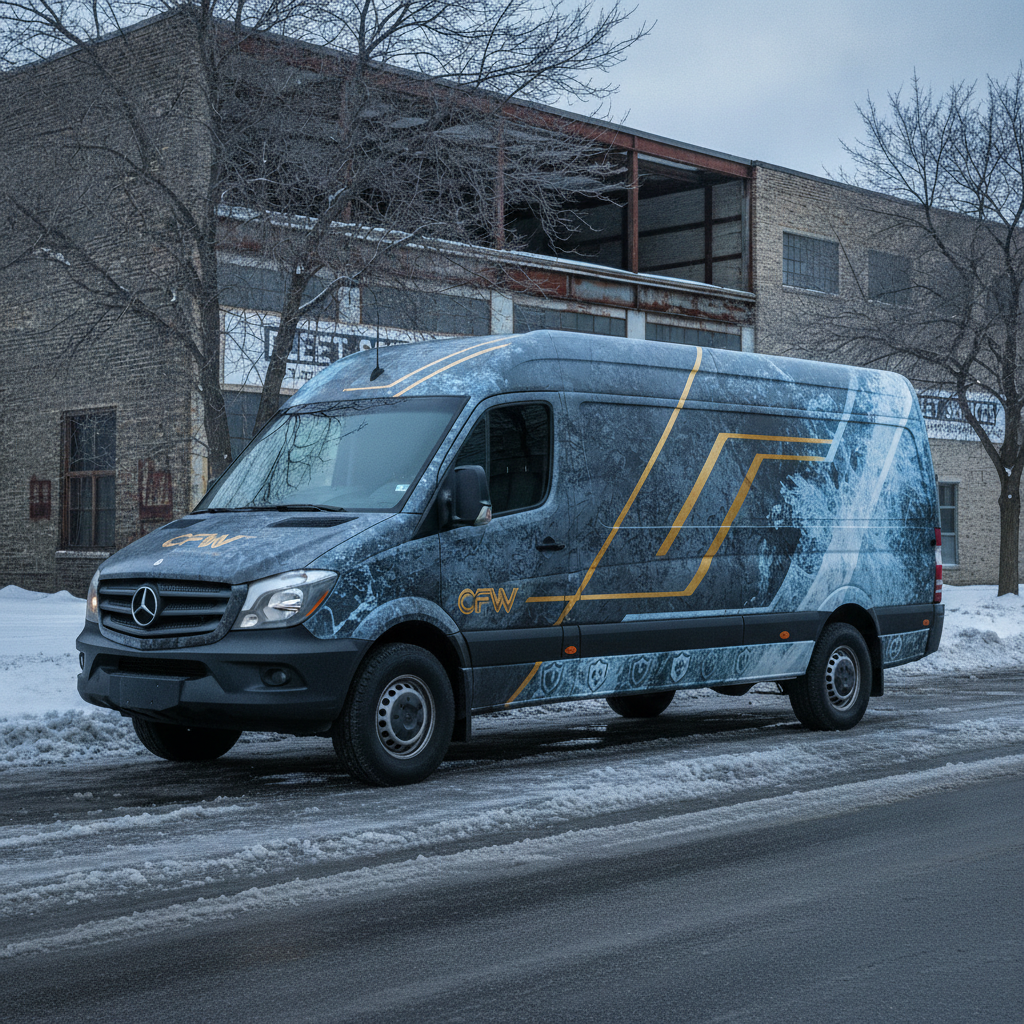
A vinyl wrap is one of the most cost-effective barriers you can put between your fleet and Chicago road salt. At Chicago Fleet Wraps, we have wrapped 19,400-plus vehicles since 2001 and have recorded zero verified paint-damage claims under wrap, which tells you something real about how well cast vinyl performs against brine, calcium chloride, and the freeze-thaw abuse that runs from November through March on the Dan Ryan, the Kennedy, and every side street in between.
A vinyl wrap is one of the most cost-effective barriers you can put between your fleet and Chicago road salt. At Chicago Fleet Wraps, we have wrapped 19,400-plus vehicles since 2001 and have recorded zero verified paint-damage claims under wrap. That record holds across 2,800-plus active fleet accounts, through every brutal Chicago winter those accounts have faced.
Why Chicago Winter Is a Different Animal for Fleet Operators
Chicago does not have gentle winters. IDOT spreads roughly 700,000 tons of salt across Illinois roads each season, and Cook County roads get a disproportionate share of that. The result is a corrosive soup that coats every surface below the door handle from October through April. Add the freeze-thaw cycles that hit Wicker Park and Bridgeport differently than they hit the suburbs, and you have a recipe for accelerated paint failure, rust bleed, and delamination that costs fleets thousands in premature repaints.
Road salt is not just sodium chloride anymore. Municipalities now use magnesium chloride, calcium chloride, and potassium acetate blends. These penetrate microscopic paint defects faster than traditional salt. Once moisture gets under compromised clearcoat, rust begins. On a cargo van, that typically shows up first at the rocker panels, wheel arches, and lower rear doors, which are exactly the surfaces that catch spray off the Kennedy at 55 miles per hour.
Fleet operators running routes through the Loop, down Pulaski, or out to O'Hare on a daily schedule face repeated salt exposure that a privately owned vehicle simply does not. The math is straightforward. More exposure, more risk, higher repair cost per vehicle per year.
What a Wrap Actually Does to Stop Salt Damage
A properly installed cast vinyl wrap forms a physical barrier over the factory paint. Salt, brine, and melt chemicals cannot reach the clearcoat if they cannot get past the vinyl. The wrap takes the abuse instead. When the wrap eventually shows wear at the edges or lower panels after four to six Chicago winters, you remove it and the paint underneath is in the condition it was on install day.
The key word is properly installed. Wraps fail at edges when they are not pressed fully into recesses, around door jambs, and along rocker panels. An improper edge seal invites moisture wicking. That is how salt gets under a wrap and causes the very damage you were trying to prevent.
At Chicago Fleet Wraps, every install uses 3M Knifeless Tape for clean, sealed cuts rather than freehand blades that nick edges. Our climate-controlled install bay on N Lamon Ave in Portage Park holds temperature and humidity within the ranges that Avery Dennison and 3M specify for proper adhesion. In winter, that matters more than people realize. Vinyl applied in a cold, damp environment does not bond correctly. A garage install done in January in an unheated bay in Cicero is a liability.
Materials: Why Cast Vinyl Is the Only Acceptable Choice for Winter Protection
We use cast vinyl only. Specifically, Avery Dennison MPI 1105 Supercast and 3M IJ180-CV3, with newer installations moving to 3M IJ280, all finished with UV overlaminate. We do not use calendered vinyl. Ever.
Here is the practical difference in a Chicago winter. Calendered vinyl is manufactured by pressing warm plastic through rollers. That process creates internal stresses in the film. When temperatures drop to single digits, as they do in January in Rogers Park and Edgewater, calendered vinyl contracts and lifts at edges. Once an edge lifts, salt water gets underneath. The wrap fails. The paint under the lifted section is now exposed to the worst of the season.
Cast vinyl is poured flat and cured slowly. The result is a dimensionally stable film that conforms to complex curves and holds its edge seal through temperature swings that routinely run from minus 15 to 45 degrees Fahrenheit within a single Chicago week. That conformability is not a sales point. It is a physical property that directly affects how well your vehicles survive February.
UV overlaminate serves a secondary winter function. It resists the light abrasion from frozen road debris and sand that gets mixed into salt spreads. Without laminate, graphic inks dull faster under that abrasion. With it, the wrap surface stays cleaner and is easier to wash, which matters because salt residue left on a wrap surface works on the laminate over time.
The Honest Tradeoffs: What a Wrap Will and Will Not Do
Wraps protect painted surfaces. They do not protect bare metal that is already rusting. If a vehicle has existing rust bleed at the rocker panels before it comes to us, the wrap covers it but does not stop the rust underneath from progressing. We will tell you that at the 2-hour itemized quote stage, not after install.
Wraps also do not protect wheel wells, undercarriage, or unpainted frame components. Those areas need traditional undercoating and regular washing. A wrapped fleet still needs to go through a touchless wash every week during salt season. Salt sitting on a wrap surface for extended periods will eventually work into laminate seams, particularly around fuel doors and mirrors where the film has relief cuts.
Our 2-year workmanship warranty covers edge lift and adhesion failures caused by our install process. It does not cover damage caused by automated brush washes, pressure washing closer than 12 inches, or chemical degreasers applied at the wrong concentration. We give every fleet manager a one-page winter care sheet at delivery. Following it is not complicated, but it is necessary.
Wrap lifespan in Chicago runs 5 to 7 years under normal conditions. Hard winter use, daily highway miles, and frequent washing at the low end of that range are realistic. Lighter-duty urban routes and proper care push toward the higher end. Plan your replacement cycle accordingly when you are building fleet budgets.
Cost and Fleet Pricing: What the Numbers Look Like
A full wrap on a cargo van runs $4,200. For fleets, we apply contract-based discounts on a single purchase order: 3 percent for 2 to 4 vehicles, 7 percent for 5 to 9, 11 percent for 10 to 24, and 15 percent for 25 or more. A fleet of 30 cargo vans comes in at $3,570 per vehicle under the 15 percent tier, which is $107,100 total versus $126,000 at street price. That $18,900 difference funds a lot of paint repairs.
Compare that against the cost of a professional respray on a cargo van, which runs $3,000 to $6,000 depending on condition and body shop backlog. A respray does not include branding. A wrap does. When you factor in the advertising value of a moving billboard running down the Eisenhower every day, the protection is essentially subsidized by the marketing.
We offer free pickup and delivery across Chicagoland. Our 8-day production lifecycle means a vehicle is out of your rotation for less than two weeks from scheduling to delivery. For fleets running tight scheduling through South Loop or Northwest Side routes, that predictability matters.
Preparing Your Fleet Before the Season Hits
The best time to wrap before winter is September and October. Salt application in the Chicago metro typically starts in November and does not stop reliably until late March. Getting vehicles wrapped before that window means they enter salt season with full edge adhesion already cured and seated.
If you missed the fall window, January and February installs are still worthwhile. Our climate-controlled bay makes year-round installation viable where an outdoor or unheated shop cannot reliably deliver the same adhesion quality. We will not rush an install to meet a delivery date if bay conditions are not right. That discipline is part of why we have zero verified paint-damage claims across 25 years and 19,400-plus vehicles.
Vehicles coming in for winter wraps should be professionally detailed and fully decontaminated before install. Iron fallout remover pulls embedded brake dust and road grit that would otherwise sit between the paint and the vinyl. We do a final panel wipe with isopropyl on every vehicle before film goes down, but decontamination is the customer's responsibility at drop-off.
People Also Ask
Does a vinyl wrap protect a commercial vehicle from Chicago road salt damage?
Yes. A properly installed cast vinyl wrap forms a physical barrier over factory paint, preventing road salt, brine, and deicing chemicals from reaching the clearcoat. Chicago Fleet Wraps has recorded zero verified paint-damage claims across 19,400-plus wrapped vehicles and 25 years of operation. The protection depends on correct edge sealing, cast vinyl material rather than calendered film, and winter washing practices that remove salt residue from wrap seams and relief cuts.
How long does a fleet wrap last through Chicago winters?
Cast vinyl fleet wraps installed to manufacturer spec typically last 5 to 7 years in Chicago conditions. Heavy winter use, daily highway miles on corridors like the Dan Ryan or the Kennedy, and frequent washing put vehicles toward the lower end of that range. Proper care including touchless washing during salt season and avoiding brush washes extends wrap life. Chicago Fleet Wraps backs every installation with a 2-year workmanship warranty covering edge lift and adhesion failures caused by the install process.
What is the cost to wrap a fleet of commercial vans in Chicago for winter protection?
A full cargo van wrap at Chicago Fleet Wraps is priced at $4,200. Fleet contracts receive discounts based on vehicle count: 3 percent for 2 to 4 vehicles, 7 percent for 5 to 9, 11 percent for 10 to 24, and 15 percent for 25 or more vehicles on a single contract. Free pickup and delivery is included across Chicagoland. Quotes are itemized and delivered within 2 hours of assessment. The production cycle from scheduling to vehicle return runs 8 days.
Next Step
Call Chicago Fleet Wraps at (312) 597-1286 to schedule your 2-hour itemized quote. We are located at 4711 N Lamon Ave #7, Chicago IL 60630 in Portage Park. Free pickup and delivery runs across Chicagoland. If your fleet is heading into another Chicago winter unprotected, that is a decision you will pay for in paint repairs by April. Let's get ahead of it now.
Ready for a quote? See Van Wraps Chicago or get an itemized quote in 2 hours.
Frequently Asked Questions
Does a vinyl wrap protect a commercial vehicle from Chicago road salt damage?
Yes. A properly installed cast vinyl wrap forms a physical barrier over factory paint, preventing road salt, brine, and deicing chemicals from reaching the clearcoat. Chicago Fleet Wraps has recorded zero verified paint-damage claims across 19,400-plus wrapped vehicles and 25 years of operation. Protection depends on correct edge sealing, cast vinyl material rather than calendered film, and winter washing practices that remove salt residue from wrap seams and relief cuts.
How long does a fleet wrap last through Chicago winters?
Cast vinyl fleet wraps installed to manufacturer spec typically last 5 to 7 years in Chicago conditions. Heavy winter use, daily highway miles on corridors like the Dan Ryan or the Kennedy, and frequent washing push vehicles toward the lower end of that range. Proper care including touchless washing during salt season and avoiding brush washes extends wrap life. Chicago Fleet Wraps backs every installation with a 2-year workmanship warranty covering edge lift and adhesion failures caused by the install process.
What is the cost to wrap a fleet of commercial vans in Chicago for winter protection?
A full cargo van wrap at Chicago Fleet Wraps is priced at $4,200. Fleet contracts receive discounts based on vehicle count: 3 percent for 2 to 4 vehicles, 7 percent for 5 to 9, 11 percent for 10 to 24, and 15 percent for 25 or more vehicles on a single contract. Free pickup and delivery is included across Chicagoland. Quotes are itemized and delivered within 2 hours of assessment. The production cycle from scheduling to vehicle return runs 8 days.