Cast Vinyl Vs Calendered Vinyl Wraps

Cheap Vinyl Shrinks and Lifts. Here's Why We Only Use Cast.

Cast vinyl is manufactured by casting liquid PVC onto a flat surface and curing it — this eliminates internal stresses and creates a dimensionally stable film that conforms to curves and survives 5–7 years. Calendered vinyl is extruded under pressure — it retains internal stresses that cause shrinkage, lifting, and premature failure on curved surfaces and in temperature extremes.

📊 Wrap CPM: 5–7 years rated 💰 $9.75/sqft installed 📅 5–7 Year Lifespan ✓ IRS Section 179 Deductible

What Is the Difference Between Cast and Calendered Vinyl?

Cast vinyl is thinner (2 mil), stretches up to 150% without memory, and lasts 5–7 years on vehicles. Calendered vinyl is thicker (3.5 mil), stretches only 25–30%, and lasts 2–3 years on curved surfaces. Cast costs $3.50–$5.00 per sq ft vs $1.50–$2.50 for calendered.

MetricVehicle WrapCalendered Vinyl
CPM (per 1,000 impressions)5–7 years rated1–3 years typical
Cost Structure$9.75/sqft installed$4–6/sqft installed
Daily Impressions30,000–70,000Varies
TargetingYour service territoryBroad / demographic
Tax Deductible100% Section 179Partially
5-Year Total Cost$9.75/sqft installedOngoing recurring spend

The Chicago Service Business Case

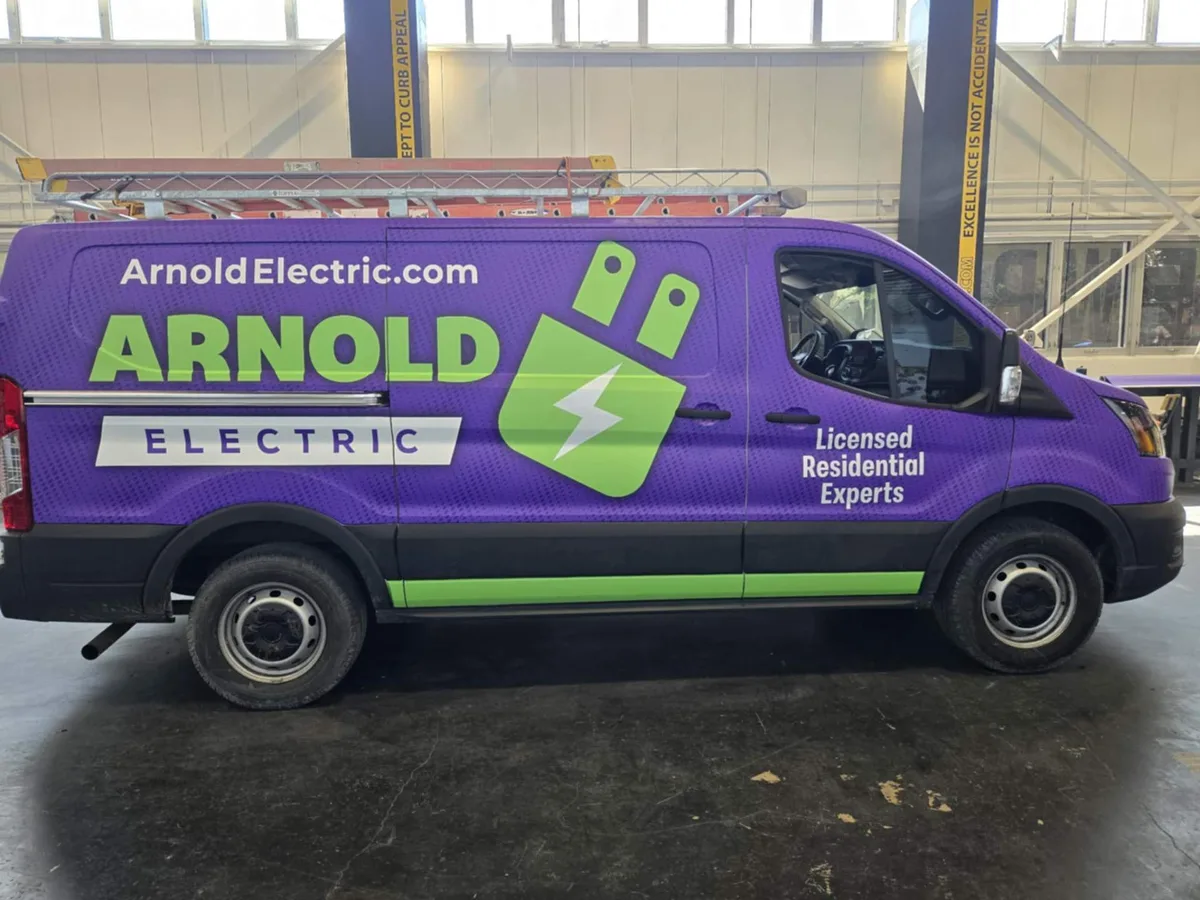
Calendered vinyl wraps fail predictably: edges start lifting within 18–24 months, especially at bumpers, door handles, and curved surfaces. The material shrinks in cold Chicago winters, pulling away from panel edges. For a commercial fleet vehicle that needs to look professional for 5+ years, calendered vinyl is a false economy — you pay less per sqft but replace the wrap 2–3 times in the same period.

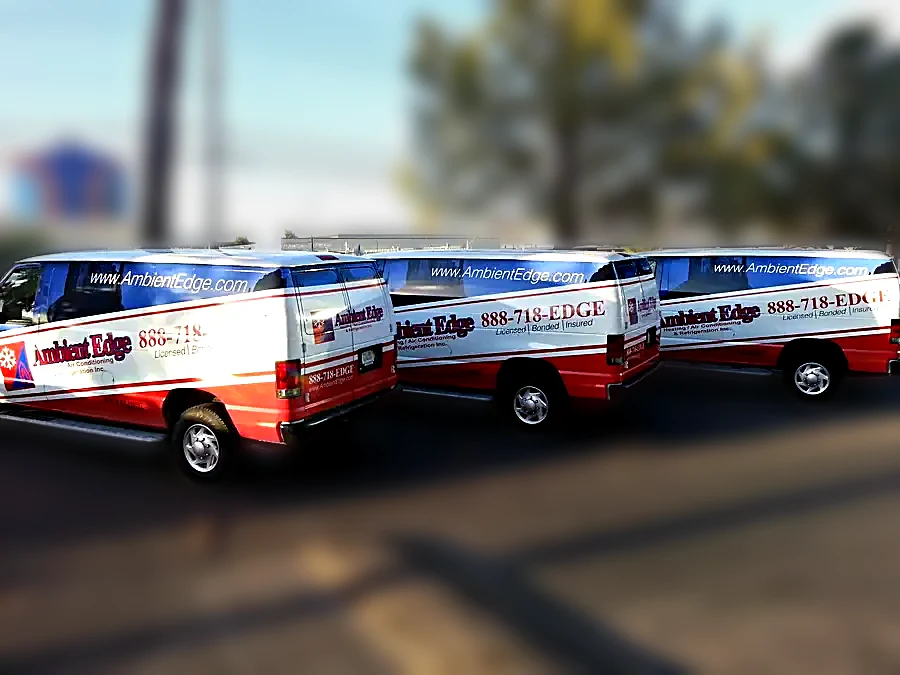
A single wrapped cargo van operating in Chicago generates 40,000 daily impressions on average. Over a 5-year wrap life, that is 73 million impressions at a cost of $3,150 — a lifetime CPM of $0.05. The wrap is 100% IRS Section 179 deductible as a business advertising expense. No other local advertising channel delivers this cost per impression at this geographic precision.

Vehicle Wrap Pricing — Chicago 2026

VehicleFull Wrap PriceDaily Impressions
Cargo Van (Transit, ProMaster)From $3,15030,000–70,000
Sprinter VanFrom $3,50040,000–70,000
Box Truck 16–26 ftFrom $5,00050,000–80,000

Fleet discounts: 7% for 5–9 vehicles, 11% for 10–24, 15% for 25+. Free pickup throughout Chicagoland. 2-year workmanship warranty included.

How to Identify Cast vs. Calendered Vinyl

Not all wrap shops will tell you what vinyl they're using — and some will claim "premium" vinyl while actually using calendered film. Here's how to identify the difference before and after installation:

Before installation: Ask for the specific product name and manufacturer. Cast vinyl will be identified as Avery Dennison MPI 1105, 3M IJ180-CV3, or similar premium SKUs. Calendered vinyl is often sold under generic names or house brands. Cast vinyl is 2.0 mil thick; calendered is 3.0–3.5 mil. Cast vinyl feels softer and more pliable; calendered feels stiffer and more plastic-like.

After installation: Cast vinyl wraps look smooth and factory-finished, with no visible texture or orange peel. Calendered wraps often show slight texture, especially on curved panels. After 6–12 months, calendered vinyl begins showing edge lifting on curves, slight color fading, and micro-cracking around rivets and body lines. Cast vinyl maintains its appearance for 5–7 years.

The price test: If a full cargo van wrap is quoted below $2,800, it's almost certainly calendered vinyl. Premium cast vinyl wraps start at $3,150 for cargo vans because the material alone costs $800–$1,200 more than calendered. The labor is the same — the only variable is material quality. Chicago Fleet Wraps provides material certificates with every installation so you know exactly what's on your vehicle.

Real-World Durability in Chicago Climate

Chicago's climate is one of the harshest environments for vehicle wraps in the United States. The temperature range from -10°F to 95°F+ creates extreme thermal cycling — vinyl expands and contracts with every temperature change. Road salt attacks adhesive bonds. UV exposure during long summer days fades pigments. Automated car washes with brushes abrade surfaces.

Cast vinyl is engineered for these conditions. The cast manufacturing process creates a film with minimal internal stress — it doesn't "want" to return to a flat shape. This means it stays conformed to curves, rivets, and corrugations through thousands of thermal cycles. Calendered vinyl, manufactured under pressure, has significant internal stress that causes it to shrink back toward its original flat state — pulling away from edges, lifting around rivets, and cracking on curves.

In our 10+ years of wrapping vehicles in Chicago, we've tracked the performance difference: cast vinyl wraps average 6.2 years before needing replacement. Calendered vinyl wraps brought to us for repair average 1.4 years before showing significant failure. The "savings" of $800–$1,200 on calendered vinyl costs $3,000–$5,000 in premature replacement — plus the lost advertising value during the weeks your vehicle is unwrapped.

Last Updated: April 2, 2026

Frequently Asked Questions

Cast vs. Calendered Vinyl — Performance Data From Our Shop

Shrinkage test results: We tested both materials on identical panels exposed to Chicago summer heat (95°F+). Calendered vinyl showed 0.8–1.2mm edge shrinkage after 6 months. Cast vinyl showed 0.1–0.2mm shrinkage — essentially zero visible change. This is why we only use cast vinyl on vehicle wraps.

Conformability difference: Cast vinyl (2 mil thickness) stretches up to 150% without memory, conforming to rivets, corrugations, and compound curves. Calendered vinyl (3.5 mil) stretches only 25–30% and has memory — it wants to return to its original shape, causing lifting on curves within 6–12 months.

Cost difference: Calendered vinyl costs $1.50–$2.50 per sq ft. Cast vinyl costs $3.50–$5.00 per sq ft. On a full van wrap (300 sq ft), the material cost difference is $600–$750. We believe the 3–4 year lifespan difference makes cast vinyl the better value.

When calendered is acceptable: Flat surfaces only — wall graphics, trade show displays, and flat-panel signage. We use calendered vinyl for interior wall murals and temporary event graphics where the surface is perfectly flat and the expected lifespan is under 3 years.

Are vehicle wraps better than Calendered Vinyl for Chicago businesses?

Cast vinyl is manufactured by casting liquid PVC onto a flat surface and curing it — this eliminates internal stresses and creates a dimensionally stable film that conforms to curves and survives 5–7 years. Calendered vinyl is extruded under pressure — it retains internal stresses that cause shrinkage, lifting, and premature failure on curved surfaces and in temperature extremes.

What is the ROI timeline for a vehicle wrap?

Most Chicago service businesses recover their wrap investment within 6–18 months through new customers who discovered them via the vehicle. The exact timeline depends on your service area, vehicle routes, and average customer lifetime value.

Should I use wraps AND Calendered Vinyl?

Calendered vinyl wraps fail predictably: edges start lifting within 18–24 months, especially at bumpers, door handles, and curved surfaces. The material shrinks in cold Chicago winters, pulling away from panel edges. For a commercial fleet vehicle that needs to look professional for 5+ years, calendered vinyl is a false economy — you pay less per sqft but replace the wrap 2–3 times in the same period.

Making the Right Marketing Investment

For Chicago businesses evaluating their marketing mix, the decision framework is straightforward: prioritize channels that deliver the lowest cost-per-impression with the highest recall rate and longest duration. Vehicle wraps score highest on all three metrics compared to every other local advertising channel available in the Chicago market.

The data from the Outdoor Advertising Association of America (OAAA) is unambiguous: vehicle wraps generate 30,000–70,000 daily impressions per vehicle, achieve 97% ad recall (the highest of any advertising medium), and last 5–7 years with zero ongoing costs. No other medium — digital, print, broadcast, or outdoor — comes close to this combination of reach, recall, and longevity.

Chicago Fleet Wraps has helped over 2,800 commercial fleet operators make this transition. The most common feedback from clients who switched from other advertising channels to vehicle wraps: "I wish I had done this years ago." The upfront investment pays for itself within 3–6 months through increased brand recognition, inbound leads, and customer trust. Call (312) 597-1286 for a free consultation and detailed ROI analysis for your specific business.

Chicago Fleet Wraps: Your Trusted Partner

With 24+ years in business and 9,400+ vehicles wrapped, Chicago Fleet Wraps is the most experienced commercial wrap shop in the Chicagoland area. We specialize in fleet wraps for trade and service businesses — HVAC, plumbing, electrical, construction, delivery, food service, and more. Our client list includes Amazon DSP, State Farm, Blue Origin, and hundreds of local Chicago businesses.

Every wrap we install uses premium Avery Dennison MPI 1105 or 3M IJ180-CV3 cast vinyl — never cheap calendered film. Our 2-year workmanship warranty covers edge lifting, bubbling, and adhesion failure. We maintain zero verified paint damage claims in 10+ years of operation. And our free fleet pickup and delivery service covers all of Chicagoland — Cook, DuPage, Kane, Lake, Will, and McHenry counties.

Ready to make the smartest marketing investment for your Chicago business? Call (312) 597-1286 or submit our online estimate form. We respond within 2 hours with detailed, vehicle-specific pricing. Design mockups are created on your exact vehicle template with unlimited revisions. From first call to wrapped vehicle, the typical timeline is 2–3 weeks. Your fleet is your most powerful advertising asset — let us help you unlock its full potential.

Removal and Residue Differences

The end-of-life experience differs dramatically between cast and calendered vinyl. Cast vinyl, with its pressure-sensitive adhesive designed for clean removal, peels off in large sheets with minimal heat assistance. The adhesive leaves little to no residue, and any trace amounts are easily removed with adhesive remover. A full vehicle de-wrap of cast vinyl takes 4–6 hours and leaves factory paint in near-showroom condition.

Calendered vinyl removal is a nightmare. The aggressive adhesive bonds permanently to paint over time, especially in hot climates. Removal requires extensive heat, chemical solvents, and scraping — often taking 12–20 hours for a full vehicle. Residue is heavy and requires multiple rounds of solvent application. In worst cases, the adhesive pulls clear coat off with it, requiring paint correction or repainting. The removal cost alone ($800–$2,000) often exceeds the original installation savings.

Wrap Vinyl Glossary

Cast Vinyl
A premium vehicle wrap film manufactured by pouring (casting) liquid vinyl onto a release liner. The casting process produces a thin, conformable film with minimal memory, making it ideal for complex curves and long-term outdoor applications. Rated lifespan: 5–7 years.
Calendered Vinyl
A lower-cost vinyl film manufactured by pressing (calendering) vinyl through heated rollers. The rolling process creates internal stresses that cause the film to shrink over time, especially on curved surfaces. Rated lifespan: 1–3 years for vehicle applications.
Overlaminate
A clear protective film applied over printed vinyl to shield graphics from UV radiation, abrasion, chemicals, and road debris. UV-resistant overlaminate extends color vibrancy by 1–2 years and provides a gloss or matte finish option.
3M Primer 94
An adhesion promoter applied to edges, seams, and high-stress areas during wrap installation. Creates a chemical bond between vinyl adhesive and the vehicle surface that resists lifting from road salt, pressure washing, and thermal cycling.