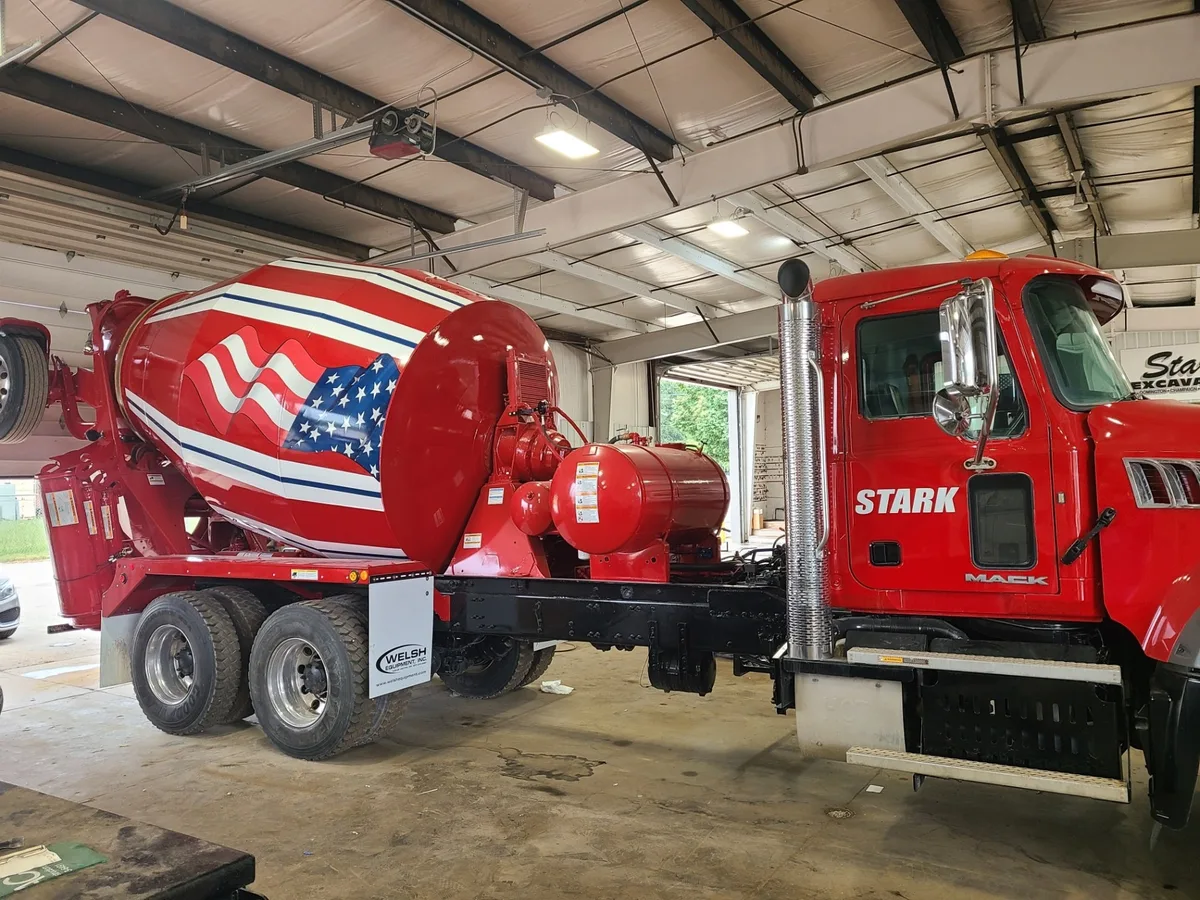
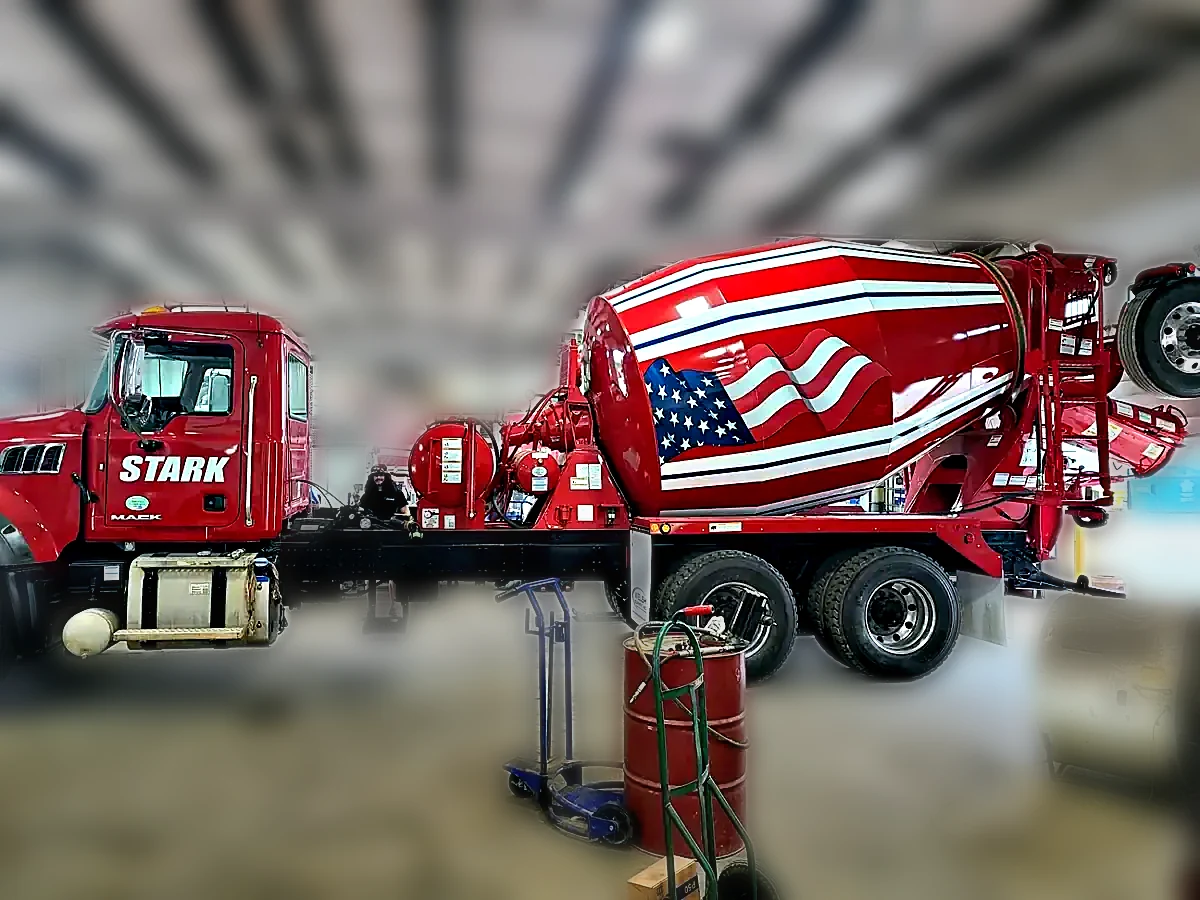
Full equipment fleet rebrand. Trailers, mixer barrels, and service trucks
- ▸Full equipment fleet rebrand across trailers, concrete mixer barrels, and service trucks. Multi-surface program with three different vehicle/equipment platforms in a single coordinated brand rollout
- ▸Rolling install schedule designed around active jobsite operations. Fleet capacity maintained throughout the wrap window with no project-day downtime
- ▸3M IJ180-CV3 wrap film + 8519 overlaminate spec. 5-year material warranty covering the program
- ▸Industry benchmark: highway-route concrete mixer trucks in fleets of this size and route profile typically generate 15,000-20,000 daily ad impressions per vehicle across the wrap lifespan
- ▸Mixer-barrel wrap surface preparation handled in-bay. Barrel-specific application technique for the rotating drum surface (different from flat panel installs)
- ▸Single point of contact from quote through final unit delivery. One project manager, one install crew, one warranty document for the full fleet
Impression and ROI ranges shown are industry benchmarks for fleet wrap programs in this category and vehicle type. Client-specific revenue, lead-volume, and brand-recognition outcomes are not represented as benchmarks and remain confidential to the client.
The Starting Point
Stark Excavating is a heavy civil contractor running excavation, concrete, asphalt, and site development across central Illinois and the Chicago region. They came to Chicago Fleet Wraps for branding on equipment most contractors leave bare: trailers and concrete mixer barrels.
Excavation contractors live and die on jobsite visibility. A Stark trailer outside a road project, a Stark mixer rolling concrete to a foundation pour, a Stark dump truck staged at a subdivision build - every one is seen by other contractors, project managers, homeowners watching construction, and competitors scoping the work.
The math: a mixer barrel rotates roughly 1,200 times per pour. Four to eight pours per day, 200 working days per year. The barrel is a billboard that spins in front of the customer for every pour. Trailers at jobsites work the same way - static signage in front of every neighbor and subcontractor.
The Trailer Job
Trailers aren't standard wrap surfaces. Heavy gauge steel. Rivets every 12 inches. Diamond plate sections. Years of road grime and salt embedded in the panels.
Pre-install prep took longer than the install. Power-wash, isopropyl decon, rust treatment, diamond plate masking. Rivets heat-formed individually after the wrap was laid - vinyl that bridges over a rivet without being pressed into the head lifts inside 6 months.
Material: Avery Dennison MPI 1105 cast vinyl with DOL 1460 overlaminate. Cast film is non-negotiable on a trailer. The compound curves, rivet pattern, and edge seams demand a film that conforms without memory. Calendared vinyl shrinks back. Cast doesn't.
The Concrete Mixer Barrel Job
Mixer barrels are the hardest wrap surface in the industry. Rotating drum, constant abrasion from concrete and aggregate, water and chemical exposure, freeze-thaw cycling, and a curved surface that's never the same diameter twice.
Most wrap shops won't take this work. The ones that do usually deliver wraps that fail in 12 months.
We use 3M IJ180-CV3 with 8519 overlaminate on barrels. Higher abrasion resistance than the trailer spec, paired with the heaviest-duty cast overlaminate 3M produces. The system handles Stark's operating conditions: rotating, abrasive, wet, chemically loaded.
Install required heating the barrel to 90°F before applying vinyl. Cold barrel plus cast film equals poor tack. We staged it in our heated bay for 4 hours, applied the wrap clean, post-heated to 220°F to lock conformity, edge-sealed every panel break.
Print: HP Latex 700W at our Portage Park facility. Latex inks bond deeper than solvent - important when concrete abrades the surface daily.
The Outcome
Builds project-site visibility. Every jobsite with Stark equipment becomes a branded presence. Homeowners see Stark trailers for weeks during street rebuilds. Other contractors see them daily on multi-trade jobs. Both convert to referrals.
Generates rotating impressions during pours. Mixer barrels are working signage. Every delivery puts the brand in front of the receiving customer for the full pour - 30 to 60 minutes of branded visibility per delivery, thousands of times per year per truck.
Differentiates Stark in fleet staging. Branded equipment looks more professional than bare. Project managers notice. General contractors notice. It influences who gets called for the next phase.
Why This Project Matters
Trailer and mixer barrel wraps are work most Chicago wrap shops avoid. Difficult substrates. Slow install. Higher material cost. Thinner margins than wrapping a Sprinter van.
Chicago Fleet Wraps takes this work because we have 25 years of install experience and the materials inventory to handle it. Stark got their fleet branded on equipment most competitors leave blank. Every Stark vehicle on a jobsite generates recognition the unbranded competitor next to it isn't.
That's the compounding effect of doing the work right on the equipment most shops won't touch.